
10 Most Reliable Japanese Cruisers For Long-Term Ownership
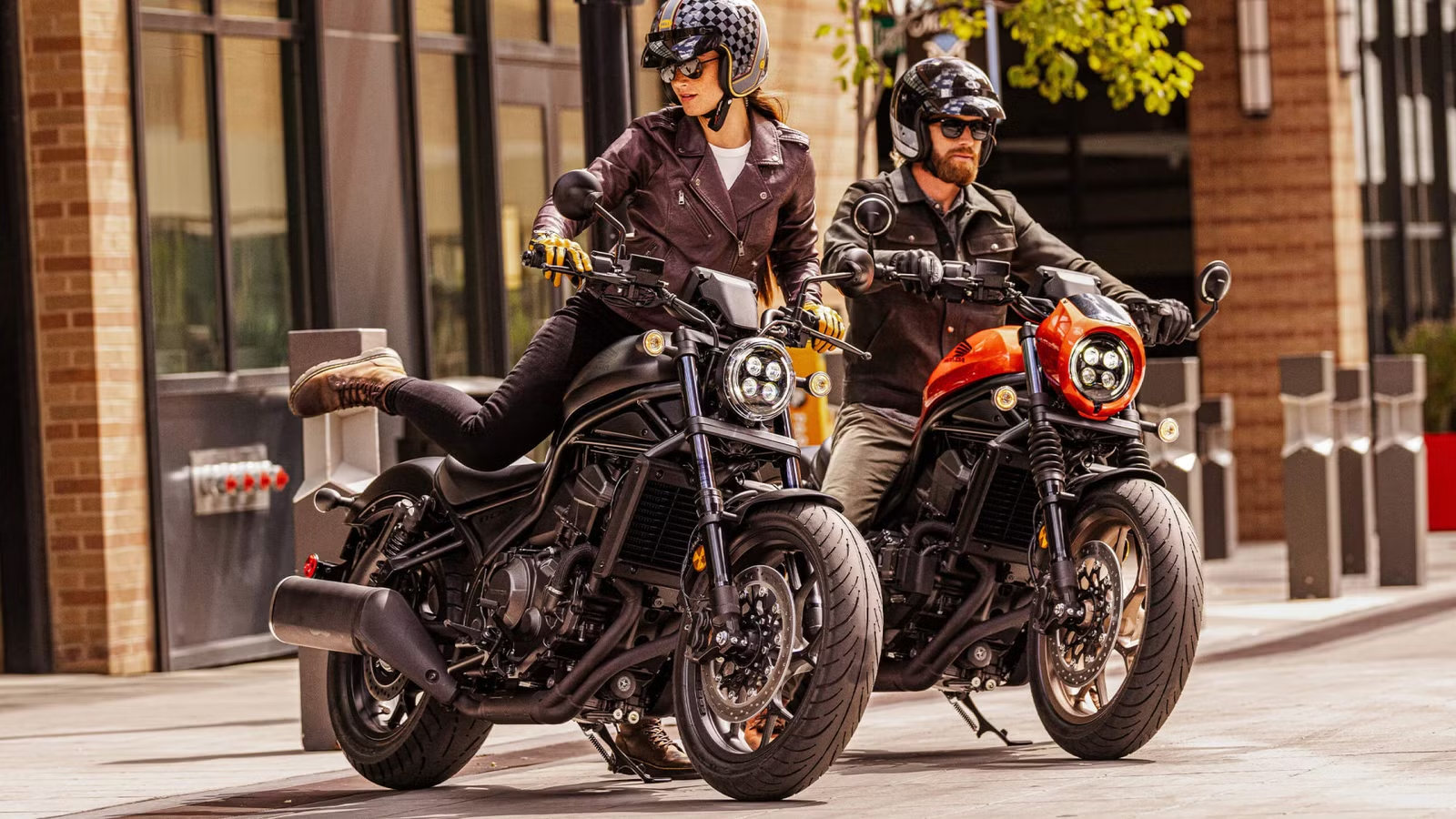
Metric cruisers often get a bad rap. All too often derided not because they are bad motorcycles, but rather because they are misunderstood. If you are willing to be a little more open-minded, you will find there is a lot of value to be had in this space. The biggest issue people have with metric bikes, in particular the Japanese bikes, is their lack of originality in terms of design. It feels a lot like the big four all used some form of template for their cruiser designs, but there are a couple of modern bikes that have moved with the times, and there is no denying how reliable all of these bikes are.
Kawasaki Vulcan 900 Custom
MSRP: $9,999

To put things into perspective, the cheapest American cruiser costs as much as the most expensive bike on this list. In its defense, it is a relatively new bike, whereas the Vulcan 900 platform has been around for two decades now. While dated, it is also as proven as anything currently on the market.

With just shy of 60 pound-feet of torque, it has enough power to get up to highway speed and stay there, but it certainly isn’t fast. The Custom is a bike that is more about style than speed, with that big 21-inch front wheel, drag bars, and blacked-out aesthetic. If you are not sold on the design, we will readily admit there is more value to be had with the other Vulcans on this list.
Honda Rebel 1100
MSRP: $9,699


You might find yourself doing a double-take when you see that the new Rebel 1100 is actually cheaper than the aforementioned Vulcan. All due respect to the Vulcan, but this is a big upgrade in almost every respect. Other than the fact that it doesn’t have a passenger seat or a V-twin.

Its crossplane parallel-twin does a pretty good job of emulating a V-twin, though. Both the ADV and touring bike that make use of this powertrain have proven more than capable of racking up hundreds of thousands of miles. In this more mild state of tune, it will most likely outlast us all.
Kawasaki Vulcan 900 Classic
MSRP: $9,599

Unlike most retro bikes these days, the Vulcan 900 Classic is actually cheaper than the more modern Custom. It is arguably the quintessential chrome-clad metric bike. But that isn’t necessarily a bad thing, and it does differentiate itself a little with an attractive new Metallic Ocean Blue/Pearl Stardust White paint job.

For those that like this more traditional styling, there is a lot of value to be had here. It also comes with floorboards, and the lesser-spotted passenger seat as standard fitment. If you are planning on doing some touring, it might be worth considering the LT, which gets a windshield and saddlebags.
Yamaha Bolt R-Spec
MSRP: $8,999

The Bolt R-Spec might as well be called the Bolt Sportster. It is a dead ringer for the old Harley, albeit more reliable. While that bike was still in production, it just looked like a shameless copy, but with that bike now out of production, it feels more like a tribute.

Just like the aforementioned Vulcans, it makes just shy of 60 pound-feet of torque, and certainly isn’t the quickest. Unlike the Vulcans, it is actually air-cooled (like the Sportster), which means it is even easier to maintain. If you love the design of the old Sportster, but also want a reliable new motorcycle, this is the solution.
Honda Shadow Phantom ABS
MSRP: $8,699

Out of all the metric cruisers currently on the market, the Shadow Phantom is arguably the best-looking bike. It boasts a long, low design and certainly has more presence than its spec sheet would suggest. With a wet weight of just 553 pounds, it is actually pretty light for a full-size cruiser like this.

Unfortunately, its 745cc V-twin barely makes 50 pound-feet of torque. Suffice to say, this is a bike that has more bark than bite. But, with it being so approachable, it is potentially a bike you could learn to ride and keep indefinitely.
Kawasaki Vulcan S
MSRP: $7,649

The third and final Vulcan on this list is actually worlds apart from the other two bikes. It has the same modern, parallel-twin engine you would otherwise find in a Ninja 650 sport bike. So while the torque figure is far from impressive, with 60 horsepower and a wet weight of under 500 pounds, it is fairly sporty for a cruiser.

Some will love that, and others will hate the fact that most of the power lives a little higher up in the rev range. Its biggest asset has nothing to do with performance, though. The Ergo-fit system means that no matter your height or weight, you will fit.
Honda Rebel 500
MSRP: $6,799

Out of all the metric cruisers currently on the market, the Rebel 500 is the easiest to recommend. It is relatively compact, so it won’t be ideal for taller riders, but that might be its one and only disadvantage. Other than that, it is a perfectly competent all-rounder, for a great price.

It is approachable enough for riders to learn on, yet still powerful enough to do long-distance rides. This parallel-twin has also proven more than capable of accumulating miles like no other small displacement engine. It is also economical and light, so it will also handle the daily commute without a fuss.
Kawasaki Eliminator
MSRP: $6,499

On the face of it, the Eliminator looks to be cut from the same cloth as the aforementioned Rebel. But, just like the Vulcan S, it shares an engine with a sport bike. So, to get the most out of it, you will need to rev it a fair bit.

It also benefits from the Ergo-fit system, so even though it is a relatively small motorcycle, you will find a way to fit. This is the one edge it has over the Rebel. It also stands out from the crowd a little with a more modern design, and more features than most of the bikes on this list.
Honda Rebel 300 E-Clutch
MSRP: $5,349

In the past, we often struggled to understand why anyone would consider a Rebel 300. Theoretically, the 500 could cover all bases. But, by adding an E-Clutch to the bike, it doesn’t just stand out from Honda’s crowded cruiser range; it stands out as the most affordable motorcycle equipped with this feature.

The E-Clutch effectively provides riders with an entry point into Honda’s world of automatic motorcycles. If you were interested in eventually stepping up to one of Honda’s bigger DCT-equipped bikes, this is where you would start. It is also economical and affordable enough to hold onto as a commuter, allowing you to own a second “fun” bike.
Yamaha V Star 250
MSRP: $4,799

The V-Star 250 is a remnant from another time. Its small-displacement air-cooled V-twin is about as unusual as engine configurations get these days, where pretty much anything under 300cc is a single cylinder. But we are glad that it is still around.

It most certainly won’t appeal to everyone, but this simple little bike will appeal to those interested in learning how to do their own maintenance work. The simple, carb-fed lump is also reliable, and with a claimed fuel economy of 78 MPG, extremely economical. It is actually so affordable to run that it is a bike any level rider could buy exclusively for commuting purposes.
Sources: Various manufacturer websites

Related posts


Latest Post


No Comments