How Much It Costs To Replace A Honda CR-V Hybrid Battery In 2026
9 minutes reading
Wednesday, 7 Oct 2026 15:16 0 8 autotech
Hybrid battery replacement is one of those topics that every CR-V Hybrid owner will eventually have to reckon with — and knowing what to expect before the bill arrives makes all the difference. The Honda CR-V Hybrid has earned its place as one of America’s best-selling compact SUVs through a combination of proven reliability and everyday practicality, but no battery lasts forever. The CR-V Hybrid’s pack typically holds up well into the vehicle’s later years, yet when replacement day comes, it represents one of the more significant repair costs you’ll face. Honda’s transparent parts pricing gives us a solid baseline for what owners can expect to pay.
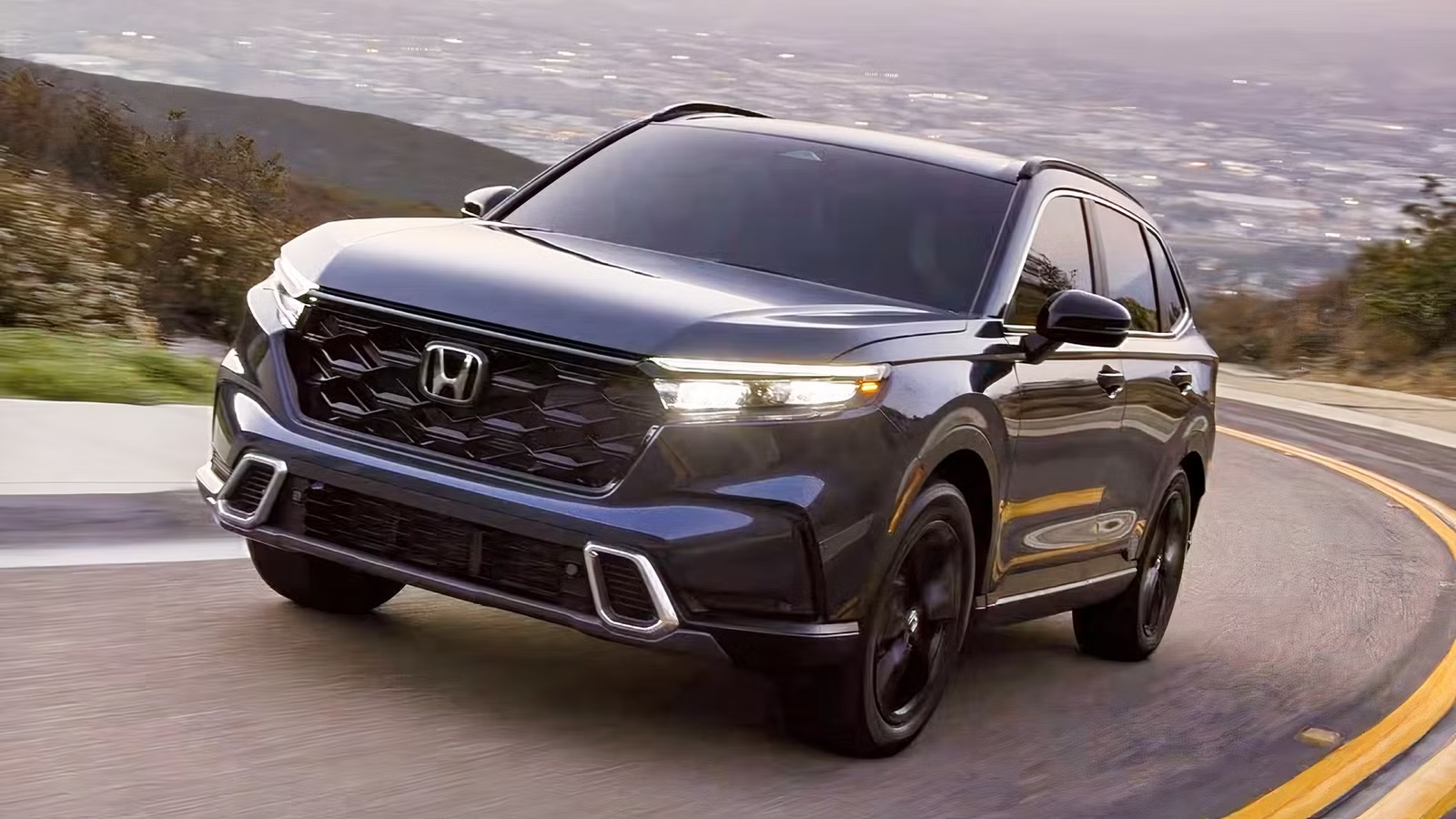
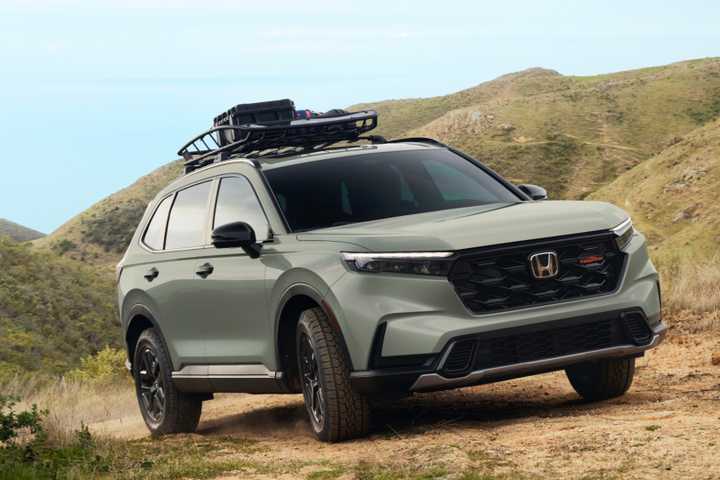
The 2026 Honda CR-V Hybrid employs a front-wheel drive and optional all-wheel drive system that broadens its appeal in a fiercely competitive segment. It represents a natural evolution of the brand’s electrification strategy, which pursues multiple power sources — including full electrification and hydrogen fuel-cell technology — though gasoline-electric hybrid remains its primary focus at this time.
Just bear in mind that these prices will be vastly different when the time comes to have a new pack fitted after about two decades. Like many other brands, Honda anticipates that replacing the battery pack on its hybrids will be relatively more affordable in the future, even when taking inflation into account.
Expect To Pay $3,515 For A New Battery
Profile action shot of 2026 Honda CR-V Sport Touring Hybrid driving in cityHonda
Honda’s online parts catalog for the CR-V Hybrid indicates that a new HEV battery pack module costs $3,515 before taxes and discounts, though this figure includes all auxiliary components that you wouldn’t typically need unless the housing sustains damage from a collision or a manufacturer fault. Select Honda dealership websites suggest you can expect to pay around $2,000 for a new hybrid battery in the best-case scenario, which is a fairly conservative figure. CR-V owner forum users have reported that older Honda CR-V Hybrid battery replacements typically run around $1,900 for parts alone, excluding labor at an independent workshop — a number that sounds reasonably accurate.
Parts are likely to take up the bulk of the cost, with battery replacement labor estimated at between $500 and $800 depending on whether you visit a Honda-accredited service center or an independent workshop. Replacing the battery pack on an HEV is a much easier task than a battery module replacement for an EV, but it does require some degree of disassembly, as the large pack is typically located beneath the rear bench.
OEM Versus Refurbished Battery Pack: The Risks You Need To Know About
2026 Honda CR-V rear badge close-upTopSpeed | Michael Frank
While the cost estimate is rather conservative, the final price can vary considerably based on location, availability, and your specific repair or replacement requirements. With that in mind, you may come across cheaper options in the form of refurbished battery packs. These packs are often pulled from low-mileage donor vehicles, inspected, and reconditioned to a serviceable state, though quality depends heavily on the reputability and resources of the provider. Those with cell-matching and load-testing capabilities will generally deliver a better product than those without.
A low-quality battery can lead to even more expensive repairs than a new OEM replacement would have cost, so choosing a reputable provider is critical. Companies like Greentec Auto, iHybrid Battery, and EV Battery USA offer properly reconditioned batteries with warranties for added peace of mind. Speaking of which, warranty coverage is another key factor — most reputable providers offer between 12 months and three years of coverage. If a provider offers no warranty at all, walk away.
Honda’s Generous Standard Hybrid Battery Warranty
2026 Honda CR-V TrailSport Hybrid front 3/4 shotHonda
Honda includes its standard three-year or 36,000-mile limited warranty and five-year or 60,000-mile powertrain warranty with every CR-V Hybrid sale. A five-year corrosion warranty with unlimited mileage is also part of the package. Replacement parts fitted by the dealer are covered for one year, and accessories carry a three-year or 36,000-mile warranty.
All hybrid systems are covered for three years or 36,000 miles, but the battery pack gets the market-standard eight years and 100,000-mile coverage. For peace of mind on the road, a 36-month or 36,000-mile roadside assistance warranty is also included. Honda additionally offers in-house extended warranty packages in varying terms for owners who plan to keep the vehicle longer.
Honda’s Dependable Market Reputation
2025 Honda CR-V front shotHonda
The 2026 Honda CR-V Hybrid benefits from good overall mechanical reliability, predominantly thanks to the dependable nature of its L-Series ICE unit, while the direct-drive system also eliminates a significant number of potential mechanical failure points. J.D. Power gives the entire range an 83/100 consumer-verified overall score, made up of 83/100 for quality and reliability, 79/100 for the driving experience, 86/100 for resale, and 83/100 for dealership experience.
According to iSeeCars, the CR-V has an average lifespan of around 169,626 miles or about 13.9 years, with a 30.4 percent chance of reaching 200,000 miles. The publication grants it a 7.9/10 for reliability, placing it in second place in both the most reliable crossover SUV and most reliable small SUV categories. CarEdge placed the CR-V’s five-year cost of ownership at $36,935 — just over $1,000 more than the RAV4. In terms of maintenance costs, CarEdge puts the figure at $7,636 over the first ten years of ownership, with a 21.74 percent chance of requiring major repairs; both figures are lower than the average for comparable SUVs.
The CR-V’s Versatile Drivetrain Configuration
2024 Honda CR-V Hybrid Sport Touring AWD engineLyndon Conrad Bell | TopSpeed
Honda offers one gasoline-electric hybrid configuration for the CR-V: an Atkinson-cycle 2.0-liter four-cylinder engine paired with two permanent-magnet motors. The Honda CR-V is the brand’s most popular model in its monthly sales charts, and features this drivetrain producing 204 horsepower and 274 pound-feet of torque. It is available in front-wheel drive or all-wheel drive form; the latter uses a conventional driveline to the rear axle rather than an additional electric motor.
Honda’s hybrids don’t use a conventional transmission, but rather a direct-drive eCVT unit similar to what you would find in an EV. The front-wheel drive CR-V Hybrid earns an EPA fuel economy estimate of 43/36/40 MPG on the city/highway/combined cycle, while the all-wheel drive model returns a slightly lower 40/34/37 MPG.
The 14-gallon fuel tank provides up to 560 miles of range in front-wheel drive form, a figure the all-wheel drive variant lowers to 518 miles. Honda’s hybrid system is a series-parallel design, meaning the electric motor can operate independently of the combustion engine. The front-wheel drive model is projected to save around $3,250 in fuel costs over five years compared to the average new vehicle sold in the U.S., with an estimated annual fuel spend of $1,550 and a per-25-mile cost of approximately $2.56.
Appealing Long-Term Ownership Costs
Interior shot of a 2026 Honda CR-V TrailSport Hybrid’s front cabinHonda
Beyond the battery pack, the 2026 Honda CR-V Hybrid benefits from competitively low five-year ownership costs, according to Edmunds. The publication estimates $5,638 on maintenance, $601 on repairs, and $11,399 on depreciation over five years. Fuel costs are projected at around $6,272 over the same period.
CarEdge indicates that the model will cost $39,524 to own over five years and 60,000 miles, accounting for $13,059 in depreciation, $7,700 in fuel, and $2,440 in maintenance. Meanwhile, iSeeCars assigns the CR-V Hybrid a $13,792 or 38.7-percent depreciation rate after five years, which is somewhat steeper than its main rivals.
Expect The CR-V’s Battery To Last 15 Years
2026 Honda CR-V TrailSport Hybrid Front Angle With DirtHonda
According to Honda’s own estimates, the CR-V Hybrid battery pack is designed to last six to ten years or up to 100,000 miles. Other Honda hybrid battery options can last for 10 years or even closer to 150,000 miles, though longevity is entirely dependent on care practices and usage patterns. Several factors contribute to battery wear. Chief among them is heat exposure, which accelerates degradation in the lithium-ion cells used in Honda’s hybrid models.
Frequent high-power discharge and recharge cycles also add strain, particularly in stop-and-go traffic where the hybrid system switches between engine and battery power more frequently. Deep discharges — allowing the battery to drain close to empty before recharging — wear cells faster than shallow cycles, though the vehicle’s software typically prevents this from occurring.
How To Keep Your Honda CR-V Hybrid In Good Condition
2024 Honda CR-V Hybrid Sport TouringHonda
The 2026 Honda CR-V Hybrid relies on the Honda Maintenance Minder system to calculate service intervals based on real-time engine conditions. Technicians perform routine oil changes, tire rotations, and multi-point inspections every 7,500 to 10,000 miles. Cabin air filters and engine air filters require replacement every 15,000 to 30,000 miles. Midlife servicing at 45,000 to 60,000 miles calls for transmission fluid renewals, brake fluid flushes, and rear differential fluid changes on all-wheel-drive models. Long-term maintenance milestones at 90,000 to 120,000 miles require spark plug replacements, engine coolant flushes, and mechanical valve inspections.
Basic upkeep costs remain moderate throughout early ownership, averaging between $400 and $600 per year for standard maintenance. Major mileage intervals requiring transmission fluids, spark plugs, and brake flushes can push individual service visits toward $800 or more depending on dealer labor rates.
The factory warranty covers the high-voltage hybrid traction battery for eight years or 100,000 miles under standard federal regulations, minimizing early out-of-pocket hybrid expenses. Owners in California emissions states benefit from extended high-voltage component coverage of 10 years or 150,000 miles.
Sixth-generation Honda CR-V models spanning 2023 through 2026 are subject to several safety recalls. A major steering gearbox recall targets an improperly manufactured worm wheel that swells under heat and humidity, causing a sticky steering feel; dealers address this by replacing the worm gear spring and applying fresh lubricant. Separate fuel system recalls cover high-pressure fuel pumps and loose fuel hose connections that can crack, leak, or cause engine stalls. Additional safety recalls involve passenger seat weight sensors that short-circuit from humidity and cause improper airbag deployment.
Base Trim Engine
2L I4 Hybrid
Base Trim Transmission
CVT
Base Trim Drivetrain
Front-Wheel Drive
Base Trim Horsepower
145 HP @6100 RPM
Base Trim Torque
138 lb.-ft. @ 4500 RPM
Base Trim Fuel Economy (city/highway/combined)
43/36/40 MPG
Base Trim Battery Type
Lead acid battery
Make
Honda
Model
CR-V Hybrid
Source: Honda, EPA, J.D. Power, iSeeCars, Edmunds, and CarEdge.













No Comments