
The Motorcycle That Makes A Strong Case For Buying Used Instead Of New
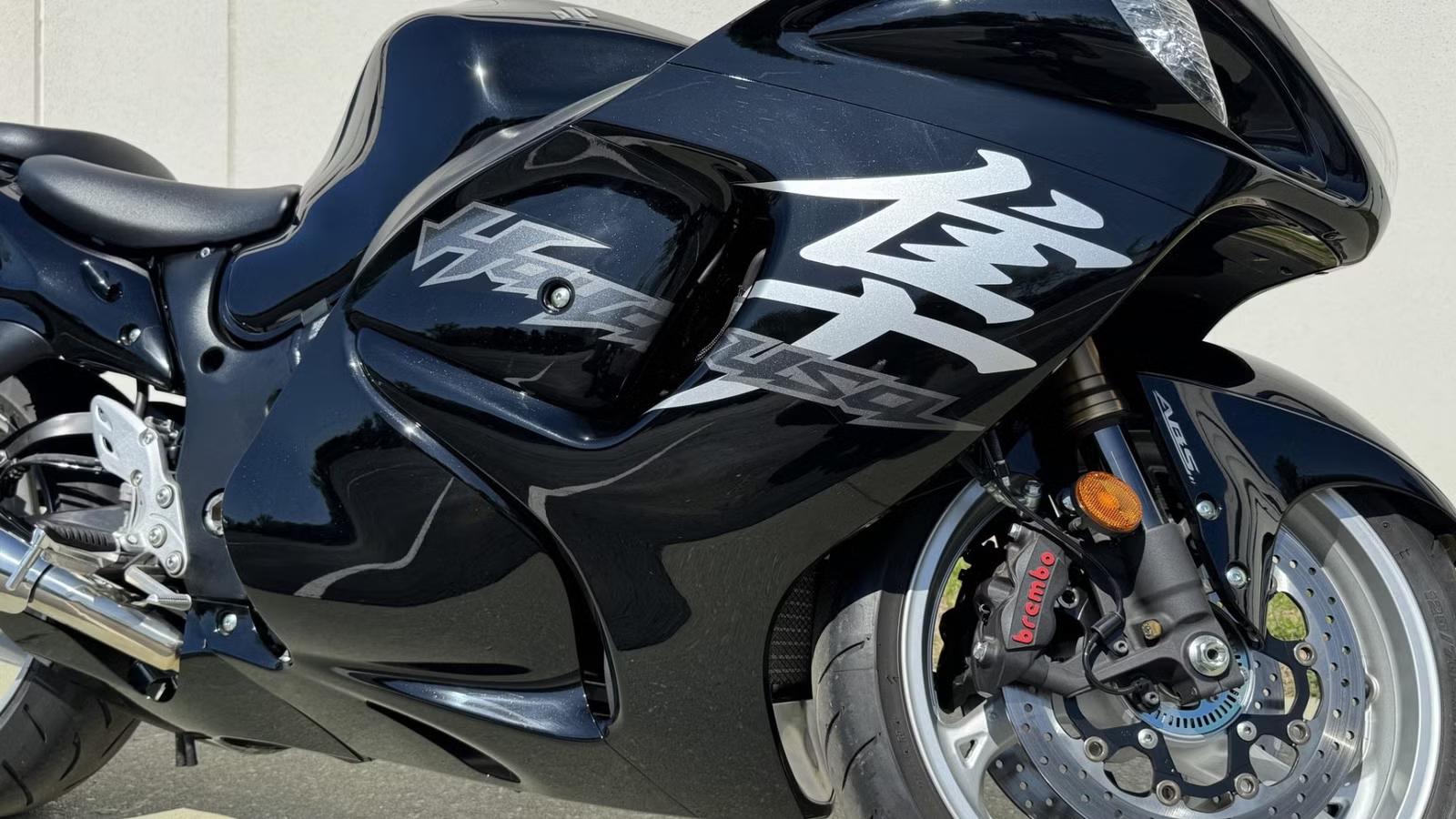
Hyperbikes used to be the ultimate flex, the bikes riders bought to chase outright speed and bragging rights over anything else on two wheels. That equation has changed. New flagship pricing has climbed high enough that even riders who can afford one are asking whether it still makes sense, and the segment that used to define excess is now the one buyers are most likely to shop used.
The Number Of Hypersport Bikes Is Lower Than Ever

Emissions regulations, not competition, have done more to shrink the hypersport class over the last decade than any rival manufacturer ever managed. Suzuki’s own B-King streetfighter, which shared the Hayabusa’s engine, was discontinued back in 2012. Honda’s CBR1100XX Super Blackbird was gone even earlier.
Kawasaki’s Ninja ZX-14R, the Hayabusa’s closest rival for two decades, has already been pulled from European and Asian markets over tightening emissions rules, and reports suggest 2025 was its final model year even in the United States. That leaves the segment thinner than it has been in twenty years, mostly because retuning a liter-plus engine to clear modern emissions standards costs more than most manufacturers want to spend on a low-volume halo bike.
And Higher Prices Makes Turning To The Used Market Ideal

A new 2026 Hayabusa starts at $19,499, and the Special Edition runs $20,129, both before destination charges and dealer fees push the out-the-door number higher still. Financing a bike in that price range, in a segment that already sells in low volume, is a tougher sell than it used to be. That’s pushed more riders toward the used hypersport market instead, where the Hayabusa’s own history gives buyers more to choose from than almost any other bike in the class, including its closest rival, the ZX-14R.

The Gen 2 Hayabusa Is Half The Price And More Powerful

That used bike worth chasing is the Gen 2 Suzuki Hayabusa, built from 2008 through 2020. When Suzuki redesigned the Hayabusa for the current Gen 3 in 2021, it had to retune the engine to clear modern emissions standards, and output actually dropped in the process. Suzuki’s own figures put the Gen 2 at 197 horsepower at the crank, versus roughly 187 to 188 horsepower for today’s model.
Buying the older bike doesn’t mean settling for less power. On paper, it means getting more of it, at a fraction of the price. For a deeper look at what makes that engine tick, TopSpeed has covered the secrets behind the Hayabusa’s 1.3-liter engine in detail, and how the current Hayabusa stacks up against the rest of the segment’s most powerful bikes.
What A Decade Of Depreciation Actually Buys You

Listings on Cycle Trader and Autotrader show Gen 2 Hayabusas trading anywhere from around $7,000 for higher-mileage 2011 to 2015 examples to roughly $16,000 for clean, low-mileage 2018 to 2020 bikes. Even the nicest used Gen 2 undercuts a new 2026 model by several thousand dollars, and the more affordable end of that range is less than half the new bike’s $19,499 starting price. That gap buys a bike with a known service history, a decade of ownership data behind it, and none of the depreciation still ahead of a brand-new model.
The 1,340cc Engine Is In Its Most Powerful Tune

The Gen 2’s inline four grew to 1,340cc from the original 1,299cc, with a longer stroke, higher compression, and a stronger bottom end than the bike it replaced. That’s the same basic architecture Suzuki has carried through three generations, but the Gen 2 is the version that made the most power before emissions tuning caught up with it.
Gen 2 Owners Are Reporting 100,000-Mile Engines On Stock Parts

Owner threads on the Hayabusa Owners Group forum are full of Gen 2 engines clearing 60,000 to 100,000 miles on nothing more than oil changes and scheduled valve checks, with some owners reporting well past 150,000 miles on an untouched original engine. The valve train is a shim-under-bucket design, with the first inspection due at 15,000 to 16,000 miles, a routine service rather than something to fear. That kind of consensus, repeated across owners riding the bike hard for over a decade, is a stronger reliability signal than a single dyno run or press review could ever provide.
Parts Availability Isn’t The Problem People Assume It Is

A 12-year production run, on top of the Gen 1 model that shares much of the same platform, means Gen 2 Hayabusas were built in real volume for a long time. Suzuki’s dealer network still stocks OEM parts for the bike, and the aftermarket built up around it, from Yoshimura exhausts to Brock’s Performance tuning parts, is as deep as any hypersport bike has ever had. That’s not the kind of support a buyer typically finds on a low-volume exotic a decade after it went out of production.
More Power, Half The Price, And 150,000-Mile Proof: The Case Is Closed

The Gen 2 does miss out on what the current Hayabusa offers: ride-by-wire throttle, IMU-based traction and wheelie control, cruise control, and a more refined electronics suite on the Special Edition. None of that changes what the engine does once the throttle is open. The Gen 2 still holds the strongest output the Hayabusa has ever made, backed by over a decade of real-world reliability data, at a price that undercuts a new model by more than half in some cases. For a bike whose entire reputation was built on raw performance, that’s the version worth buying.
Sources: Suzuki, Cycle Trader

Related posts


Latest Post


No Comments