The Hyundai Hot Sedan Making M240i Buyers Rethink Everything
11 minutes reading
Sunday, 4 Oct 2026 17:00 0 9 autotech
There is an obvious reason a buyer chooses a BMW, and the choice narrows by the time they choose a 2 Series coupe, and is more finely tuned when they choose an M-inspired 2 Series Coupe. There is little to no chance that buyer is going to look at a Hyundai because the Korean brand is far below their prestige consideration—it doesn’t make coupes. It also doesn’t make RWD cars and only a couple of AWD sedans, and neither of them would be considered “hot.” So when you compare a hot Hyundai sedan to a BMW M240i, you’re basically sorting through priorities.
This hot Hyundai sedan is not a “budget” BMW M240i. It is vastly different, but merits a thought about how enthusiastic you are about each car’s presentation. How important is prestige (one is a BMW; the other is fairly exclusive)? Is purchase price a factor? Is ease of entry and interior space a necessity? Is performance a “must have,” or a “nice to have,” and at what level? And, of course, how long do you want to live with it? Those are questions that all new car buyers pore over, and they’re important to address as you weigh this hot Hyundai N sedan against a BMW M240i.
A Turbocharged Six-Cylinder That Matches the M2’s 0–60 At $14,000 Less
2026 BMW 240i front shotBMW
The mechanical specifications of the M-inspired BMW M240i XDrive justify its price of $55,600 ($2,000 less for the RWD variant), which is about eight percent higher than the average MSRP in the U.S. For the price, though, you get a powerful six-cylinder turbocharged engine, all-wheel drive, a solid chassis, and a premium interior.
A Coupe Body That Favors The Driver Over Rear Passengers
At about 180 inches long (riding on a 108-inch wheelbase) the BMW M240i xDrive is an all-weather, city-friendly compact wrapped up in an attractive, balanced two-door skin. Like most coupes, which are primarily used for personal mobility, the relatively roomy cabin is biased toward front-seat occupants, but it is rich in technology and materials to give it the premium presence that comes with the BMW badge.
The M240i Matches The M2’s 0–60 While Getting Nearly 50 Percent Better Fuel Economy
Engine of the 2023 BMW 2 Series Gran CoupeBMW
The 2027 BMW M240i xDrive uses a mild-hybrid 3.0-liter turbocharged inline-six directing 386 horsepower to all four wheels via an eight-speed automatic, enabling it to sprint from 0–60 mph in a claimed 4.1 seconds. The rear-biased configuration matches the more powerful M2 RWD model on acceleration (with the M2 also costing $14,000 more), but saves a significant amount of fuel, averaging 29 mpg combined, according to the EPA, versus the M2’s 19 mpg.
Prestige Ownership Comes With Premium Costs
2025 BMW 2 Series rear close-up of the badgeBMW USA
The BMW badge has a legacy of performance behind it, and the M240i positions itself within a well-established hierarchy. Buyers aren’t merely purchasing a luxury coupe; they’re buying into a recognizable performance brand with strong luxury cachet. That will likely mean a higher return when it comes time to sell, though the depreciation over five years is still expected to be about 40 percent, according to Edmunds. Maintenance is the other challenge for luxury brands, with the M240i projected to incur about $5,400–$6,000 over five years.
The Hyundai Elantra N: $20,000 Cheaper, Better On Track, And Ready To Make BMW Buyers Uncomfortable
Value-Packed Hyundai Fare Adds A Spicy Twist
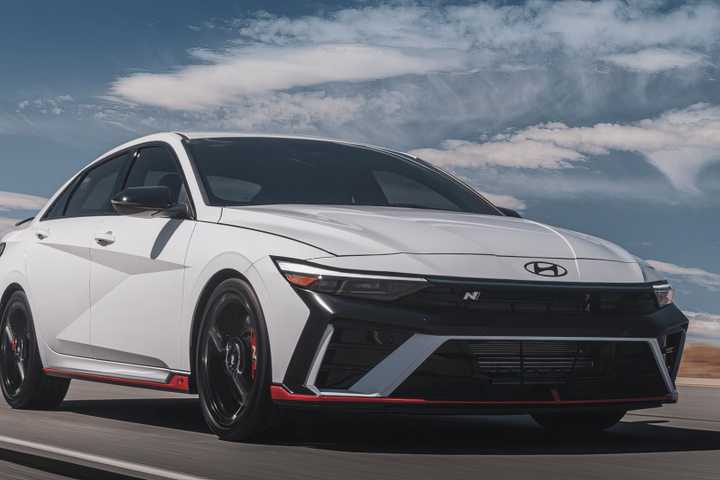
Front three-quarter tracking shot of a white 2026 Hyundai Elantra NHyundai
It’s a stretch to think a compact Hyundai sedan can compare to a luxury BMW coupe, but here we are with a Hyundai Elantra N that is only one letter removed from a BMW M. As stated at the start, the Elantra N is not a “budget” BMW M Series, but it offers its own set of skills and features that may get some consideration from enthusiasts who aren’t fully invested in prestige badges and keep an open mind on dynamic performance.
The Price Point Provides The Invitation To The Performance Party
2026 Hyundai Elantra N rear 3/4 shot parked on the roadHyundai
The price difference alone makes the comparison to the BMW M240i considerably interesting. The 2026 Elantra N starts at $35,300 (plus $1,500 for a dual-clutch transmission that you’ll probably want), while the 2027 M240i xDrive starts about $20,000 higher, at $55,600. Is that enough to justify over 100 more horsepower, all-wheel drive, and better fuel economy? Maybe, but that’s just the start. Both cars are compacts with similar footprints, but the different bodystyles offer different levels of cabin access and interior space.
The Hyundai Elantra N Has The Power To Succeed
2025 Hyundai Elantra N TCR engineWilliam Clavey | TopSpeed
Keeping what it is and what it does in context, the Elantra N’s 2.0-liter turbocharged four-cylinder produces an impressive 276 horsepower, sending power to the front wheels via a six-speed manual (or an optional DCT, which adds more capability), but a fast engine and shiftable transmission don’t make a performance car, and this is where the side-by-side comparison gets interesting. Purists will claim a FWD car can’t be a performance car, but Hyundai begs to differ, with electronic control over the limited-slip differential and suspension, and a rear chassis brace.
A Steering-Wheel Button That Temporarily Boosts Power By 10 HP — Gimmick Or Genuine Edge?
Interior shot of a 2025 Hyundai Elantra NHyundai
Launch control is standard fare, and the available eight-speed DCT further boosts Elantra N performance with a collection of software-driven features to make the car more responsive when driven hard. Using the steering-wheel N button calls up the DCT’s N Power Shift (NPS) and N Track Sense Shift (NTS) programs that alter shift behavior during hard acceleration and track driving. Then, pushing the NGS (for N Grin Shift) below the N button temporarily boosts power by 10 horsepower and sharpens the DCT’s response for about 20 seconds. Many consider such features theatrical, except the people who actually use them.
Hyundai Affordability Translates Into Low Ownership Costs
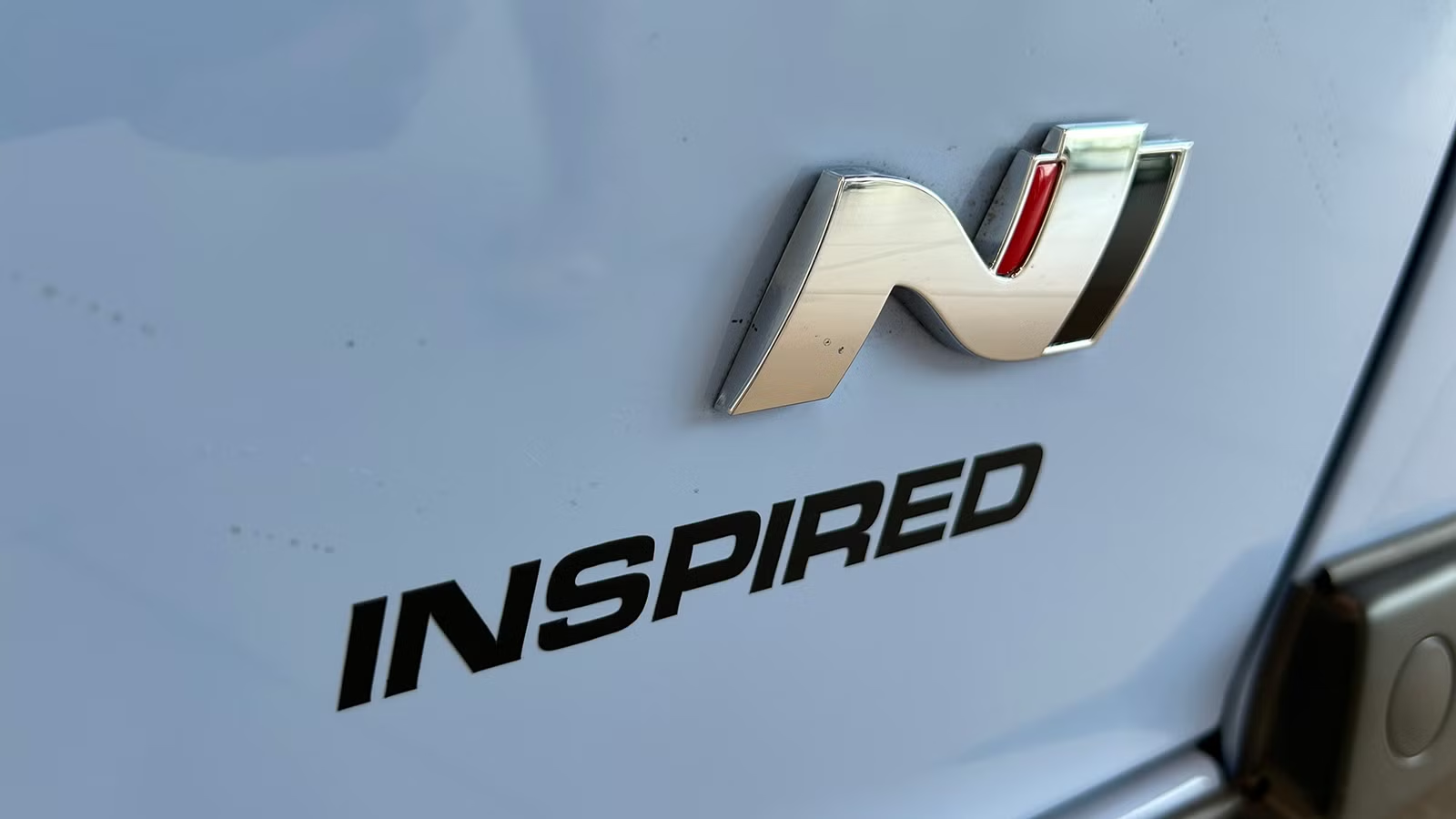
Detail shot of a 2024 Hyundai Elantra N showing the trunk-lid mounted N badgeHYUNDAI
Hyundai’s ownership legacy is based on affordability—its cars are inexpensive to purchase and cheap to maintain, exemplified in the brand’s powertrain coverage of 10 years or 100,000 miles that covers high-cost engine, transmission, and driveline repair and replacement components. As a result, Edmunds projects repair costs of $600–$700 over five years, and maintenance costs around $5,000. Depreciation of about 43 percent brings resale value down to the $20,000 level—a good used price, but the Elantra N loses the original powertrain warranty coverage (unless it’s certified pre-owned).
The Difference Is $20,000, But What Is The Sum?
2024 – 2025 Hyundai Elantra N 7th Gen (CN7) FaceliftHyundai
2026 BMW 2 Series Coupe Front Angle ViewBMW
As noted at the start, there is really no direct comparison between the Hyundai Elantra N and the BMW M240i, but the most obvious comparison between the two performance-oriented cars is the $20,000 difference in purchase price. The challenge then becomes to see what the BMW offers for that extra $20k, with the obvious answer being prestige. So we’ll present the differences and let you, dear reader, decide how that tips the balance for you.
What Does $20,000 Actually Buy?
2024 – 2025 Hyundai Elantra N 7th Gen (CN7) FaceliftHyundai
2025 BMW 2 Series Coupe, Side ProfileBMW
Size-wise, the two are not vastly different, with the BMW being six inches shorter but riding on a half-inch longer wheelbase. It’s also half an inch wider, which physically gives it a more stable stance for handling and smoothing out road imperfections. But both of those characteristics depend on suspension, which we’ll touch on later. The four-door bodystyle grants the Elantra better access to an interior that is roomier for both passengers and cargo, and more comfortable in terms of all passenger room figures (including a six-inch difference in overall legroom). If access, room and comfort are important in a sporty car, the Elantra N holds better value.
Powertrain And Driveline Bet On Ride And Handling Excellence
Shot of a 2025 Hyundai Elantra N’s engineHyundai
2026 BMW 2 Series Coupe EngineBMW
The BMW M240i xDrive raises the stakes with a 386-horsepower 3.0-liter turbocharged inline-six that generates 398 pound-feet of torque. Those combine for consistent acceleration from zero to 60 mph in a claimed 4.1 seconds (4.4 for the RWD version). The Hyundai Elantra N counters, with a 276-horsepower 2.0-liter turbo four, 289 pound-feet, FWD, an electronic LSD, and a standard six-speed manual. It could fold, but it has an eight-speed dual-clutch automatic trump card that puts NGS on the table, temporarily boosting horsepower to 286, and adding considerably more fun in handling.
The Elantra N can handle about 1g of lateral acceleration on its standard 245/35R19 Michelin Pilot Sport 4S high-performance tires, compared to the 0.95g–0.97g (depending on tire brand and type) of the M240i xDrive’s 225/40R19 tires, which can be staggered with 255/35R19s on the rear. The Hyundai comes standard with an active electronically controlled suspension (ECS) that is tuned for track stiffness, using G-sensors, wheel speed, and chassis pitch; the BMW comes standard with the active Adaptive M Suspension that gets input on steering speed, body movement, and GPS data to cater to long-distance cruising smoothness. The Elantra N gets the nod on the track, but the M240i xDrive is arguably a better real-world driving choice.
2025 Hyundai Elantra N interior showing front cabinHyundai
2025 – 2026 BMW 2 Series Gran Coupe interiorBMW
Once you get past the initial price-spend, you have to consider living with the car for at least a couple years, if you’re leasing, or longer if you’re intent on keeping it. Edmunds puts the five-year cost difference at about $15,000 in favor of the Hyundai Elantra N, taking into account annual fuel and upkeep costs, financing interest, and depreciation. The EPA estimates annual fuel costs for the BMW M240i xDrive at $2,250, which is $700 less per year than the Hyundai Elantra N. Both prefer premium fuel for optimum power but adjust to work fine on regular.
That’s a savings of $3,500 over five years, but the BMW gives it back in upkeep costs that Edmunds projects to be $800–$900 higher over that span (partly mitigated by BMW’s complimentary maintenance plan), and in potential repair costs that could be $1,700–$2,000 higher, thanks to Hyundai’s comprehensive powertrain warranty. The bulk of the ownership-cost difference is financing (which is natural, given the higher purchase price) and depreciation (again relevant to the original purchase price, but which may be mitigated through meticulous care). So, the BMW’s prestige premium is real (pay for it at purchase, and get it back at resale), but doesn’t factor in much in day-to-day operation.
The Hyundai Elantra N Won’t Replace The BMW M240i But Does Make You Think
2026 Hyundai Elantra N front 3/4 shotHyundai
Once you get beyond the expected purchase-price difference, comparing these two cars involves turning preconceived notions on their heads—the Hyundai Elantra N is bold and sophisticated; the BMW M240i is simple and understated—which leaves the buyer with a more complicated justification than “buy the Hyundai because it is cheaper.”
The buyer who wants superior track hardware, four-door versatility, and driver engagement at a low price will lean toward the Elantra N. The buyer who specifically wants a six-cylinder coupe, AWD, and badge prestige won’t be swayed from the M240i xDrive. “Budget alternative” doesn’t really apply in this comparison because a budget alternative is usually defined by what it lacks. In this case, the Elantra N and M240i xDrive are surprisingly equal in stature, performance and day-to-day operating costs, but different in the makeup of those features.
Comparing These Two Cars Involves Setting Stereotypes Aside
2024 – 2025 Hyundai Elantra N 7th Gen (CN7) FaceliftHyundai
The Hyundai Elantra N’s challenge is overcoming stereotypes. Hyundai has worked around the FWD layout that stigmatizes performance cars with sophisticated hardware (brakes, struts and tires) and software (electronic controls for suspension and differential). The BMW M240i is equally stereotyped as a naturally-talented performance coupe.
Yes, the BMW M240i has the more sophisticated drivetrain architecture, but that works better in straight-line acceleration, whereas the Hyundai’s chassis makes it difficult to overtake it on the track. Also, the engine comparison upends the notion of the smaller Hyundai four-cylinder engine out-saving the larger, more powerful BMW “six,” with the latter rated as more fuel-efficient than the former. The conclusion is not in objectively deciding which car is “better,” but in finding which car subjectively suits you better.











No Comments