
The Chevy 454 Race Engine GM Killed, Then Sold Over The Counter
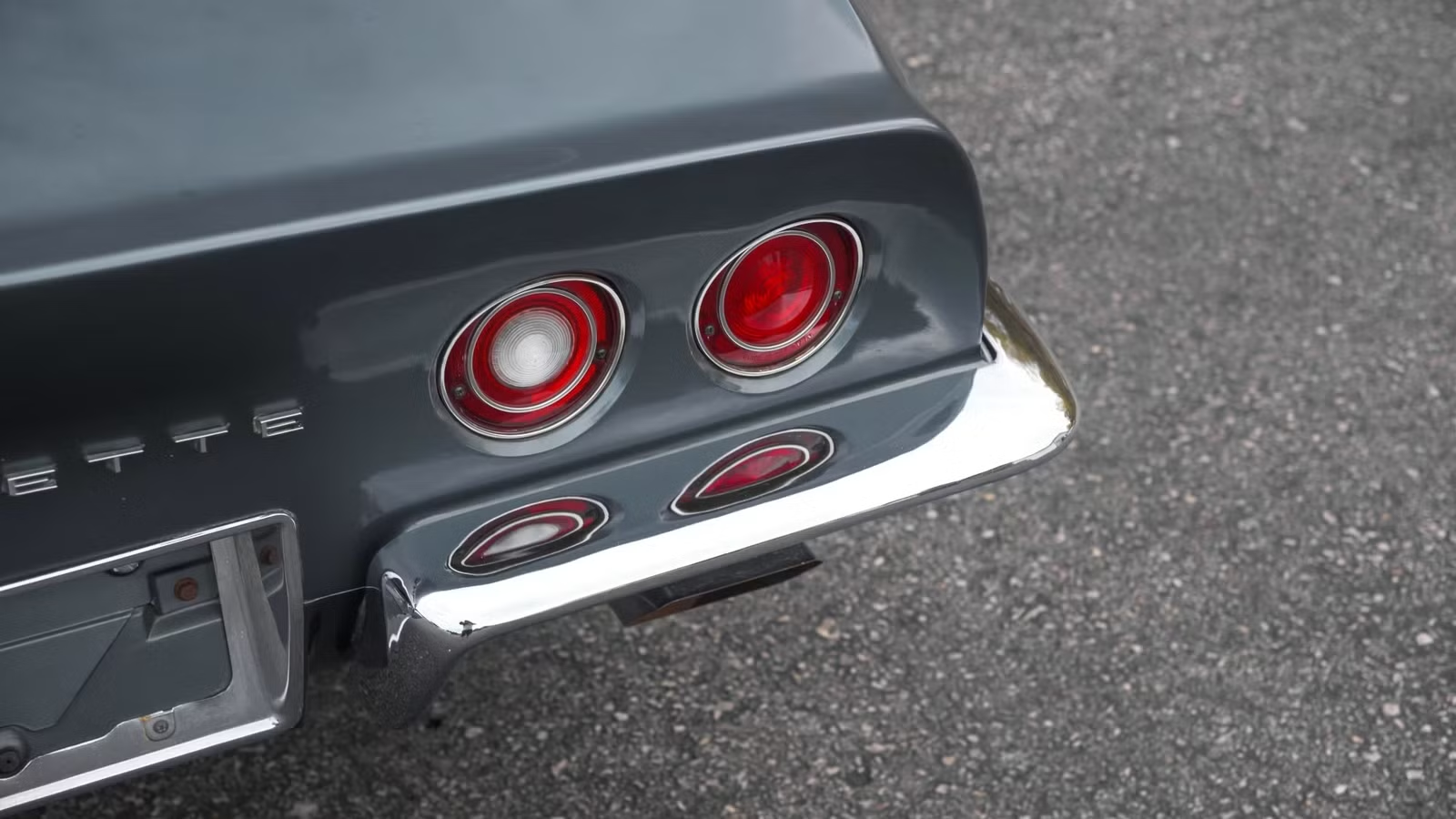
One of the rarest and most potent Chevrolet Corvette engines to ever exist, technically never got to race. The engine was so insane that it was deemed too dangerous for public streets, and the project was scrapped before entering production. But some Chevy engineers refused to let this incredible powerhouse simply die. So they found a loophole to exploit, allowing drivers to get a version of the engine with even more power for a short period of time. It’s not considered to be a unicorn find.
Chevrolet Wanted The Corvette To Dominate Rivals

By the late 1960s and early 1970s, the Chevy Corvette was facing steep competition on racetracks. In 1969, the L88 427 big-block V8 existed with its factory-rated 430 hp and 460 lb-ft of torque. It helped the Corvette accelerate from 0 to 60 mph in about 4.2 seconds and finish a quarter mile in around 11.8 seconds with a top speed of 170 mph.
Meanwhile, Mopar was racing with the 426 cubic-inch Elephant HEMI V8, which has a factory rated 425 hp and 490 lb-ft of torque. This engine allows Dodge and Plymouth cars to accelerate from 0 to 60 mph in roughly 4.9 seconds and complete a quarter mile in around 13.9 seconds with a top speed of about 156 mph.
Ford was also a serious contender with its stout Cobra Jet engine. The 428 cubic-inch (7.0-liter) V8 option delivers a factory-rated 335 hp and 445 lb-ft of torque. With this engine, Mustangs accelerate from 0 to 60 mph in about 5.6 seconds with a 13.9-second quarter-mile range and top speed of 128 mph.


The Corvette already had an edge on rivals, but to give the L88 427 more power, the engine’s 3.76-inch stroke crankshaft was increased to 4.25-inches to achieve a larger displacement. Also, it gained high-flow aluminum rectangular port heads. But it maintained its Chevrolet Mark IV big-block architecture with a 4.25-inch bore, single 850-cfm Holly four-barrel carburetor, and L88-style foundation.
But The LS7 454 Died Before It Ever Got To Race

The Chevy Corvette seemed ready to race with the LS7 454 engine, and a prototype was built in 1970. This 454 cubic-inch 7.4-liter big-block V8 has an advertised factory-rated 460 hp and 500 lb-ft of torque with an 11.25:1 compression ratio. It appeared in pamphlets, catalogs, and on dealer order sheets with open-chamber aluminum heads, and that got plenty of drivers excited. One Corvette prototype was built to test the configuration. It flew from 0 to 60 mph in about 5.3 seconds with a 13.8-second quarter mile time. This was a massive achievement as the prototype was carrying two people, tons of luggage, and a full tank of gas. It would have been even faster with a stripped-down track trim. But sadly, this ultra-rare Corvette prototype was crushed!
The engine never made it to production as General Motors canceled the project due to John Z. DeLorean’s de-proliferation program. It was designed to flush out expensive, low-volume specialty power trains. Plus, muscle cars were facing increasing emission standards that were difficult to meet, increasing gas prices, and skyrocketing insurance premiums.
Chevy Engineers Gave The LS7 454 Even More Power

Members of the Chevrolet parts division, engineers, dealerships, and potential buyers were crushed by this decision. The engine was already gaining traction after appearing in catalogs and being put to the test. So, engineers refused to let the engine die and exploited a loophole to put it in the hands of buyers with extra juice. Through the Central Office Production Order (COPO) administrative system, the LS7 454 could be purchased as an “off-road use only” or “racing use only” option. This process accidentally gave the over-the-counter V8 more power, but the enthusiasts and drag racers who immediately went for it probably didn’t mind. They were secretly getting a race car engine after all.
As an over-the-counter option (XCH), the forbidden LS7 V8 gained domed forged iron-cast pistons that boosted its compression ratio from 11.25:1 to 12.2:1. It also gained massive rectangular-port (closed chamber) high-flow headers and a heavy-duty mechanical flat-tapper solid lifter cam with high valve lift.

The 454 LC7 XCH is believed to have a power output between 460 and 500 hp and 600 lb-ft of torque. But some dyno tests show that it’s actually closer to 582 hp. It was never officially tested, but it did feature large off-road-only warnings and required specialized high-octane racing fuel as a serious powerhouse.
The Chevy Corvette 454 LS7 XCH V8 Drives Collectors Wild
Not very many people had the opportunity to get this engine over-the-counter. It was pulled by 1971 due to strict new Clean Air Act guidelines that made high-compression engines with solid lifters almost impossible to certify for legal street use. Plus, needing over 100-octane leaded fuel means that it’s pretty impractical for daily driving on public streets.
Chevrolet didn’t keep an official record of how many 454 LS7 Corvette engines were built. On that note, only about 216 factory 427 L88 engines were ever made. Plus, they probably survive in low numbers as they were put in race cars and heavily pushed to the limit. They are highly collectible and seen as unicorn finds as historical pieces of automotive rebellion during the golden age of muscle car performance.

Rebuilt engines that are ready to run range in price from $10,000 to over $15,000 depending on official documentation. Used engines with an XCH stamp and matching internal parts that still require a complete machine refresh fetch between $4,000 to $7,0000. New Old Stock and Unfired engines sell from about $8,000 to over $12,000.
Pristine examples that are still in the crate with the official XHC over-the-counter stamp typically hold the most value. Options that retain the original high compression forged positions, four-bolt main bearings, solid-lifter mechanical camshafts, and rectangular-port heads often carry more value as well.
Source: Top Speed, Hagerty, Hot Rod, Bring A Trailer

Related posts


Latest Post


No Comments