
Semi-solid vs solid state: Decoding the future of electric car batteries
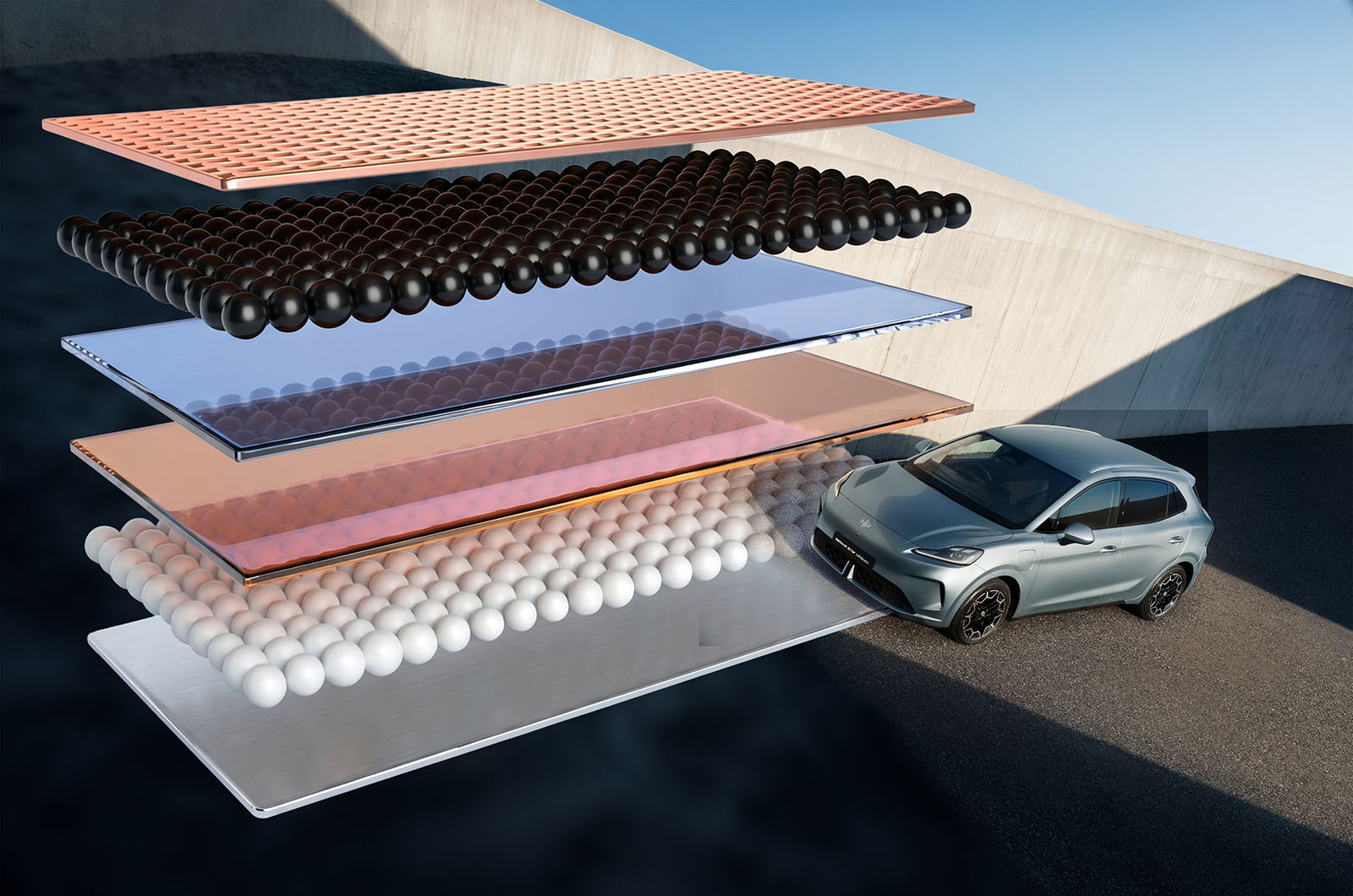
As battery technology improves, so the terminology gets more confusing, but soon it may pay to understand the differences when choosing an EV.
Renault and MG have announced forthcoming updates to their respective technologies, with both edging closer to solid-state lithium-ion from conventional liquid electrolyte technology.

MG says it will be the first brand to mass-produce a semi-solid-state battery, called SolidCore. It will be introduced in European MG EVs at the end of this year and is claimed to offer a longer range and faster charging with enhanced cold-weather and all-round performance. MG says the cells contain solid and liquid electrolytes, with around 5% liquid content. Other manufacturers developing semi-solid tech often use an electrolyte gel, which differs from MG’s approach.
Earlier this year, Renault’s EV and software arm, Ampere, announced a deal with Basquevolt to fast-track development of lithium metal-based lithium ion batteries. Basquevolt’s lithium metal battery tech will form the basis of the development for what will be a solid-state battery technology using ‘solid-state-type polymer’ electrolyte, rather than the conventional liquid electrolyte, to enable the use of lithium metal anodes.
Anodes (negative electrodes) of lithium ion batteries are usually graphite, often with some silicon content to improve energy density. Were they made from lithium metal (like early prototype lithium ion batteries), the battery’s energy density by weight would increase substantially. But lithium metal has so far presented insurmountable difficulties for use in large EV batteries.

Examples include the formation of dendrites, needle-like formations that branch out through an electrolyte until it reaches the cathode (positive electrode), shorting out the cell. Another challenge is that a lithium metal-based cell’s volume increases and decreases during cycling, which poses a challenge within the tightly packaged confines of a battery pack. Research into the design and materials is ongoing, with several different approaches being taken.
Ampere and Basquevolt have been collaborating for the past year and Basquevolt is said to be demonstrating already that its tech can achieve high energy density while reducing battery pack manufacturing costs.
The safe adoption of lithium metal anodes would result in step changes in both battery capacity and charging speeds, taking manufacturers closer to achieving parity with (if not matching) the time taken to refuel an ICE car.
Semi-solid-state batteries are a more mature technology and MG started mass production of the SolidCore battery last year. But many of the big names are developing all-solid-state as well, with Nissan promising to launch an EV powered by one in 2028, while others, including MG, snap at its heels.

Related posts






Latest Post


No Comments