
The Mustang Paul Newman Drove To Victory At Daytona Proves He Was The Real Deal Behind The Wheel
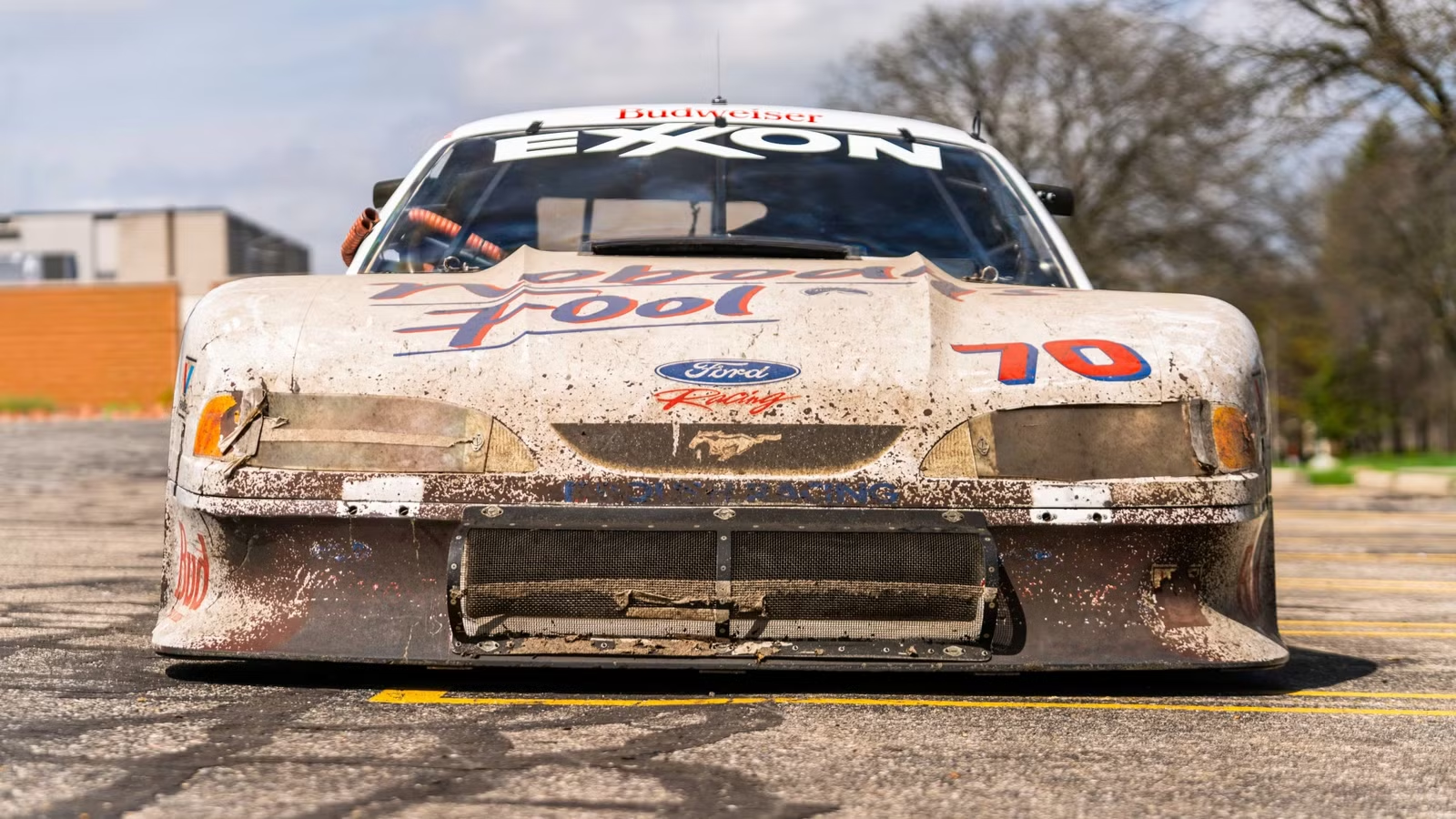
Paul Newman’s racing career was never a vanity project. The actor who won an Oscar and sold salad dressing also put in serious laps at Daytona, Le Mans, and across the IMSA circuit — and a dirt-caked, battle-scarred Ford Mustang heading to auction this week is the physical proof. Roush is letting go of the 750-horsepower Cobra that Newman co-drove to a GTS-1 class win at Daytona, and it spent the last 30 years sitting in a museum still wearing its race livery and every scratch it earned.

The car matters because Newman mattered — not as a celebrity who bought a seat, but as a co-driver who showed up, put in the laps, and came home with hardware. The auction is the news peg, but the real story is what this Mustang says about a motorsport résumé that Hollywood fame has long overshadowed.
 92 autotech
The Obscure 1962 Prototype That Predicted The Mustang Two Years Early
This forgotten prototype came two years before the Mustang and had all its hallmarks — yet almost no one remembers it.
What This Mustang Actually Did On Track
The car is a Roush-built Ford Mustang Cobra running in the GTS-1 class under IMSA rules — the top rung of the GT production-based category at the time. Roush Engineering prepared it to full race spec, and the numbers back that up: 750 horsepower, purpose-built for endurance competition, not a show car that happened to wear a race number.
Paramount Pictures came on as a sponsor, tying the car to a Newman film promotion, but the racing was real. Newman and his co-driver took GTS-1 class honors at the Daytona 24 Hours — one of the most demanding endurance events on the calendar. The car also ran at Le Mans, where class competition at the 24 Hours is no less brutal regardless of what the overall leaderboard says. That it spent three decades in a museum without being restored or cleaned up isn’t neglect — it’s provenance. The race dirt and contact marks are the documentation.
Newman’s IMSA Credentials Stand On Their Own

Newman started racing seriously in his late forties — late by any measure — but he didn’t treat it as a hobby. He competed regularly in IMSA throughout the late 1970s and into the 1980s, accumulating co-driver credits and class results that would be respectable for any privateer racer, celebrity or not. The Daytona class win is the headline result, but it sits inside a broader record of consistent IMSA competition that included endurance events where finishing — let alone winning your class — requires genuine racecraft and physical endurance.

The Le Mans entry is the credential that tends to get glossed over. Running the 24 Hours of Le Mans in any class is not a check-writing exercise. The circuit demands commitment from every driver in the car, and Newman was in the rotation. That he did it while being one of the most recognizable faces on the planet, and while the racing press still treated him as a curiosity rather than a competitor, says something about how seriously he took it.
Why This Car Belongs In Racing History, Not A Memorabilia Case

This Mustang has been off the market since its museum placement, which makes this auction the first real opportunity for the serious collector market to weigh in on what a Newman-raced, class-winning IMSA car from this era is actually worth. The temptation will be to price it as a celebrity artifact — Newman’s name moves units in any category. But gearheads who know what a GTS-1 Daytona class win means, and what a Roush-prepped 750-horsepower Mustang from this period represents as race iron, should be looking at this differently.
The unrestored condition is a feature, not a flaw. Race cars that have been cleaned up and repainted lose the chain of custody that makes them historically legible. This one still looks like it just came off the circuit. The battle scars are the story — and the story is that Paul Newman drove this thing hard enough to win, at Daytona, in a class that required him to actually race.
Newman was a legitimate IMSA competitor who happened to be famous. This Mustang is the evidence. Let’s hope it ends up with someone who understands the difference between a trophy piece and a race car — because this one is the latter.

Related posts



Latest Post



No Comments