
Renault mulls Clio reinvention, next-gen 5 alongside new models
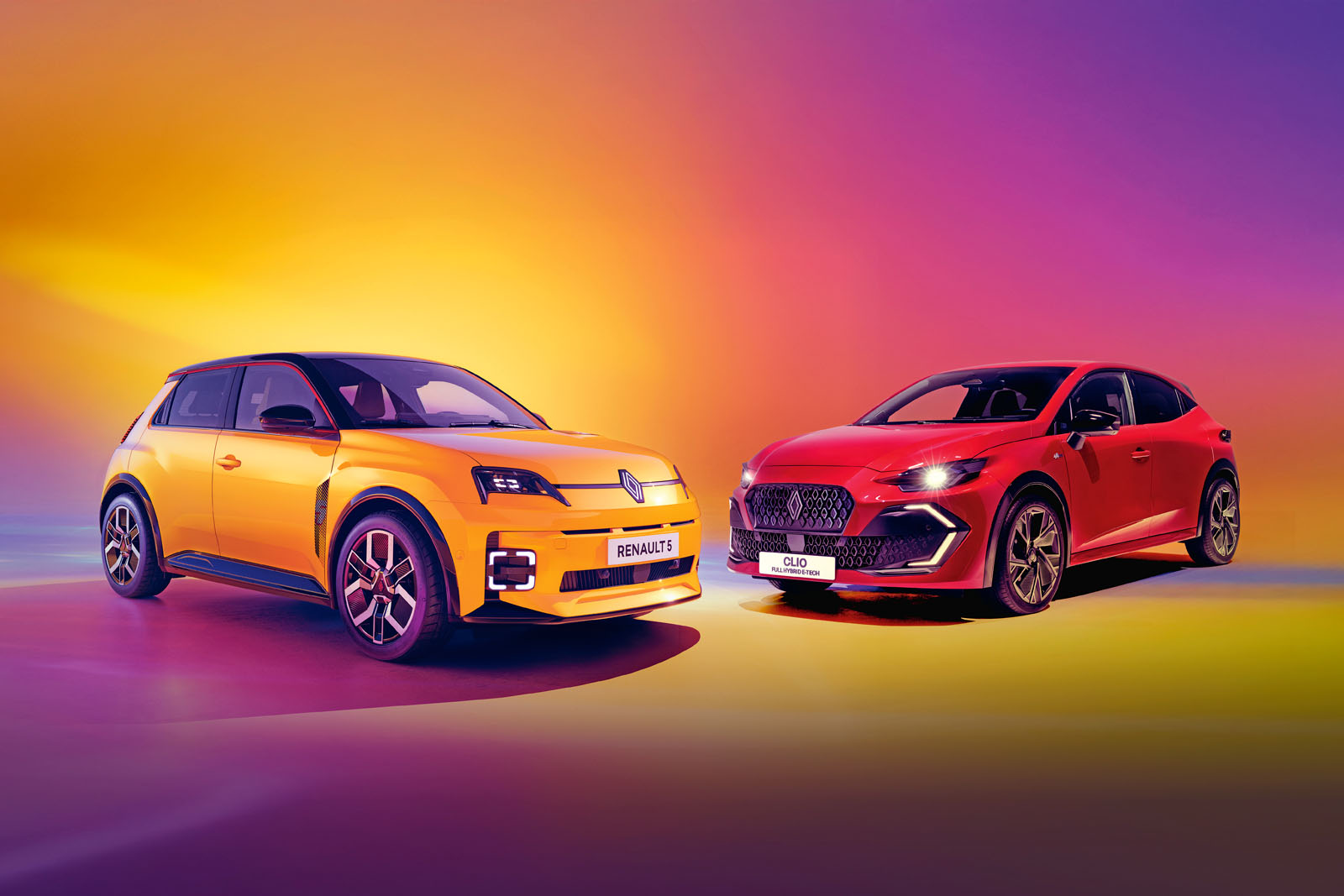
Renault is currently considering next-generation versions of both the ultra-successful 5 and Clio – but boss Fabrice Cambolive said the French manufacturer’s “first objective” is to add some “purely new models” to its existing line-up.
The brand has enjoyed considerable success in recent years by adding retro-themed EVs, such as the 4, 5 and Twingo, alongside a growing line-up of hybrid models, such as the Clio, and including a range of new SUVs that have adopted classic nameplates.

While he didn’t rule out more retro-inspired models, Cambolive insisted Renault won’t fill its line-up with them, instead saying any such model “has to fit into the modern era”. He added: “You can go retro if you have a purpose, but if you don’t have one, you will fail.”
Renault is aiming for a balanced line-up, Cambolive said: “You should be on one-third iconic cars, like R5, R4 and Twingo; one-third saga cars that are not icons but in the mind of people, like Clio and Scenic; after that you have to let your designers propose something purely new. You are dead if you just live in the past.
“Our first objective now is to bring into the market some purely new models, because we don’t have to count on the past with R5 and Clio.”

Cambolive gave no firm details about what those new models might be, although he said he doesn’t see room for additional cars in the current line-up. But he noted a trend towards offering global cars that are then heavily localised for each region.
Reinventing the Renault Clio
While the new Clio has only just been launched and has still yet to reach the UK in right-hand drive, Cambolive said that, ahead of the next-generation 5, Renault is prioritising “seeing what will come after today’s Clio”.
Given the likely product cycle, the next-generation Clio is unlikely to arrive until the mid-2030s.
Cambolive added: “We feel that in Europe, we have a kind of uncovered sub-segment, which is the B-hatch-segment ‘low drive’ [non-SUV], where we need to invent the successor of Clio, and this is what we are working on now.
“We are trying to understand the potential of the B-hatch, and at which size: a B-hatch now should be 4.1-4.2 metres. How do you cover this, when you need to have not an SUV but a hatch? And which type of car should you go for: sportivity, practicality, versatility and so on? This is what we are trying to anticipate with Clio for the next generation.”
Pressed for details, he said the next-gen Clio “shouldn’t be retro”, explaining: “Clio is a kind of saga car, and we have to think about the new Clio in this way, not to try to put the new Clio in the totally electrified world. It’s a little too soon to answer you. I don’t know if we will have a combustion engine at this stage.”
Notably, the next-generation platform that Renault is developing can accommodate both pure-electric and range-extender powertrains.
Cambolive said: “What we’re saying is that in 2030 we want to be 100% electrified, out of which 50% is BEV, and now the trend is going even higher towards BEV than what we said. It means it’s a little too soon to answer to you but, frankly speaking, we will be in a pure-electrified world [when the next Clio arrives].”

Related posts






Latest Post


No Comments