
5 EVs With The Fastest Charging Speeds
We won’t lie, there are many hurdles when you consider switching from gas-powered cars to battery electric vehicles. Range anxiety, lack of mechanical character, or tech obsolescence are some of the things that hold buyers back. One such quality is charging speeds. While EVs have come a long way in recent years, with charging speeds only getting better, many buyers still aren’t satisfied with the claimed numbers. After all, long charging hours add more downtime for the car, and on a road trip, it looks like a waste of time.

Fortunately, there are some EVs out there that are pushing the boundaries of charging speeds. Thanks to new 800-volt battery architecture and ultra-fast DC chargers, some EVs out there can charge from 10 to 80 percent in as little as 20 to 25 minutes. That’s already good enough, but if you want more, there are five EVs that can charge from 10 to 80 percent in under 20 minutes. Heck, the fastest charging one juices up that range in just 11 minutes. So, here are five such EVs that offer the fastest charging speeds out there.
5
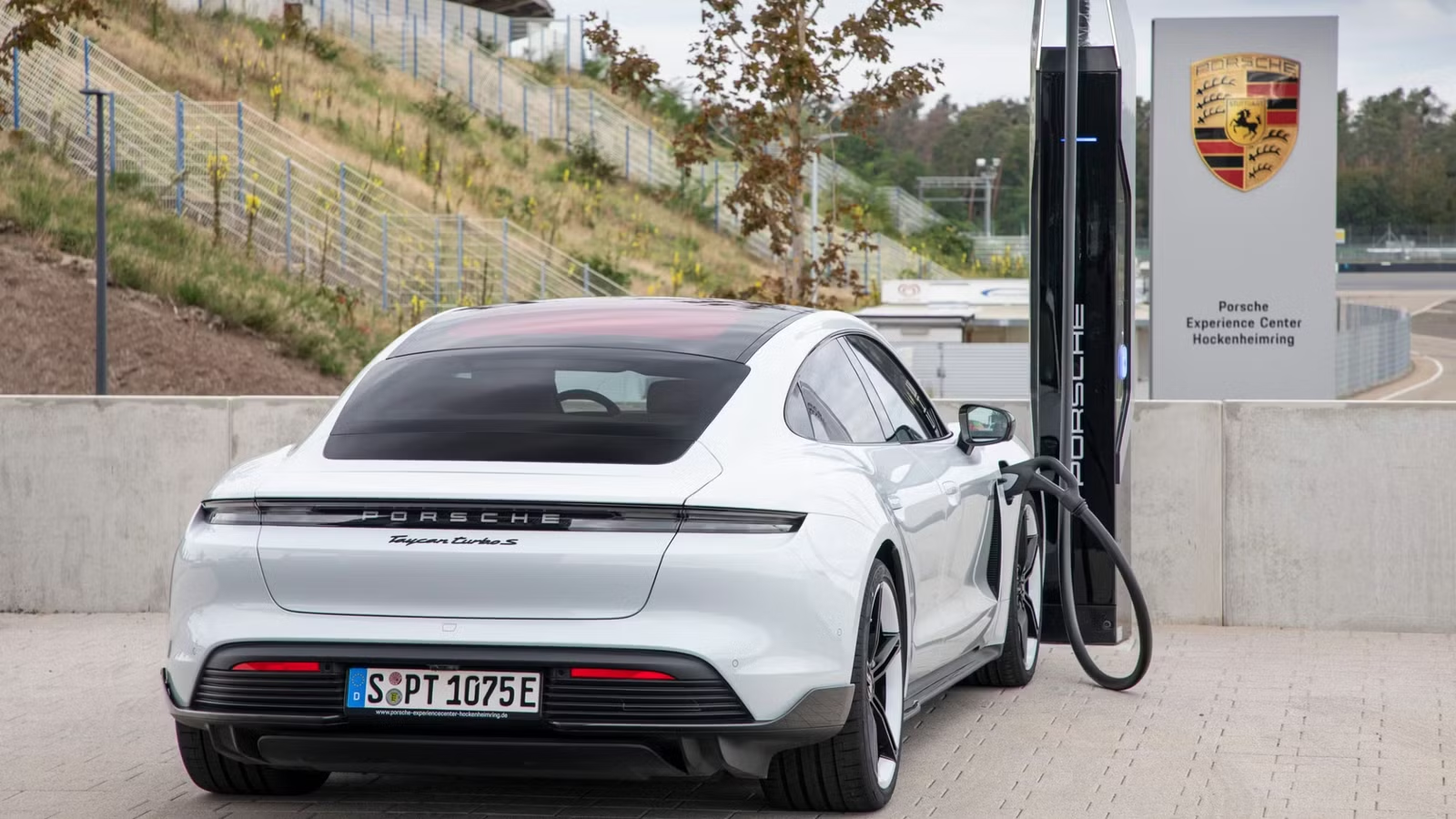
2026 Porsche Taycan
10- to 80-Percent: 18 Minutes
The Taycan shows that Porsche knows how to build an electric sedan without compromising the behind-the-wheel magic that the brand is known for. To address the elephant in the room, Porsche claims the Taycan can go from 10 to 80 percent in as little as 18 minutes. This 800-volt battery architecture is paired with either a single motor or a dual motor setup. The base Taycan RWD produces “only” 402 horsepower, but stepping up to higher variants unlocks more performance. At the top, the Taycan Turbo GT all-wheel drive is capable of producing 1,019 horsepower when using launch control, resulting in a blistering 0 to 60 miles per hour time of 1.9 seconds.
Ride Quality And Interiors


This performance is backed by an air-spring suspension standard, along with available adaptive dampers and rear-axle steering. The Taycan’s low-slung seating position and talkative steering should only make the drive even more interesting. And on the inside, the Taycan doesn’t fall short on luxury. The cabin is simple with a range of rich materials and color schemes on offer. There’s no shortage of screens, either, along with an optional Bose and Burmester sound system with Dolby Atmos surround sound. The only drawback you’d find with the Taycan, then, remains its limited cargo space, which can be fixed by switching over to the Taycan Cross Turismo station wagon.
4
2025 Hyundai Ioniq 6
10- to 80-Percent: 18 Minutes

Tying in with the Taycan is the only car that can be considered a mass-market model on this list: the Hyundai Ioniq 6. Sharing its platform with the Ioniq 5 SUV, the Ioniq 6 is one of the few affordable EVs that can access public 800-volt DC ultra-fast chargers, letting it charge from 10 to 80 percent in 18 minutes. The only reason it sits over the Taycan in ranking is that it offers more range, too, thanks to its long-range battery. The Ioniq 6 makes 149 horsepower with a single-motor rear-wheel drive setup, which is bumped up to 225 horsepower with the said long-range battery. The all-wheel drive version offers 320 horsepower, with a 0 to 60 miles per hour time of 4.3 seconds. Not bad for an everyday EV hatchback.
Ride Quality And Interiors

The Ioniq 6 is also praised for its smooth ride and engaging handling, thanks to its low center of gravity that gives it a planted feel. Even the cabin is designed for lounge-like comfort, with plenty of sound-deadening materials and modern, minimalistic aesthetics. The cabin is flush with plenty of tech, including two 12.3-inch displays for the digital gauge cluster and infotainment screen. What makes the Ioniq 6 even more special is its price point. Starting at under $40k, the Ioniq 6 hits the sweet spot of range, performance, charging speeds, and features. Put simply, the Ioniq 6 is the most accessible way to experience superfast charging speeds.
3
2026 Porsche Cayenne Electric
10- to 80-Percent: 16 Minutes

The second Porsche entry on the list is the mid-size Cayenne Electric, but don’t mistake it for just a Cayenne with a battery. Unlike its gas-powered sibling, the Cayenne Electric has a lower roofline, which gives it an aggressive stance. The SUV is powered by a large 108-kilowatt-hour battery with a peak charge rate of 400 kilowatts; it’s also the first Porsche EV to feature a standard NACS charging port, which allows it to charge on DC fast chargers. There, the Cayenne Electric can charge from 10 to 80 percent in just 16 minutes.
Adding to that, the Cayenne Electric is also the first EV with inductive charging, made possible with an inductive vehicle and floor pad of the Porsche Wireless Charging System. This battery architecture is paired with dual motors and all-wheel drive on the base model, producing 435 horsepower, which is bumped up to 657 horsepower on the S trim. The Turbo, however, remains the real stunner, offering a whopping 1,139 horsepower, which gives it a 0 to 60 miles per hour time of under 2.5 seconds.
Ride Quality And Interiors

The SUV rides on adaptive air suspension, and Porsche allows you to option it with available Active Ride Suspension and rear-axle steering. The Cayenne Turbo electric also features active aero to improve range and performance. On the inside, the Cayenne electric is more tech-focused than the gas-powered Cayenne, with a new infotainment screen taking up more real estate on the dash; it’s a 12.3-inch curved OLED screen. The SUV’s wheelbase is extended by 5 inches, too, which adds more legroom in the rear seats with 20 cubic feet of storage at the back. With available features like a 14.9-inch passenger display and surface heating, along with the vast range of personalization Porsche offers, the Cayenne Electric is among the most sophisticated electric SUVs you can buy today.
2
2025 Lotus Emeya
10- to 80-Percent: 14 Minutes

Lotus, a manufacturer known for lightweight sports cars, has stepped into the EV sedan game with the four-door Emeya, which is very similar to the Eletre SUV but offers a lot more performance. The grand tourer is fitted with a big 102-kilowatt battery pack that uses an 800-volt battery tech with Advanced Lotus Hyper Charging, enabling the car to charge from 10 to 80 percent in just 14 minutes. At 350 kilowatt charging, it can gain up to 93 miles in just five minutes. The battery is paired to powerful front and rear electric motors, which produce 603 horsepower in the standard model and 905 horsepower in the top-spec Emeya R model. The latter can go from 0 to 60 miles per hour in 2.78 seconds and reach a top speed of 159 miles per hour.
Ride Quality And Interiors

Given that it’s a Lotus, you can bet the Emeya handles beautifully, too. Lotus claims a perfect 50:50 weight distribution, along with a class-leading power-to-weight ratio, which should keep this EV GT fun to drive. Adding to that is the active rear spoiler that can generate more than 450 pounds of downforce, along with an active rear diffuser, grille, and air dam. Meanwhile, the interior looks highly modern and is trimmed in premium materials like Alcantara, Nappa leather, and aluminum. There’s also a large 15-inch OLED infotainment screen, four bucket seats with an optional rear bench, and somewhat spacious cargo that should make the Emeya easy to live with off the track, too.
1
2027 Mercedes-AMG GT 4-Door EV
10- to 80-Percent: 11 Minutes

The Mercedes-AMG GT 4-Door ditches gas completely in favor of a full-electric powertrain for 2027, with the only thing carrying over to the new-generation model being the name and its four-door blueprint. Mercedes claims this car uses Formula 1-based 800-volt battery technology, featuring a 106-kilowatt lithium battery based on NCMA chemistry.
As a result, the manufacturer claims a 600-kilowatt charging rate that can take the battery from 10 to 80 percent in just 11 minutes when connected to an appropriately fast DC charger. This makes the GT 4-Door EV the fastest-charging EV on offer, though you’ll have to wait until the end of 2026 to get your hands on one. The battery works together with two motors, one on each axle, to deliver up to 802 horsepower on the GT55 and 1,153 horsepower on the GT63 version. This performance is only available for short bursts, but it can shoot the GT63 model from 0 to 60 miles per hour in just 2 seconds.
Ride Quality And Interiors

As good as the GT 4-Door EV sounds when you talk about its performance and charging speeds, it’s certainly not a looker. Many would consider the car to have awkward or goofy styling, but look past it, and you have a genuinely capable luxury grand tourer. For instance, the new bodywork construction uses a blend of aluminum, steel, and fiber-reinforced composite that’s said to offer high rigidity and low weight. The low seating position and low-slung flyline, along with AMG Performance seats, should make the car fun to drive.
On the inside, you get a properly premium interior with plenty of AMG detailing all around, including a flat-bottom AMG Performance steering wheel, two displays, and Sky Control panoramic roof. And if you miss an ICE’s howl, you can activate the AMGFORCE S+ model for simulated V8 sounds, though that’s unlikely to impress enthusiasts. But with the GT 4-Door EV, that would be missing the point. This car pushes the boundaries of charging speeds and performance, enough to make us look past its weird styling.
Source: Manufacturers

Related posts




Latest Post



No Comments