
Ford’s Fastback Truck Patent Reveals A Shape-Shifting Pickup Bed Ram Never Thought Of
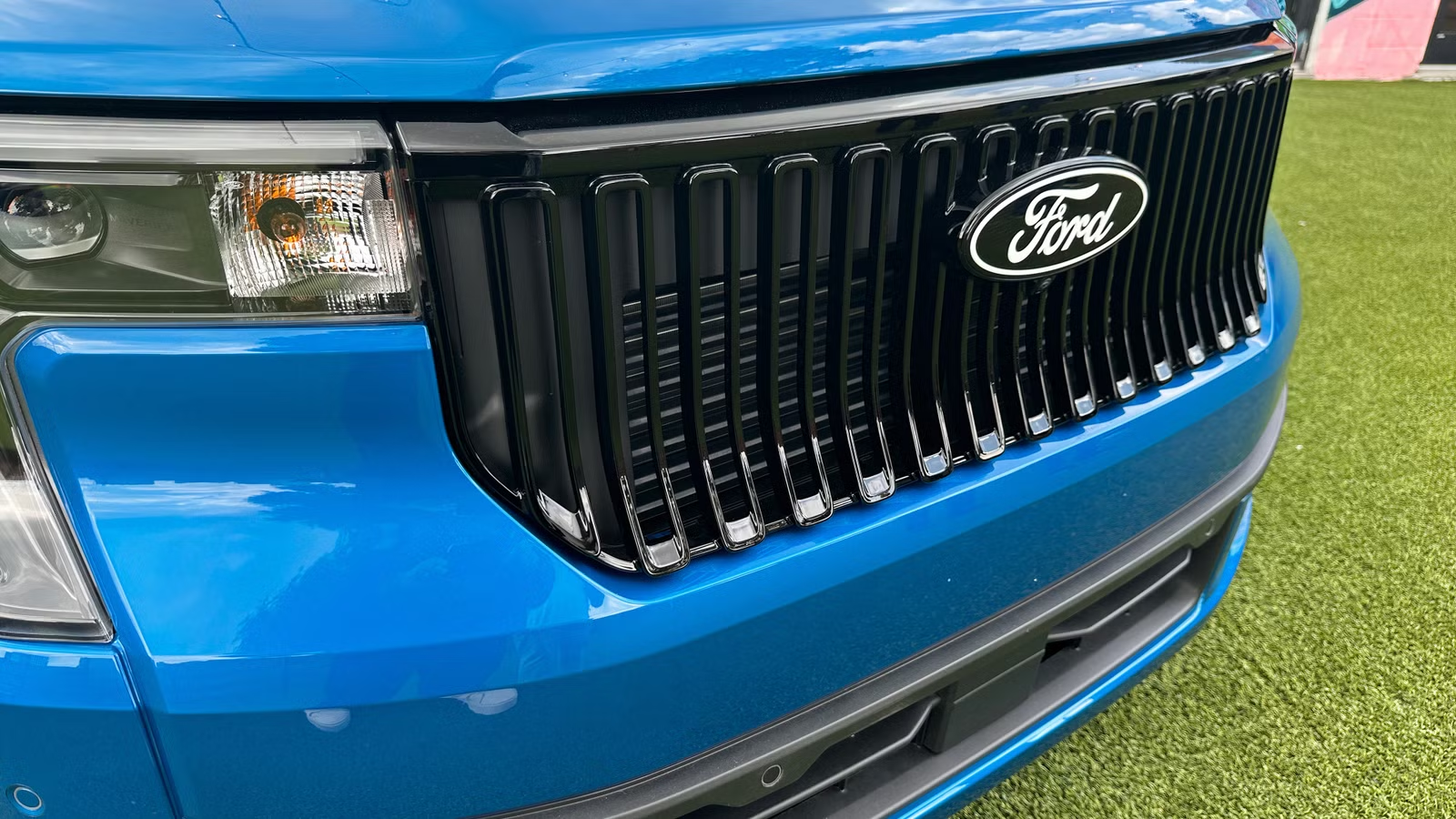
Ford has filed a patent for a motorized fastback tonneau cover that can transform a standard pickup bed into a sealed, wedge-shaped enclosure at the push of a button. Discovered and published by Carbuzz on September 18, the filing describes a genuinely complex mechanism — power actuators, folding side panels, and a composite rear window — that goes meaningfully further than anything Ram has patented in the same space.

The timing matters. Ram’s own fastback-cover patents surfaced just a few months ago, in June, and the sport-truck segment is getting more competitive by the quarter. Ford’s answer, at least on paper, is a more sophisticated piece of engineering — one that raises real questions about where tonneau-cover technology is headed and whether aerodynamic bed covers are about to become the next major battleground in the truck wars.
How Ford’s Motorized Fastback System Actually Works
The core idea starts simple: a flat cover that can raise up into a fastback profile on demand. But the execution is anything but.

A main panel is hinged at the rear of the bed. When actuated, it lifts at the front — where the bed meets the cab — and angles upward until the leading edge meets the roofline, while the trailing edge aligns with the top of the tailgate. The result is a continuous wedge shape running from cab to tailgate, smoothing the airflow that would otherwise tumble off the back of a conventional truck.
The gaps along the sides of the bed are handled by folding panels that unfold automatically as the main section rises, sealing the edges of the enclosure. Without them, the aerodynamic benefit would be largely undone by turbulence spilling in from the sides. Power actuators and gas struts — the same basic technology that lifts the tailgate on a power-liftgate SUV — handle the raising and lowering, which is necessary given how heavy a cover of this size and construction would be.
The rear window is where Ford’s patent separates itself most clearly from Ram’s competing filings. A composite panel glazed into the back of the cover lets the driver maintain a rearward sightline even with the fastback fully deployed — a practical detail that Ram’s published patents don’t address in the same way.
How It Stacks Up Against Ram’s Earlier Fastback Patents

Ram’s fastback-cover patents, found by Carbuzz in June, describe two distinct approaches. One is a simpler single hard panel that moves to create a wedge profile. The other is more ambitious: a cover that can form an aero wedge like Ford’s, but can also raise at both ends to become a full bed topper — essentially a pop-up camper shell on demand.
Ford’s patent doesn’t go that far in terms of reconfigurability, but it adds the composite rear window and the folding side panels, which Ram’s designs don’t appear to include. Whether that makes Ford’s approach better in practice depends on what truck buyers actually want — unobstructed bed access, a cleaner aerodynamic profile, or the flexibility to switch between multiple configurations. Both companies are clearly investing serious engineering effort into the problem, which suggests the fuel-economy payoff is real enough to justify the cost and complexity.
What This Means for Fuel Economy and Truck Buyers

Pickup trucks have never been known for aerodynamic efficiency, and the open bed is a significant part of why. At highway speeds, a conventional bed acts roughly like a parachute — air tumbles in over the cab, fills the box, and creates drag. Hard tonneau covers help, but a flat cover still leaves a blunt trailing edge at the tailgate.
A fastback profile eliminates that cliff. By gradually tapering the airflow from the cab roof down to the tailgate, it reduces the low-pressure wake behind the truck and, in theory, meaningfully cuts highway fuel consumption. The patent doesn’t quantify the gain, and Ford hasn’t made any official statements about production intent. But as Carbuzz notes, the fact that multiple automakers are filing patents for covers this elaborate and expensive to manufacture suggests the efficiency numbers are significant enough to matter — both to buyers and to the fuel-economy regulations that still apply to automakers.
For truck buyers, the practical appeal is real even beyond fuel savings. A motorized cover that seals the bed completely offers security and weather protection that a roll-up fabric cover can’t match, while the power-actuated opening means you’re not wrestling with a heavy panel to get at your cargo.
A Patent Is Not a Production Promise

Ford has not confirmed any plans to bring this cover to market. Patent filings are frequently used to protect intellectual property rather than signal near-term production intent, and many automotive patents never make it past the drawing stage. The mechanism described here is complex enough that cost, weight, and durability in real-world conditions would all need to be solved before it could appear on a production F-150 or Ranger.
Still, the convergence of patents from both Ford and Ram in a short window points to something real happening in the segment. Aerodynamic bed covers may not be the flashiest truck feature — they won’t show up in a towing-capacity comparison or a horsepower headline — but if they can deliver measurable fuel savings at highway speeds, they’re the kind of practical upgrade that resonates with buyers who use their trucks every day. Whether fastback covers become the next frontier after torque and towing is still an open question. Right now, though, it looks like Ford and Ram are both betting they will.

Related posts


Latest Post


No Comments