
Yamaha’s $7,999 Twin Makes Triumph’s Trident Look Overpriced
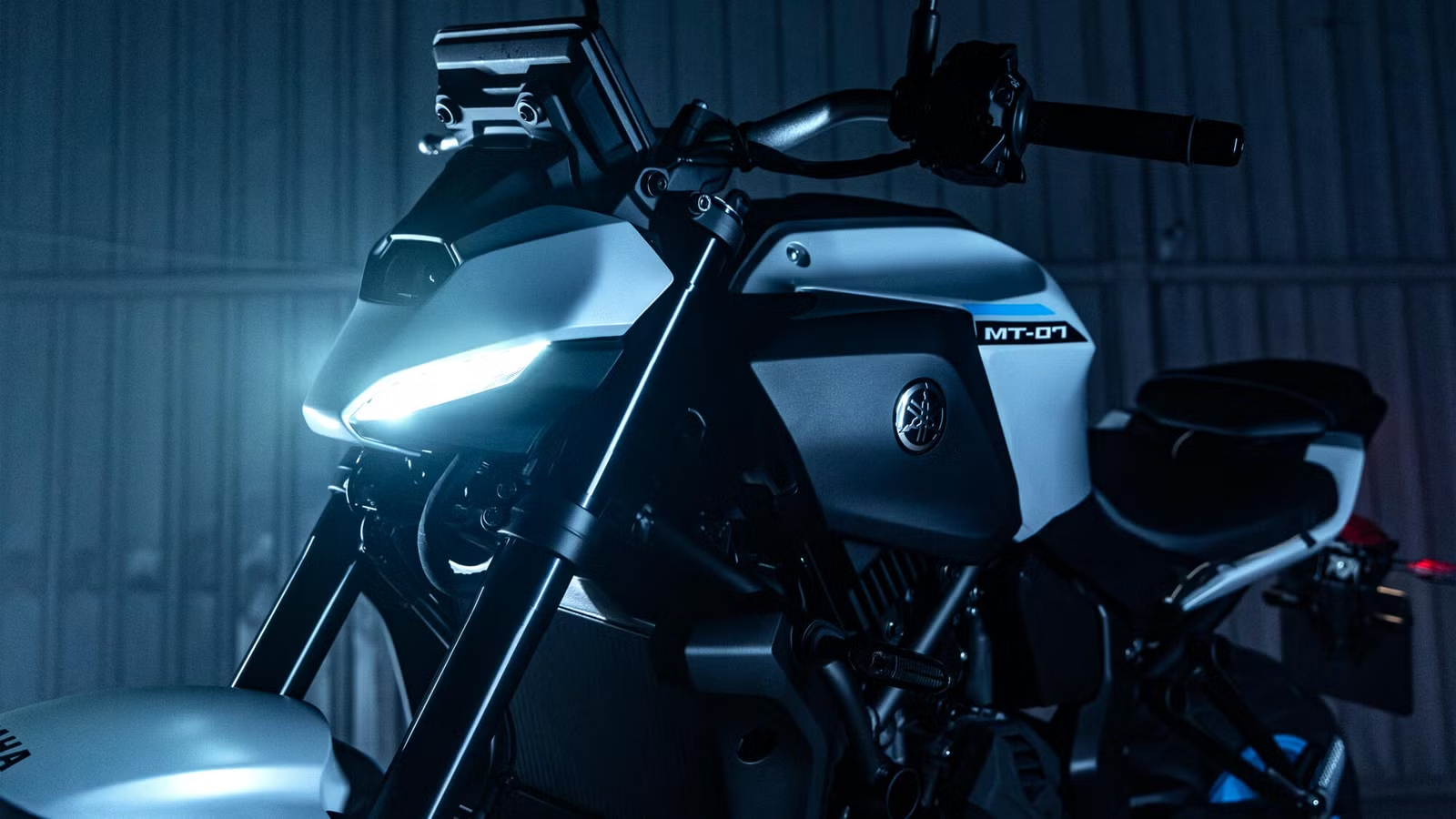
There’s been a bit of a price war going on in the US motorcycle midweight market. Honda kicked things off by slashing MSRPs of its 500cc and 650cc range, then Suzuki followed by pulling off a similar move for its GSX-8S and GSX-8R. Now, Yamaha has decided to join the party and disrupt the market further. The price revisions have made its midweight range ever so delectable, making new rivals seem overpriced in comparison. That’s particularly true for one of the brand’s highest-selling bikes in recent years: the MT-07.
The MT-07 Drops Under $8,000 For Model Year 2027

The MT-07 has always enjoyed popularity worldwide. Its sales figures back that up, as Yamaha claims to have sold close to 200,000 units since its debut. Such a popular product rarely needs price cuts or aggressive discounts to make its case. It simply sells, be it due to word of mouth or global recognition. In recent times, however, the number of rivals for the MT-07 has risen considerably.
Honda unveiled the CB750, Suzuki brought the GSX-8S, and Triumph dropped the Trident 660. At the same time, the MT-07’s MSRP kept rising slowly, which made it one of the pricier bikes in this space. That’s why Yamaha has now decided to make amends. The MT-07’s MSRP has now dropped from $8,699 (MY2026) to $7,999 (MY2027). This figure is the lowest we’ve seen for the MT-07 since 2022, when the bike used to sell for $7,899.
Rivals Like The Trident 660 Look Overpriced Now

With that new price, the MT-07’s market position is more solid than ever. Rivals like the Triumph Trident 600 look particularly overpriced, given the sizable near-$800 price difference. Similarly, the MT undercuts the GSX-8S by a similar margin (despite the Suzuki getting its own price cut), and the KTM 790 Duke is a whole $1,000 up. The Honda CB750 Hornet is priced exactly the same as the MT-07, while the Z650 is $100 cheaper, meanwhile.

A Deep Dive Into The 2027 Yamaha MT-07

For the reduced price, Yamaha hasn’t cut any corners. You get the same package as last year, which boosts the overall value proposition. The brand updated the bike not so long ago, so this isn’t a dated product, either. Here’s a lowdown on what you get as standard here.
The Popular CP2 Brings The Punch

At the MT-07’s heart is Yamaha’s world-renowned CP2 engine. It displaces 689cc from a fully liquid-cooled parallel-twin setup. That, along with a relaxed compression ratio, helps produce 72 horsepower and 47.5 pound-feet. All that reaches the wheel via a six-speed transmission. The party trick, though, is the 270-degree crankshaft. This ensures the power is well-spread in the rev range, mimicking a V-twin’s power delivery. Accordingly, the peak power and torque kick in at 8,750 and 6,500 RPM, respectively. Yamaha also claims you can eke out 57 miles per gallon with an easy right hand.
A Steel Chassis With KYB Forks Promise Stability

Paired with the engine is a dependable underpinnings setup. A steel tubular frame is the centerpiece here. This frame has undergone a minor update, now offering between 12 and 13 percent increased torsional, longitudinal, and lateral rigidity. Also, the swingarm pivot assembly differs significantly from the old model, with a new shape, thickness, and bracing. It still weighs the same as the previous-gen model, though.
Moving on, the chassis is suspended on KYB suspension, which includes 41 mm USD forks and a preload-adjustable shock. Yes, adjustability up top remains missing. Elsewhere, you get 17-inch SpinForged wheels with simple road rubber. Here, the front wheel has dual 298 mm disc brakes while the rear has a single 245 mm rotor. Unbranded calipers clamp these discs.

All these bits help keep the weight low. Yamaha claims 403 pounds fully fueled, which is impressive for the segment. The wheelbase matches the compact theme, measuring just 54.9 inches. Other dimensions include:
- Tank capacity: 3.7 gallons
- Ground clearance: 5.9 inches
- Rake: 24.3 degrees
- Length: 81.3 inches
The Feature List Keeps Things Simple

This is where the MT-07 might seem slightly behind its rivals. Despite the updates, the MT-07’s feature list is simple rather than savvy. A five-inch TFT is front and center, armed with four selectable themes, connectivity via the Y-Connect app, and turn-by-turn navigation via the Garmin app. This is also your gateway to the rider aids, namely traction control, three throttle maps, and three ride modes. Quickshifter remains an optional extra for $200–a bummer considering most of its rivals offer that as a standard inclusion.
We’d also like to highlight that there’s a new color for 2027. It’s called ‘Redline’, comprising a dual-tone finish with a red tank and headlight fairing, paired with a white front fender and tail. It’s a very non-Yamaha livery, but we’re all for the choices. If you don’t like what you see, the Ice Storm and Charcoal Black have been carried forward, too.
Source: Yamaha Motorsports

Related posts


Latest Post


No Comments