
Google Gemini Is Coming To Nine Honda And Three Acura Models—Here’s The Full List
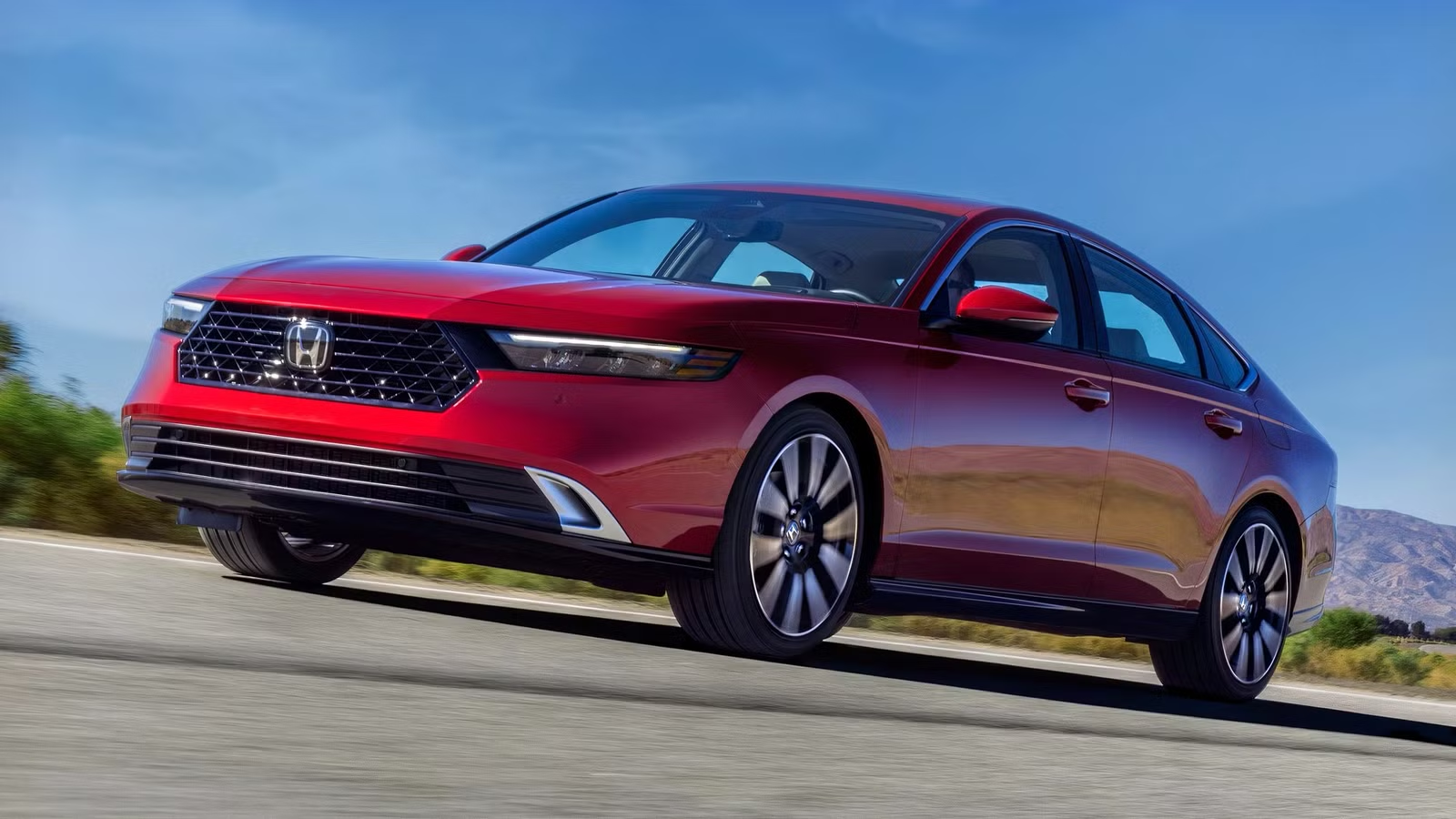
Honda is bringing Google Gemini-powered conversational AI to a select group of its vehicles, and the rollout is more targeted than you might expect. Confirmed this week, nine Honda models and three Acura models will receive updated software featuring the AI assistant—but a number of popular nameplates are notably absent from the list.

The distinction matters for buyers right now. If you’re shopping a 2026 CR-V or considering an Acura MDX, this update changes the ownership experience in a meaningful way. If you’re eyeing a Civic or Accord, you’re not on the list—and that gap tells you something about how Honda is prioritizing its software rollout.
What Conversational AI Actually Does Inside A Car
Traditional in-car voice controls work on fixed commands. You say a specific phrase—”Navigate to the nearest gas station”—and the system either recognizes it or it doesn’t. Miss the exact phrasing, and you’re tapping the screen anyway.

Conversational AI like Google Gemini works differently. It processes natural language, meaning you can speak to it the way you’d speak to a person. Ask it to find a coffee shop that’s on your route, not too far out of the way, and open right now—and it can parse all of that in a single request. It also holds context across a conversation, so follow-up questions don’t require you to start from scratch. For drivers, the practical upside is fewer eyes off the road and less frustration with voice systems that feel like they’re fighting you.
The Full List: Nine Hondas And Three Acuras

Car & Driver confirmed the complete roster of models receiving the Gemini integration. On the Honda side, the nine qualifying models are the 2026 CR-V, Pilot, Passport, Ridgeline, Odyssey, HR-V, Prologue, Civic e:HEV, and CR-V e:FCEV. Acura’s three models are the MDX, RDX, and ZDX.
Look at that list, and a pattern emerges quickly. Honda’s selections skew toward its higher-volume SUVs and crossovers, its only truck, and its minivan—the models that tend to attract buyers who spend more time in the car and are more likely to engage with connected features. The Prologue EV and the electrified Civic e:HEV and CR-V e:FCEV entries suggest Honda is also treating Gemini as part of a broader push to make its electrified lineup feel more premium. On the Acura side, all three entries are SUVs, which tracks with where Acura’s sales volume actually lives.
Who Gets Left Out—And What That Signals

The Civic sedan and hatchback—Honda’s best-selling nameplate in many markets—does not appear on the list, nor does the Accord. Both are high-volume cars with strong owner loyalty, so their absence is the most notable gap in the rollout.
The most straightforward read is cost and positioning. Gemini integration likely requires a certain hardware baseline, and Honda may be reserving it for models where buyers are already paying for more connected tech. The Civic Sport, for instance, starts around $28,000 and is praised for its value and driving character—not necessarily its infotainment ambitions. Equipping every trim of every model with Gemini would dilute the feature’s value as a differentiator for the CR-V and Pilot buyer who’s spending more and expecting more.
It also reflects a broader industry pattern: automakers are rolling out AI features selectively, using them to justify stepping up to higher trims or newer model years rather than pushing them across the entire lineup at once. Honda appears to be following that same logic.
What Owners And Shoppers Should Do Next

If your vehicle is on the confirmed list, Honda hasn’t announced a specific over-the-air update timeline publicly, so checking with your dealer or monitoring Honda’s connected services portal is the practical next step. The Carscoops report from July 15 noted the update is framed as a software rollout, which suggests it won’t require a dealership visit for compatible vehicles.
If your model isn’t on the list, it’s worth tempering expectations for a near-term expansion. Honda’s selective approach suggests this isn’t a blanket platform update—it’s a deliberate segmentation decision. That may change in future model years, but for now, Gemini is a feature tied to specific vehicles, not the Honda brand as a whole.

Related posts





Latest Post


No Comments