
7 Aerodynamic Classic Icons Named After Fighter Jets
Ford and other automakers have been naming muscle cars after animals for decades. However, it’s actually more common for classic high-performance vehicles to be named after airplanes instead. Even the current beastly truck known as the Ford Raptor draws inspiration from the Lockheed Martin F-22 Raptor fighter jet and birds of prey. But cars from the 1950s and 1960s started the aviation trend, so enough about trucks! Let’s dive in.
7
1962 Triumph Spitfire
HP: 63 Torque: 67 LB-FT

When I think of something that spits fire, I imagine a dragon. But the 1962 Triumph Spitfire doesn’t actually shoot flames. It’s a lightweight two-seater British roadster named after the famous World War II Supermarine fighter. The title emulates a fiery, passionate, quick-thinking attitude that’s full of determination and energy.
With a weight of only about 1500 lbs, the 1962 Spitfire is able to accelerate from 0 to 60 mph in roughly 15 seconds. It finished a quarter mile in about 19 seconds with a top speed of about 92 mph. The 1,147 cc inline-four engine with twin carburetors is paired with a four-speed manual transmission. For the time period, it delivers an engaging driving experience.
It was designed with exterior features to heavily lean into its aviation-inspired moniker. The Triumph Spitfire wears a gigantic one-piece cowl that hinges on the front of the chassis. When opened, the entire front end of the car swings up to expose the entire engine bay to mimic the way ground crews work on aircraft.


The interior feels like a pilot’s cockpit with a tight, narrow design that you lower into. Plus, the gauges and layout were modeled after the interior of the actual fighter plane. Black-dial Smiths gauges are placed over the center console instead of sitting in front of the driver like those in an ordinary sedan. Early marketing campaigns placed the car directly beside the plane.
6
1960 Mercury Comet
HP: 90 Torque: 138 LB-FT

The Mercury Comet had a rough takeoff as it struggled to get off the ground. When it launched in 1960, its parent brand, Edsel, was discontinued, and Ford pulled its branding. So, it launched without a make until Ford placed it under the Lincoln division as the Mercury Comet in 1963. However, it still drew inspiration from the de Havilland DH.106 Comet, the world’s first commercial jetliner.
The Comet created the sensation of flying across the sky as its 144 cubic-inch (2.7-liter) inline-four engine propelled it from 0 to 60 mph in about 14.2 seconds. It finishes a quarter mile in about 20.3 seconds with a top speed of 90 mph. Later variants, like the Comet Cyclone, gained a lot more power and speed.
As an upscale cousin to the Ford Falcon, the Mercury Comet was pretty, stylish, and luxurious, similar to how flying used to be when passengers could smoke, enjoy a three-course meal, and have personal space. The catwalk tailfins, oval jet-like taillights, and jet pod front grille each borrow from aviation-like features of the mid-century.

Plus, the interior dashboard is modeled after the cockpit of late 1950s planes and experimental flight control panels with toggles and switches. It has dual oval-shaped gauge clusters, chrome that stretches across the dashboard, and chunky metal knobs that control the lights, heat, and window wipers.
5
1974 Buick Skyhawk
HP: 110 Torque: 175 LB-FT

The 1974 Buick Skyhawk is a notable entry in the compact segment. It shares its name with the Cessna 172 Skyhawk, a utilitarian light plane, and the Douglas A-4 Skyhawk, the famous United States Navy attack jet. This vintage car is also related to the Chevrolet Vega and Monza, positioned to compete in the compact segment.
It’s powered by a 231 cubic-inch (3.8-liter) overhead valve V6 engine that helps it launch from 0 to 60 mph in around 11.3 seconds with an 18.6-second quarter-mile time and a top speed of roughly 100 miles per hour. Its plane-like aerodynamic design contributes to the performance.
For the time, it featured an advanced wind-tunnel-influenced shape to deliver a coefficient of drag of only 0.43. The car’s slanted front face is inspired by the nose of a plane, and the rectangular-shaped headlights reduce wind resistance. Plus, the emblems are wing-shaped and coated in flashy chrome.

Once again, the interior emulates a cockpit with round, deeply recessed gauges wrapped in brushed aluminum to look like flight instruments, and the shifter is tightly grouped with other controls on the center console. It also featured an available Astroroof, or tinted glass roof panel, to mimic the bubble top of a fighter jet.
4
1993 Chrysler Concorde
HP: 214 Torque: 221 LB-FT

Next up is the 1993 Chrysler Concorde, a jump ahead by a few decades. It drew inspiration from the large and elegant Concorde supersonic airliner. This luxury car was launched alongside the Dodge Intrepid and Eagle Vision as an instant hit that received high praise from automotive critics.
The Concorde gets its power from an available 3.3-liter overhead valve V6 engine. It can accelerate from 0 to 60 mph in about 8.3 seconds with a quarter-mile time of around 16 seconds and a top speed of 125 mph, which is electronically limited. This engine upgrade over the standard 3.3-liter unit represented a meaningful improvement.
This luxury car has a low-slung aerodynamic profile with a massive front windshield stretched forward over the engine bay. The cabin is also pushed forward toward the wheels, with minimized front and rear overhangs to emulate the polished nose-to-body design of modern airplane fuselages.

The interior features a wraparound cockpit dash with the instrument panel curved tightly around the driver. It has an overhead console with a digital compass and thermometer and individual personal reading lamps. It also features an integrated trip computer and warning display that tracks fuel usage and directional heading.
3
1961 Oldsmobile Cutlass
HP: 185 Torque: 230 LB-FT

The Oldsmobile Cutlass launched in 1961 as an upscale sports coupe, and it drew inspiration from the Chance-Vought F7U Cutlass. This wild fighter jet had a tailless design and was known for its immense speed. The radical twin-jet fighter was used by the United States Navy in the 1950s.
Under the hood, you’ll find a high-compression 215 cubic-inch (3.5-liter) ‘Rockette’ OHV all-aluminum V8 engine paired with a four-barrel carburetor. It flies from 0 to 60 mph in 8.3 seconds and completes a quarter mile in roughly 14.7 seconds with a top speed of around 110 miles per hour.
The rear end has distinct integrated fins to mirror mid-century jet aircraft, with a deeply recessed, vertically barred grille design in the front to emulate the air intake of a turbine engine. Also, the sculpted stingray side flares incorporate angular creases to mimic the sleek lines of a jet fuselage.

Drivers sit comfortably in the standard front bucket seats with deep foam padding, creating a distinct pilot-like feeling, with a linear instrument panel set in front of them. It features rectangular indicator gauges surrounded by metallic Mylar accents and textured vinyl surfaces to catch light in a manner similar to aluminum aircraft instrumentation.
2
1964 Ford Mustang
HP: 271 Torque: 312 LB-FT

The 1964 Ford Mustang is no joke. During early concept work, co-designer John Najjar suggested naming it after the P-51 Mustang, which is admired for its high performance and agile nature. But other Ford marketers felt that the horse imagery better suited the free-spirited nature of the car.
The most powerful variant of the 1964 Mustang is the 289 K-code. The solid-lifter high-performance V8 accelerates from 0 to 60 mph in about 7.4 seconds and completes a quarter mile in around 14.7 seconds with a blistering top speed of up to roughly 135 miles per hour.
It gained its aggressive aerodynamic proportions — including a long front hood, short rear deck, and wide stance — from fighter jets built for speed. The 1964 Mustang also has a deep-set front grille that juts forward from the headlights to draw on a jet fighter nose cone. Also, the faux side radiator scoops mimic flush fuselage radiator intakes.

The interior has a dual-cockpit layout with a driver’s side gauge pod and passenger’s side faux cowl with split instrumentation panels. Then the available Rally-Pac option placed a separate clock and tachometer into pods that flank the steering column to resemble flight instruments. The floor-mounted shifter also provides an encapsulated, pilot-like feeling.
1
1960 Dodge Dart
HP: 330 Torque: 460 LB-FT

The 1960 Dodge Dart is agile and fast, like the Convair F-106 Delta Dart all-weather interceptor aircraft. Plus, the Dart moniker is related to smaller, sharp missiles or weapons. This affordable muscle car was almost named the Zipp, but thankfully that name was rejected in favor of the tougher title.
With the 1960 Dart D-500, you got the available high-performance Ram Induction V8 engine paired with long cross-ram intake runners and dual four-barrel carburetors to launch the car from 0 to 60 mph in roughly 7.8 seconds with a 15.3-second quarter-mile time and top speed of around 115 mph.
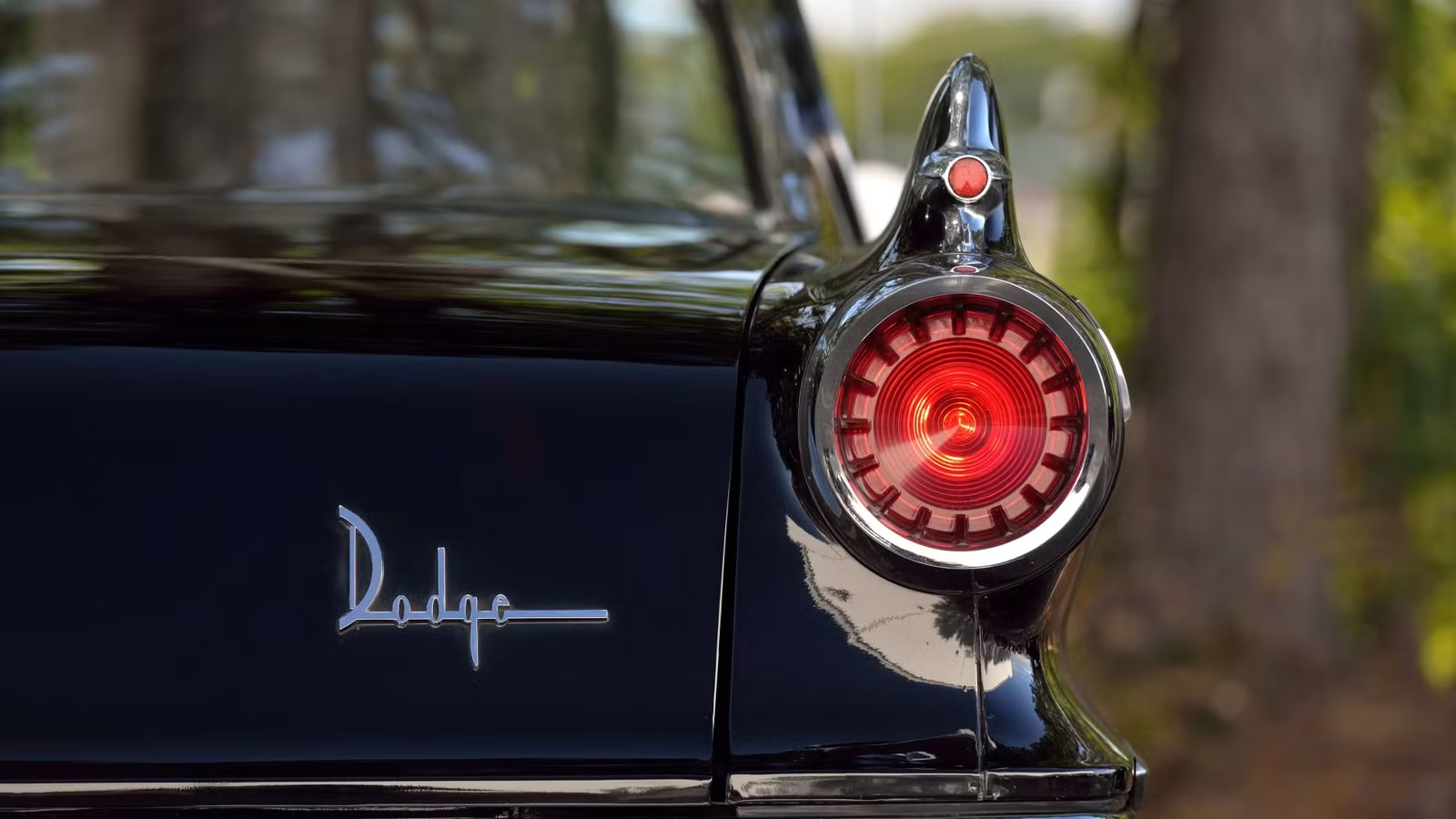
The muscle car has a Forward Look design by Virgil Exner that incorporates a wide, elaborate grille to resemble the air intake scoop of a jet engine, flanked by dual headlights. Also, you’ll notice swept-back tail fins and sharp rear fenders on the back end to simulate rocket tails with red jet exhaust taillights.

Plus, the jet-age interior includes a mechanical transmission with push-buttons on the dashboard to mimic flight control panels. The gauges are housed in an “Astra-Dome” pod with lighting that glows in the dark. Last but not least, the Dart featured available swivel front seats that swing outward to simulate pilot seating.
Source: Automobile Catalog, 0-60 Specs

Related posts



Latest Post


No Comments