
The Fuel-Saving Features Drivers Complain About But May Actually Need
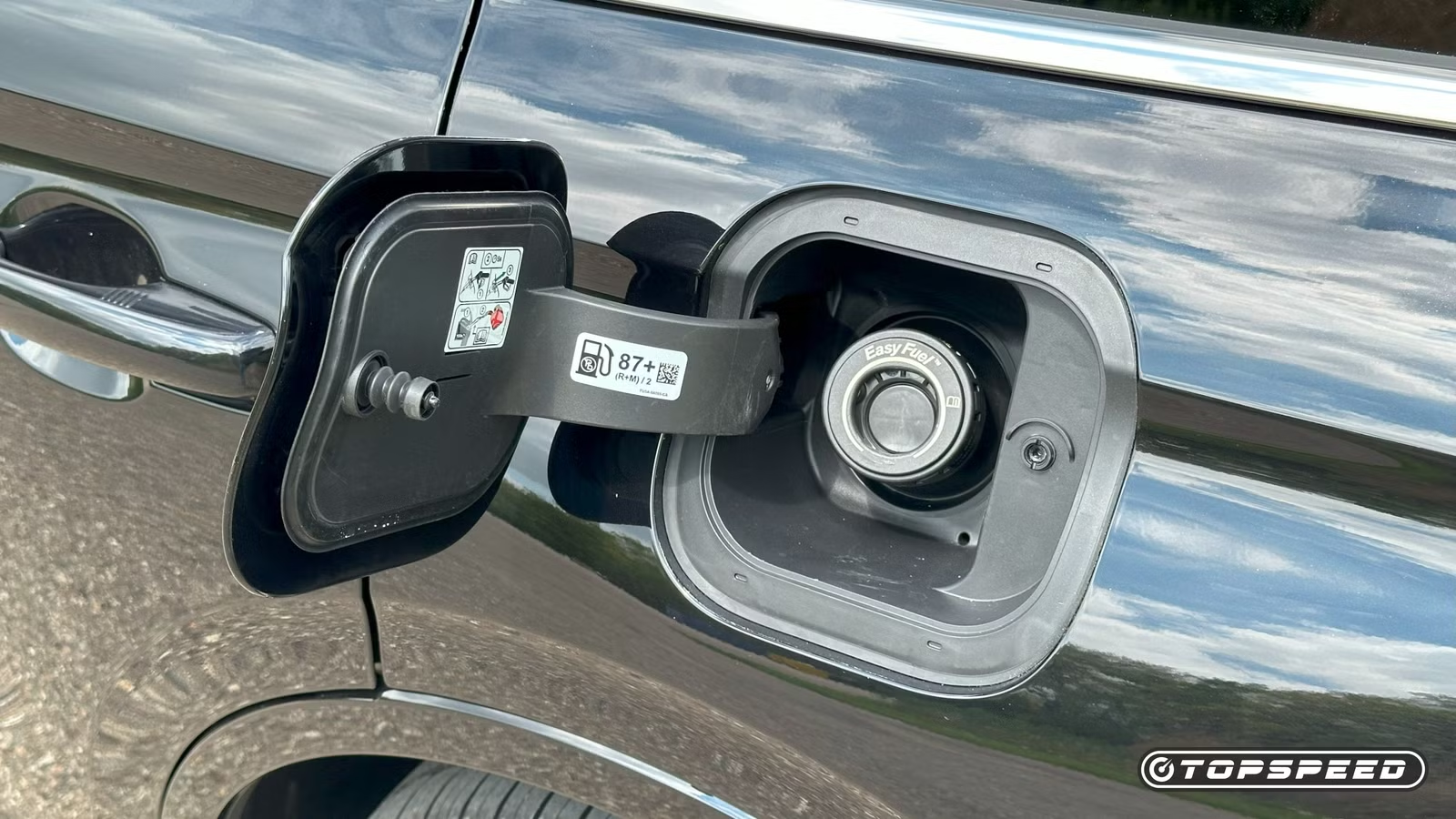
The National Highway Traffic Safety Administration, or NHTSA, enacted the corporate average fuel economy, or CAFE, standard in 1975. This was in direct response to the oil embargoes of 1973 to 1974. This standard was implemented to limit fuel consumption of passenger cars and light trucks. Originally, they wanted to meet an average miles per gallon rating of 49 to 50 MPG. Probably realizing this was an unrealistic target, coupled with safety standards and general technology capacity, NHTSA updated their target goal for 2031 for all motor vehicles to average 34.9 miles to the gallon.

Before these standards were implemented, the average fuel economy of a vehicle was between 12 and 15 miles per gallon. For example, a 1970 Cadillac El Dorado could “achieve” between eight and 11 miles to the gallon. From the “green” era of the early 2000s to technological advancements by the 2010s, automakers have been engaging in different plays on how to eke out the best fuel economy from their light-duty vehicles. Now, not all of these moves have been popular with consumers, but they’ve been implemented. We’re going to go over some of those technologies and what they mean for the future.
How Automakers Quietly Engineered Real Fuel Savings Into Everyday Features
Over the past few decades, there have been several ways that automakers have engaged in saving fuel. These include: automatic engine stop-start, cylinder deactivation, active grille shutters, and advanced transmissions. As you can tell by the different names of these features, they all do different things in order to sip fuel as opposed to guzzling.

You’ve probably heard of everything except advanced transmissions to save fuel. Some pick-up trucks like Ford F150s now come with 10-speed automatics. This allows power to be distributed at a much more economical rate.
Engine Start-Stop Functionality And How It Works

If you can believe it, engine start-stop functionality was actually first manufactured by Toyota in 1974 on the Toyota Crown. In its original form, the Toyota Crown would shut the engine off after 1.5 seconds of idling. It wasn’t until the 2010s that companies like Volvo reinstated this feature. Now, you can find this feature in just about every modern vehicle, from Chevrolets to Hyundais.
Modern iterations of this technology will not engage if the air conditioner demands power or if the engine is cold. Brands like Hyundai and Kia will detect the car moving in front of you and will automatically turn the car back on, to not obstruct traffic. The Oak Ridge National Laboratory in 2023 did a study on this functionality. They found that in more dense city environments like New York City, it improved fuel economy by 26.4 percent.
Cylinder Deactivation Advantages And Disadvantages

One less popular way, but certainly known about, is cylinder deactivation. GM might not have been the first to engage with this technology, but it certainly was the one to popularize it. Originally, this technology was found in GM vehicles in 1980s Cadillacs. Then, during the green era of the early 2000s, it was more widely popularized on larger body-on-frame SUVs like Chevrolet Tahoes and Yukon XLs.
This technology basically cuts the power in half by shutting off half of the cylinders during cruising speeds, when not nearly as much power is required. It will then turn the shut-off half of the engine back on when more power is needed. Truthfully, this is only good at highway speeds and not necessarily stop and go traffic.
Why Drivers Are Disabling These Features — And When They’re Right To Worry

Just describing these features and their capabilities doesn’t necessarily capture how the public has felt about these kinds of features. In general, it’s not like consumers are against fuel efficiency; it’s just that they are frustrated by what they’re having to give up with these features. Some of it has to do with familiarity. Others have to do with maintenance concerns and longevity. Either way, the engineers should get some credit for creatively trying to solve this problem and, at the end of the day, can’t please everyone.
Start-Stop Frustrations
Those that are used to a typical behavior in a vehicle, like idling at the light, were jarred to first experience their car’s stop-start functionality. To some, it almost feels like the car was breaking down. To others, it was such a nuisance that consumers advocated for the ability to turn it on and off at will. Some automakers caved, while others didn’t.
Subaru, for example, offered its newest-generation Forester with a fully touchscreen infotainment system. Criticized for its sluggish software performance, the infotainment system drew further complaints because the start-stop on/off switch was buried deep in the settings. Customers wanted an easier way to switch it off. Subaru actually listened and implemented an over-the-air software update to include a button on the screen.
Real Concerns Over Reliability

Even though start-stop technology came out in the early 1970s, it should not be viewed as old technology. Modern engines with this feature have redundancies and fail-safes to address the wear and tear concerns that many people have. Rightfully so! Concerns over fuel-saving technologies aren’t completely unfounded. The start-stop feature aside, cylinder deactivation has proven to be the less reliable of the two. This ends up causing severe camshaft wear and could cost anywhere between $4,000 and $11,000 to properly maintain.
Fuel Saving Benefits And Beyond

Actual fuel savings, at the end of the day, rely on the driver. Brands like Honda have implemented an Econ icon and color scheme that lets drivers know if they’re driving economically, indicated by a green hue on the dashboard. Most of these efforts were made to improve fuel economy in stop-and-go driving environments.
Gas-powered vehicles are much better suited for long-range driving. There is one other feature worth mentioning that also helps improve fuel economy: active grille shutters, coupled with active aerodynamic design in general. The Porsche Cayenne, for example, has an active rear wing that deploys at 60 miles an hour.
Do These Features Really Save Fuel?

Returning to the Oak Ridge National Laboratory study, researchers found that the biggest overall fuel-economy savings was 7.27 percent on the Federal Test Procedure city cycle. The Federal Test Procedure includes real-world driving conditions such as acceleration, deceleration, and driving at different speeds. The New York City test, on the other hand, where it was most improved at 26.4 percent, pertains more to bumper-to-bumper traffic. The US Department of Energy estimates that simply idling for 10 seconds consumes more fuel than stopping and starting.
Reduced Emissions And Cost Savings
There is, of course, the environmental impact — or lack thereof — as well. Less idling means less carbon dioxide in the atmosphere. While hypothetically you could save $100 per year if you spent $2,000 a year on gas, that will eventually add up over time.
Should These Fuel-Saving Features Be Saved?

Because this kind of fuel-saving technology has been such a hot-button topic, automakers have ended up switching gears, literally. The electric vehicle market has cooled off considerably, and gas prices are at an all-time high. Therefore, that five percent and $100 a year that we previously mentioned isn’t really going to make that much of a dent. That’s why many brands like Toyota and Honda are going fully hybrid as opposed to fully electric.
According to Jalopnik, the Toyota Camry, making the switch to fully hybrid nationally, saves the United States 48.3 million gallons of fuel per year. Those kinds of fuel savings in a hybrid system put start-stop functionality and cylinder deactivation to shame.
Sources: Jalopnik, Oak Ridge National Laboratory, fueleconomy.gov, NHTSA

Related posts




Latest Post


No Comments