
Why Triumph Is Keeping Customers Off Its Silverstone Demo Bikes — And Why That’s a Smart Move
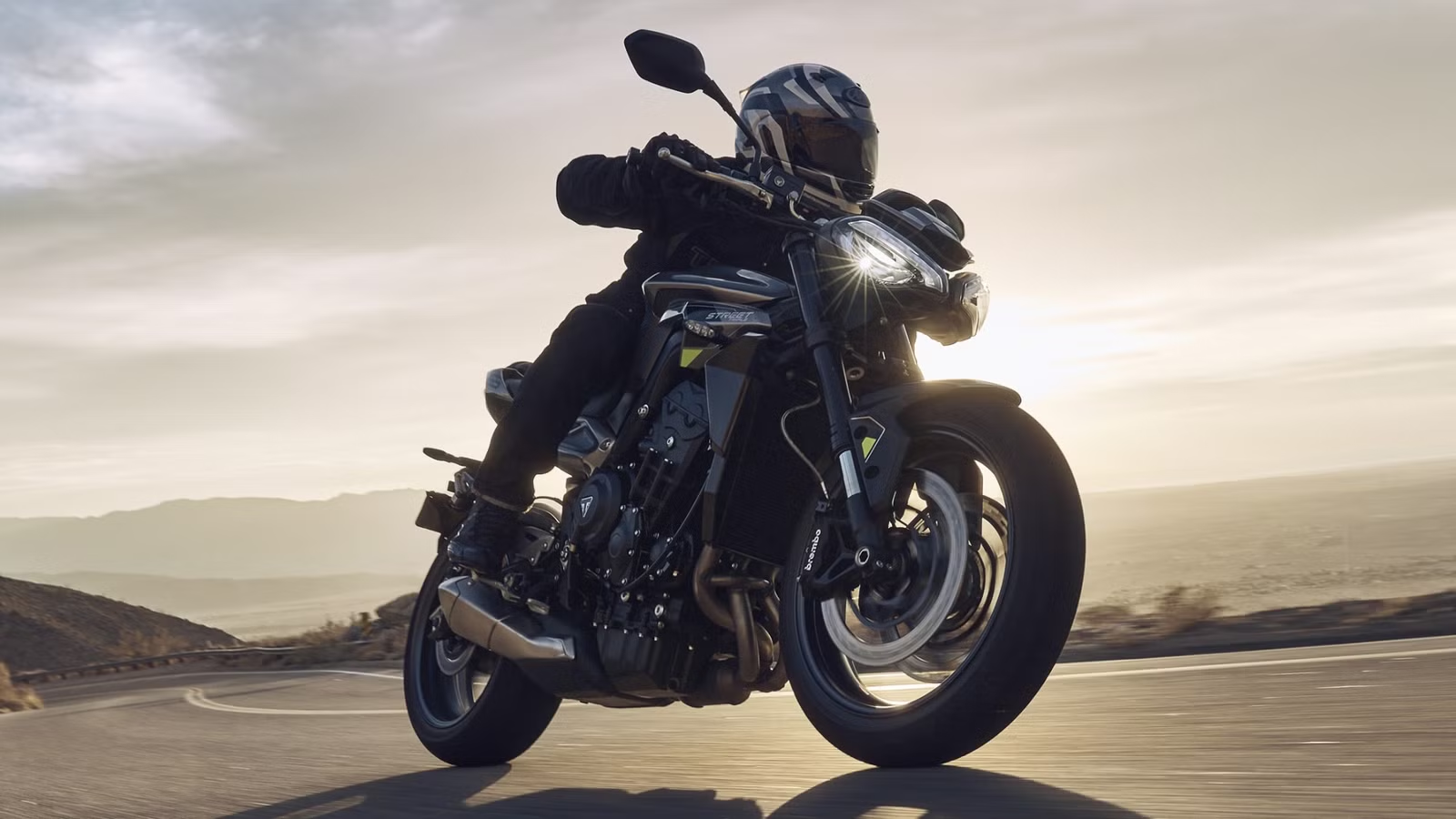
Triumph has launched a demo program at Silverstone’s Bike Track Days this week — but don’t expect anyone to hand you a key. Rather than letting prospective buyers loose on its machines, Triumph has instructors doing the riding while customers watch from the sidelines. It’s a deliberate inversion of the standard demo-day playbook, and the reasoning behind it says a lot about where premium motorcycle marketing is heading.

On the surface, it might seem counterintuitive. Demo rides exist precisely so buyers can feel a bike before committing. But Triumph’s approach trades that tactile moment for something arguably more persuasive: a clean, controlled performance showcase where the bikes are never at risk of a lowside in Turn 1 courtesy of an enthusiastic first-timer.
The Logic Behind Keeping Customers in the Grandstand
The traditional manufacturer demo model carries real risk. Hand a Street Triple or a Daytona 660 to someone who’s never ridden a bike that aggressive, and the liability exposure alone gives legal teams nightmares — never mind the brand-image hit of a crash on a circuit as visible as Silverstone. Insurance costs for open demo programs at track venues can be significant, and a single incident involving a member of the public tends to generate exactly the kind of press no manufacturer wants attached to a new model launch.

Triumph’s solution sidesteps all of that. By keeping the riding in the hands of trained instructors, the brand eliminates the liability chain that connects a customer’s mistake to its own balance sheet. More importantly, it gets to control the narrative entirely. A skilled rider demonstrating the Daytona 660’s quickshifter through Copse or the Trident 800’s mid-range torque on the Hangar Straight tells a cleaner performance story than a cautious novice tip-toeing through the same corners.
Brand Image Is Part of the Calculation Too

There’s a subtler dimension here beyond liability. Premium motorcycle brands invest heavily in the idea that their machines are capable, precise, and worthy of aspiration. That image is harder to project when a demo bike comes back with a scratched fairing and bent lever because someone misjudged the braking point at Club Corner.
Triumph’s current lineup — the 2026 Daytona 660 with its upgraded suspension and stickier rubber, the Trident 800 carrying forward a lineage stretching back to the original 740cc triple of the late 1960s — represents bikes that genuinely perform at a high level. Letting an expert demonstrate that capability in full, rather than having it filtered through a customer’s learning curve, arguably does more to sell the bike. You leave Silverstone having watched what the machine can actually do, not what you could do with it on a first ride.
How This Compares to the Rest of the Industry

Most premium manufacturers still lean toward some form of hands-on access, even if it’s tightly managed. BMW Motorrad typically runs structured demo days where riders are screened and paired with guides. Ducati has historically offered supervised track experiences at select events, with instructors on hand but customers in the saddle. KTM’s demo programs tend to be off-road focused, where the terrain itself limits outright speed and reduces the worst-case crash scenarios.
What Triumph is doing at Silverstone is more restrictive than any of those models — and more honest about why. Rather than creating the illusion of open access while quietly managing the variables, the program openly positions the instructor ride as the feature, not a workaround. Whether that approach converts browsers into buyers as effectively as a hands-on session remains the open question. But for a brand trying to protect both its bikes and its image at one of Britain’s most prominent circuits, the calculus makes sense.
What It Means for Buyers Who Want to Feel the Bike

For riders who genuinely want seat time before signing anything, Triumph’s Silverstone program isn’t a substitute for a dealer demo ride or a trackday on a rented machine. It’s closer to a performance demonstration than a test ride — think of it as watching a factory driver lap a car at a press event rather than getting behind the wheel yourself.
That distinction matters. Buyers who are already sold on the brand will likely find the experience reinforcing. Those on the fence about whether a Triumph suits their riding style may leave impressed but still uncertain. The smart move for those riders is to treat Silverstone as one data point and follow it up with a conventional dealer demo. Triumph’s program is a compelling piece of experiential marketing — it just isn’t quite the same thing as riding the bike.

Related posts






Latest Post


No Comments