
Why This Cruiser Is The Perfect First Bike For New Riders In 2026
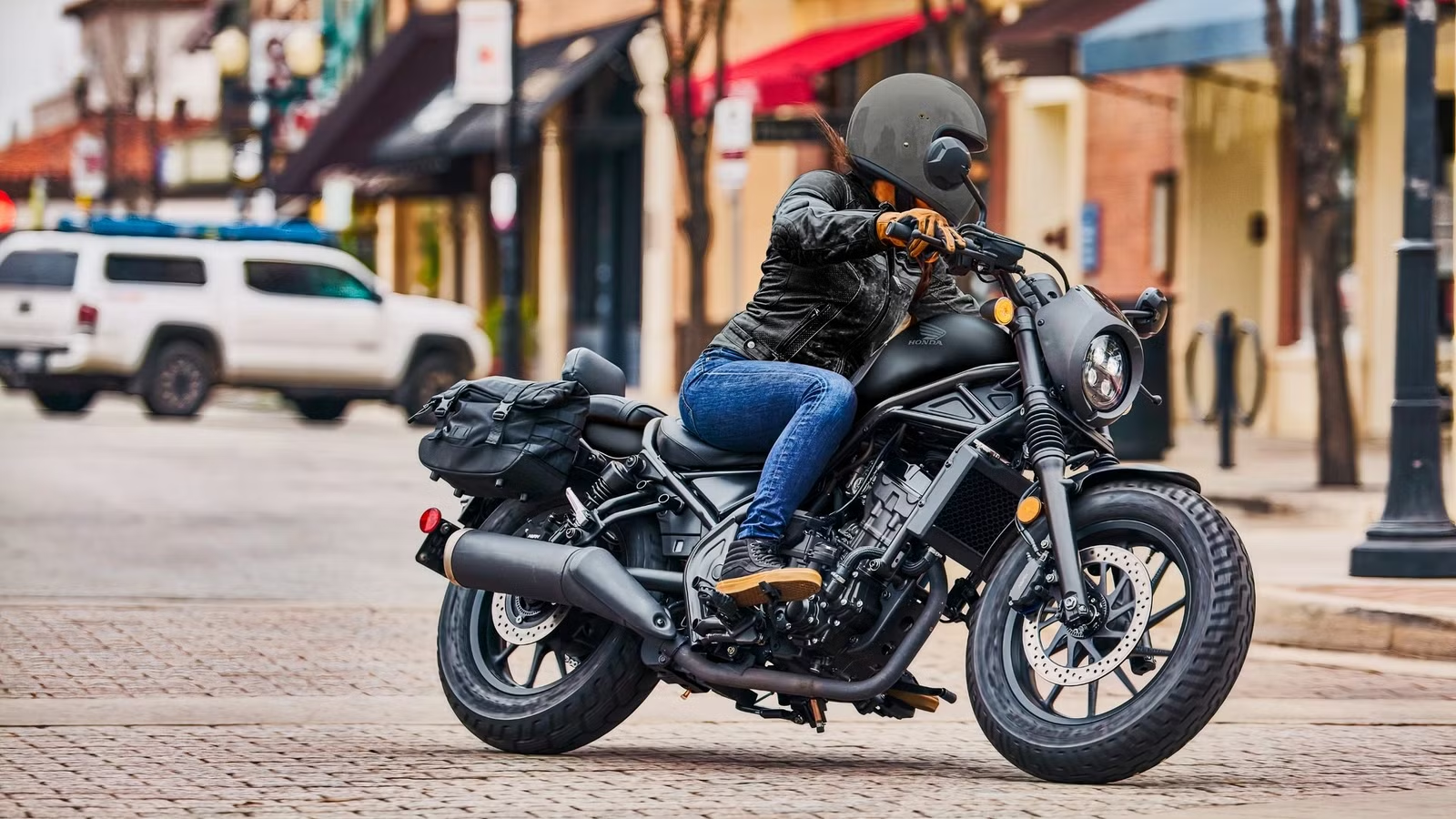
Every year, thousands of new riders face the same question: where do you start? The answer, more often than not, has been the same for four decades. The Honda Rebel has a way of showing up at the beginning of nearly every rider’s story — and for good reason. It’s approachable without being boring, affordable without feeling cheap, and just capable enough to make every ride genuinely rewarding. Whether you’re switching from four wheels to two or stepping up from a scooter, the Rebel offers a unique blend of style, comfort, and approachability that’s tailor-made for first-time riders. New riders who choose to start with the Rebel join the chorus of many millions of motorcyclists who began the exact same way.
The Honda Rebel 300 E-Clutch Is The Perfect First Bike For New Riders In 2026
Starting Price: $5,349

The Rebel story began in 1985 with the Rebel 250, a lightweight, low-slung cruiser that made motorcycling more accessible to the masses. It’s fair to say the Honda Rebel has been an integral part of the entry-level segment since its debut, thanks to the sheer number of riders who got their start on its friendly saddle. If you’ve been around motorcycles long enough, you’ll find the Rebel is a nearly ubiquitous shared experience — and that’s what makes it genuinely special.
Its 234cc parallel twin didn’t offer much in the way of performance, but it was dead reliable, and its low price and friendly ergonomics made it a hit with riding schools and new riders alike. Fast-forward to today, and the Rebel 300 continues that legacy with a dose of modern technology, refined performance, and an aesthetic that — well, looks were never really the point. The beauty of the Rebel is everything else.
Rivals
- Royal Enfield Meteor 350
- Yamaha V-Star 250
- QJMotor SRV300
The Honda Rebel Is Better Than Ever
Paint-Matched Fender And An LCD Screen

The 2025 Rebel 300 benefitted from several thoughtful updates that make an already capable bike even more welcoming for new riders. The bikemaker has also revised the handlebar position and introduced a tapered design, improving ergonomics and giving riders more confident control. The seat foam has been upgraded for better comfort on longer stints, and the instrument display is now easier to read thanks to reduced glare on the updated LCD meter.
Even the suspension has been subtly tweaked, with new bump rubber shapes on the rear shocks to help resist bottoming out for heavier riders. Honda also put some effort into the aesthetics this time around. Color-matched front and rear fenders add a touch of polish to the Rebel’s stripped-down cruiser look while preserving its minimalist, blacked-out theme. For 2026, Honda has added the E-Clutch as a standard feature.
Honda Rebel 300 Dimensions
|
Frame: |
Tubular-steel frame |
|
Front Suspension: |
41mm telescopic fork; 4.8 in. travel |
|
Rear Suspension: |
Twin shocks; 3.7 in. travel |
|
Front Brake: |
2-piston caliper, 296 mm disc (w/ ABS) |
|
Rear Brake: |
1-piston caliper, 240 mm disc (w/ ABS) |
|
Wheels, Front/Rear: |
Cast aluminum; 16 inches / 16 inches |
|
Tires, Front/Rear: |
130/90-16 / 150/80-16 |
|
Rake/Trail: |
28.0º/4.3 inches |
|
Wheelbase: |
58.7 inches |
|
Ground Clearance: |
5.9 inches |
|
Seat Height: |
27.2 inches |
|
Fuel Capacity: |
3.0 inches |
|
Wet Weight: |
364 lb. / 370 lb. (ABS) |
The Honda Rebel Isn’t Fast But Hits The Spot
…Like, At All

At the heart of the Rebel 300 is a 286cc single-cylinder engine that delivers smooth, predictable power. It might not sound like much on paper, but for a beginner it strikes a perfect balance. The motor is eager to rev and easy to manage, which encourages new riders to explore its limits, work through the gears, and build confidence without feeling overwhelmed.
Paired with a six-speed gearbox and an assist/slipper clutch, the engine provides a smooth, user-friendly experience whether you’re crawling through stop-and-go traffic or stretching its legs on an open road. Like driving a slow car fast, riding the Rebel 300 is about wringing the most out of every shift and corner. It rewards precision and engagement, teaching new riders to stay in tune with their machine — a hands-on education that makes every ride feel like an adventure.
Honda Rebel 300 Power And Torque
|
Engine: |
DOHC, liquid-cooled single; 4 valves/cyl. |
|
Displacement: |
286cc |
|
Bore x Stroke: |
76.0 x 63.0mm |
|
Compression Ratio: |
10.7:1 |
|
Transmission/Final Drive: |
6-speed/chain |
|
Fuel System: |
PGM-FI w/ 38mm throttle body |
Built For Learning To Navigate The Real World
Small And Light Makes City Riding More Fun

One of the Rebel’s greatest strengths is its practicality. With a seat height of just 27.2 inches and a narrow frame, it’s incredibly easy to flat-foot at stops — an important confidence booster for new riders. The relaxed rider triangle means your arms and legs fall into a natural position, and there’s enough ground clearance (5.9 inches) to keep things interesting when you hit the twisties. The updated LCD display includes a gear position indicator and fuel consumption meter, both helpful touches for anyone still learning the ropes.
LED lighting throughout enhances visibility and modernizes the look, while the suspension — featuring 41mm forks and nitrogen-charged rear shocks — strikes a solid balance between comfort and performance. For city dwellers, the Rebel 300 truly shines. Its lightweight and compact proportions make it ideal for lane filtering or splitting (where legal), and it’s easy to maneuver in tight traffic.
The upright seating position provides good visibility and control, helping new riders stay aware and agile in hectic environments. Commuters will also appreciate the time savings. Riders report shaving as much as 10 minutes off a 45-minute car commute by taking advantage of the Rebel’s agility. That said, this is more a general motorcycle benefit than a Rebel-specific one; it isn’t the best commuter bike around, but it handles the job efficiently while you’re still building comfort and skill on busier roads.
The Rebel 300 Is Customizable and Cool
Just because it’s a beginner bike doesn’t mean it has to look like one. The Rebel 300 offers an impressive range of official Honda accessories, from headlight cowls and meter visors to fork covers and saddlebags. Riders can personalize their bike without breaking the bank and without an engineering degree. More importantly, the Rebel looks cool straight out of the box. Its peanut-shaped tank, fat tires, and blacked-out components give it a classic-meets-modern cruiser vibe that feels at home anywhere, from coffee shop meetups to weekend getaways. Honestly, once you’re finally learning to ride, you’ll be having too much fun to worry much about how it looks anyway.
Everything Is Not Rosy, Though

There is no denying the Rebel’s status as the go-to cruiser for new riders. That said, no bike is without its flaws — or more fairly, its limits. The Honda Rebel excels at a great many things, but here are a few factors worth considering before making a decision.
Limited Long-Term Power
The Rebel 300’s modest engine is ideal for learning, but it’s simply not a forever bike. As riders grow in skill and confidence, they may find themselves craving more power, especially for highway riding or anything more spirited. That doesn’t make the 300 a bad choice; it just means you might eventually graduate to the Rebel 500 or another midweight machine.
Highway Struggles

While it can maintain 65–70 mph, the Rebel 300 isn’t exactly built for sustained high-speed travel. It’ll get you down the freeway, but passing power is limited, and strong headwinds or long grades can be a challenge. For strictly urban or suburban riders, this may never be an issue. But for commuters or road-trippers, it’s worth keeping in mind. A new rider might assume more power means more danger, but in certain situations — particularly at highway speeds — having a little extra grunt under the throttle can actually be the safer option. The Rebel will struggle to provide that.
Not Built for Tall Riders
With its low 27.2-inch seat, the Rebel 300 is one of the most approachable bikes on the market, but if you’re over six feet tall, the ergonomics might feel a little cramped. You can always make adjustments with aftermarket bars or forward controls, but taller riders might find better out-of-the-box comfort on a different platform.
Sources: Honda Powersports

Related posts


Latest Post


No Comments