
1970 Trans Am Ram Air III: Why It Matters More Than the IV
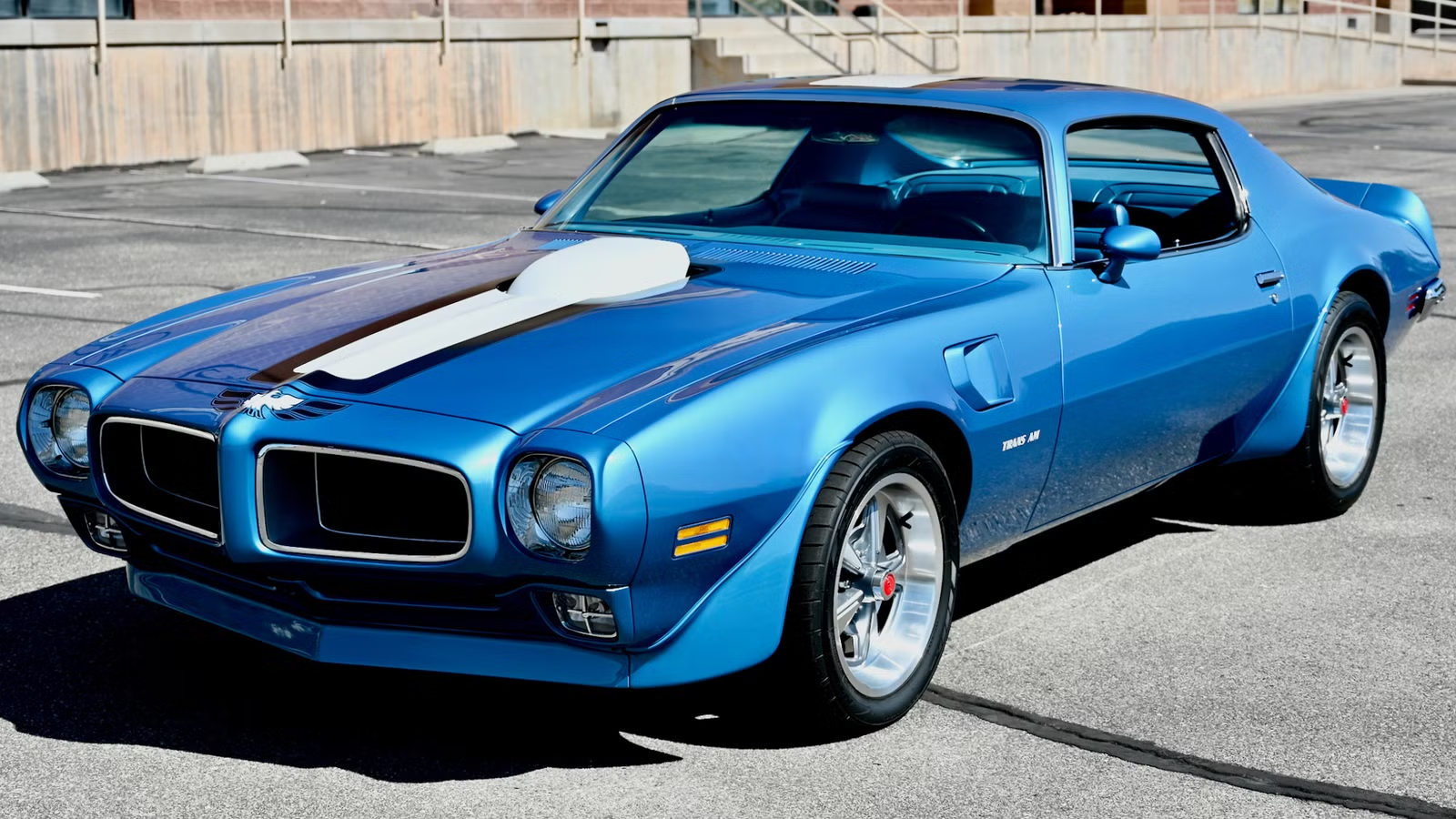
A 1970 Pontiac Firebird Trans Am with just 245 miles on the odometer surfaced this week, and the detail that makes it genuinely significant isn’t the mileage — it’s what’s under the hood. The car carries a Ram Air III, the engine that left Pontiac‘s assembly line in the vast majority of documented first-generation Trans Ams. That distinction matters more to serious collectors now than it did a decade ago.

For years, the Ram Air IV grabbed all the forum glory. Magazine features celebrated it, forum threads obsessed over it, and buyers chased it. But factory production records tell a different story: the Ram Air III was the standard performance engine for the 1970 Trans Am, and a correct-numbers example — especially one with barely any miles — represents exactly the kind of documented originality the collector market now rewards.
Ram Air III vs. Ram Air IV: What the Engines Actually Were
Both the Ram Air III and Ram Air IV were 400-cubic-inch V8s built on the same basic Pontiac block, but they were tuned for different purposes. The Ram Air III was the standard Trans Am performance engine — a street-friendly unit with solid credentials and factory-rated output that made it genuinely quick without sacrificing drivability. The Ram Air IV was a more aggressive, higher-output option developed with race-oriented breathing and a more radical camshaft profile, making it a harder engine to live with on the street.

The IV’s reputation grew partly because it was rare and partly because Pontiac’s performance marketing leaned into its race-program associations. But rare doesn’t always mean correct. For the overwhelming majority of 1970 Trans Ams that rolled off the line, the Ram Air III was the factory-specified engine — making a documented III the authentic choice, not a consolation prize.
Why the Ram Air IV Was Ordered So Rarely

The Ram Air IV carried a significant option premium over the already-expensive Trans Am package, and its more aggressive tune made it a harder sell for buyers who actually planned to drive the car. The result was a production split that heavily favored the Ram Air III — the IV was ordered by a small fraction of Trans Am buyers, while the III accounted for the lion’s share of the build. Pontiac Historical Services records, which collectors use to verify factory specifications on individual cars, reflect this reality clearly.
The IV’s scarcity created its own mythology. Because so few were built, surviving examples became objects of obsession, and the forum culture around first-gen Trans Ams amplified that obsession over decades. The III, meanwhile, was quietly doing what it was always supposed to do: being the correct, factory-standard engine for the model.
How the Collector Market Shifted Toward Originality

The broader Muscle Cars market has fractured in ways that reward documentation and factory correctness above almost everything else. Numbers-matching cars with verifiable build sheets and clean ownership histories now command premiums that modified or re-engined examples simply can’t match — regardless of what engine was swapped in. A Ram Air IV dropped into a car that left the factory with a III doesn’t add value; it destroys the originality premium that collectors are actually paying for.
That shift has rehabilitated the Ram Air III’s reputation among serious buyers. A correct-numbers III car, properly documented through PHS or equivalent factory records, is now understood as the authentic article. The IV’s mystique hasn’t disappeared, but it no longer overshadows the III in the eyes of collectors who know what they’re looking at. A 245-mile example with its original drivetrain intact is the kind of car that makes that argument without needing to say a word.
Why This Listing Is Worth Paying Attention To

A 1970 Trans Am with 245 miles is extraordinary on its own terms. Cars that survived five-plus decades in that condition are vanishingly rare, and the combination of near-zero mileage with a documented, correct-numbers Ram Air III puts this listing in a category most collectors will never encounter. The listing provides the concrete hook, but the deeper story is what the car represents: a factory-original first-gen Trans Am that was never modified, never re-engined, and never driven enough to disturb its original specification.
For anyone serious about first-generation Trans Ams, the Ram Air III is the engine to understand — not as a lesser alternative to the IV, but as the engine Pontiac actually built these cars around. This listing is a reminder of that, and a rare chance to acquire one that proves it.

Related posts






Latest Post


No Comments