Why Lexus GX 550 Owners Are Cross-Shopping A Honda Passport TrailSport
10 minutes reading
Sunday, 12 Jul 2026 18:00 0 62 autotech
Nobody walks into a Honda dealership after buying a Lexus. That’s the unspoken rule: you move up the ladder, not sideways and down. Yet a growing number of GX 550 owners are quietly doing exactly that—browsing Passport TrailSport configurators and running the numbers with the kind of focus that only follows a hefty monthly payment.
The Lexus GX 550 is, by any objective measure, an impressive machine. Its twin-turbocharged V6 delivers 349 horsepower and a class-relevant 479 pound-feet of torque, its body-on-frame architecture can haul 8,000 pounds, and its interior has been described by Kelley Blue Book as “seriously luxurious.” Launch coverage was near-universal in its praise. But 12 months into ownership, the questions hardening in owner forums are less about capability and more about cost: fuel receipts, premium-grade fill-ups, and the nagging sense that a $48,000 Honda is handling Tuesday morning just as capably as a vehicle that costs roughly $20,000 more. This is not a hit piece on a great truck-based SUV. It is a genuine reckoning with what premium pricing actually delivers once the new-car euphoria fades.
Why Some Lexus GX 550 Owners Are Questioning Whether The $20,000 Premium Still Makes Sense
Lexus GX 550 Luxury+ rear 3/4 shotLexus
The 2025 Lexus GX 550 entered the marketat around $65,500 before options, destination, or the taxes that inflate sticker shock into something genuinely sobering. The 2026 Honda Passport TrailSport starts in the $48,000 range. That gap—call it $20,000 depending on trim and region—is the central fact around which this entire conversation orbits, and it is not a small one. It is a second car. It is a college fund deposit. It is, for most buyers, years of financial breathing room.
What makes the comparison stick is that both vehicles are pitched at overlapping audiences: active families who want genuine off-road capability, comfortable daily manners, and the confidence of an all-wheel-drive platform in a mid-size footprint. The GX targets buyers who want all of that wrapped in luxury-brand cachet. The Passport TrailSport targets buyers who want most of that at a price that does not require a premium conversation with their financial planner.
Owner Sentiment In Various SUV Ownership Communities Reflects A Particular Kind Of Dissonance
Lexus GX 550 Overtrail off-roadingLexus
Threads from GX 550 owners rarely dispute the vehicle’s quality or capability; the complaints cluster around operational costs and around the recurring question of whether the premium features—the Mark Levinson audio, the stitched leather, the full suite of driver-assistance technology—are actually being used in proportion to their cost. Several owners in those communities note that cross-shopping the Passport TrailSport was less about dissatisfaction with the GX and more about realizing they were paying for a ceiling they never reach.
It is important to be precise here: forum sentiment is anecdotal, not statistically representative. KBB’s formal review roundly praises the GX 550’s interior quality. But the volume of that specific conversation—owners with $65,000 vehicles investigating $48,000 alternatives—signals something worth taking seriously.
The Ownership Reality Check: Fuel Economy, Range, And Daily Driving Costs Compared
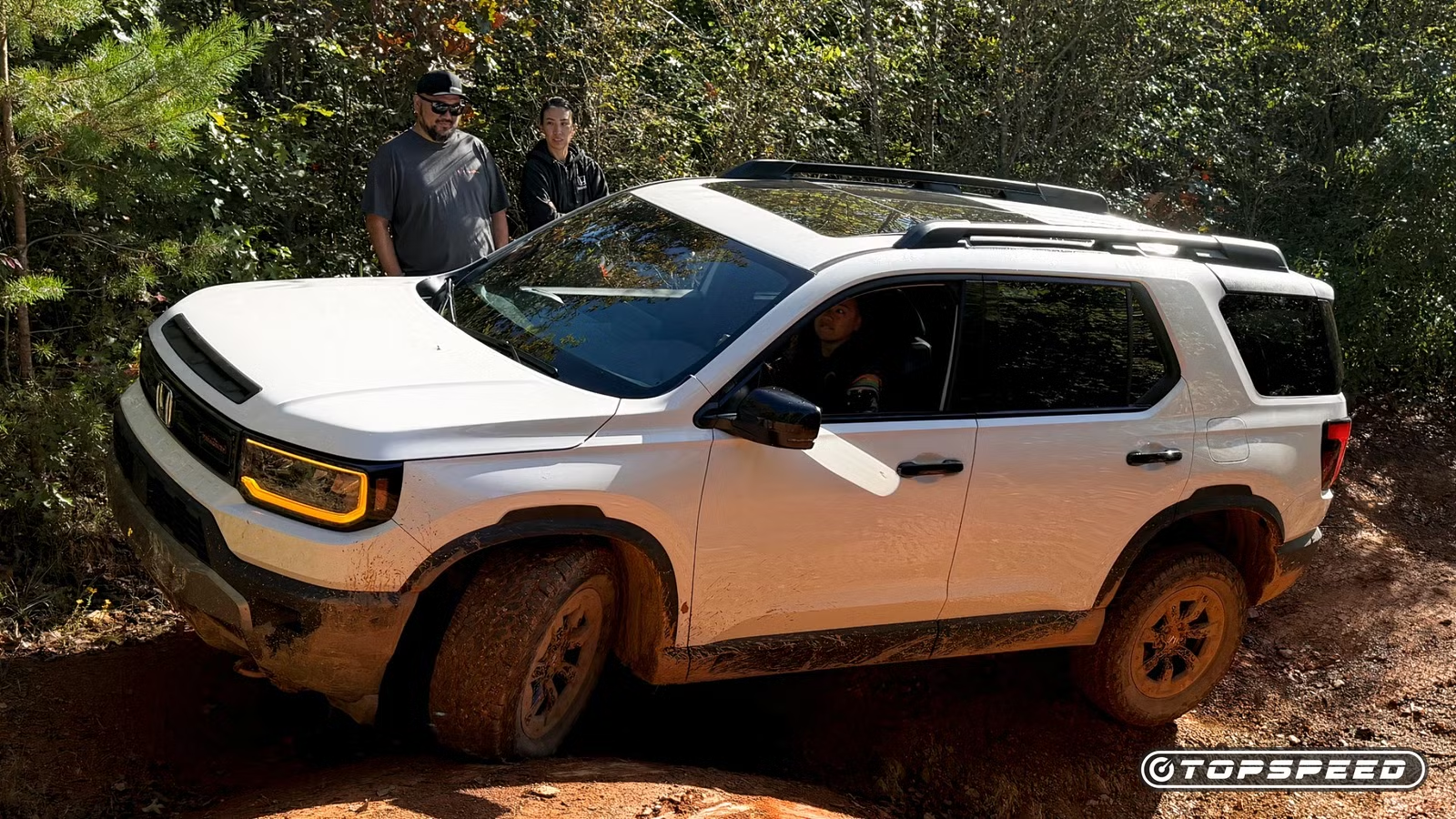
2026 Honda Passport TrailSport on hillNicole Wakelin/TopSpeed
This is where verified data takes over from forum conjecture, and the numbers are not flattering for the Lexus. The GX 550 is EPA-rated at 17 mpg combined, split between city and highway figures that reflect the realities of a body-on-frame platform and a twin-turbocharged engine optimized for torque output. The 2026 Honda Passport TrailSport, running a naturally aspirated 3.5-liter V6, is rated at 18 mpg city and 23 mpg highway. On a pure highway run, that six-mpg advantage translates to a meaningful range difference: with a 19-gallon tank, the Passport covers roughly 100 additional miles between stops compared with the GX on a long interstate haul.
The Fuel Grade Issue Compounds The Economics Further
2026 Honda Passport front quarterNicole Wakelin/TopSpeed
The GX 550 requires premium fuel, 91 octane minimum, while the Passport runs on regular unleaded. With premium fuel consistently running 20 to 30 cents per gallon higher than regular, GX owners are absorbing a cost penalty on every fill-up, every time, for the life of the vehicle. Over 15,000 miles annually at mixed driving, the difference in fuel cost between the two vehicles can exceed $500 per year depending on local prices, and that figure stacks on top of the higher insurance premiums, higher registration fees in ad-valorem states, and higher financing costs that accompany a vehicle priced $20,000 higher.
None of this is disqualifying for a buyer who genuinely needs what the GX offers. But for the owner whose weekly routine involves school runs, grocery trips, and occasional weekend trail work—and who is not regularly hooking up a boat or a horse trailer—the GX’s premium fuel requirement is a cost the vehicle’s daily behavior does not visibly justify. The Passport TrailSport, in that context, turns in real-world economics that compound its price advantage on the sticker into a total-cost argument that grows stronger over time.
How It Stacks Up Against The Honda Passport TrailSport
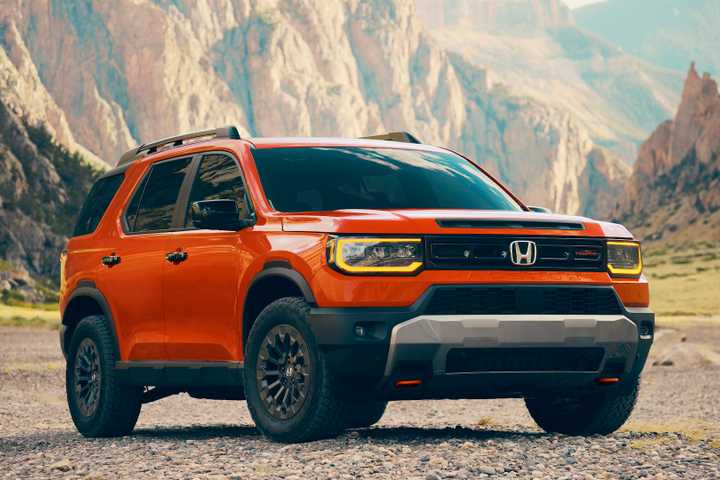
Front 3/4 action shot of 2026 Honda Passport TrailSport in orange driving through desertHonda
The Passport TrailSport is not trying to be a Lexus. It is trying to be a credible off-roader that can handle a mountain trail on Saturday and a carpool on Monday, and the 2026 iteration makes a strong case that it succeeds on both counts. MotorTrend’s coverage of the TrailSport configuration highlights an off-road-tuned suspension, standard steel skid plates protecting the underbody, and all-terrain tires fitted from the factory—a specification that typically costs owners of lesser trims an aftermarket investment to replicate. Ground clearance sits at 8.3 inches, which is competitive in this segment and sufficient for moderate trail use, stream crossings, and the kind of forest service road work that makes up the vast majority of recreational off-roading. Towing capacity checks in at 5,000 pounds, adequate for a ski boat, a small camper, or a loaded utility trailer.
2026 Honda Passport TrailSport sideHonda
What Honda has done with the TrailSport is package genuine trail readiness, not just cosmetic trail styling, at a price point that does not require the buyer to choose between off-road hardware and financial sanity. The skid plates are steel, not plastic. The all-terrain tires are mounted, not a dealer-installed option. And the suspension tuning is purpose-built for the application rather than adapted from a luxury-ride platform.
The Passport is a unibody crossover, which means it will not challenge a GX 550 on a dedicated off-road course where approach angles and articulation become decisive. On the trails that 90 percent of adventure-oriented buyers actually drive, the difference is largely academic. Where the Passport wins decisively is in the daily-driving comportment that a unibody platform delivers: a lower step-in height, better on-road refinement at highway speeds, and a turning radius that does not require three-point corrections in urban parking structures.
More Cargo Space, Easier Packaging, And The Practical Advantages That Matter
An interior view of the 2026 Honda PassportHonda
A 2026 Honda Passport shows off its trunk space with its rear hatch openHonda
The cargo comparison between these two vehicles is real but should not be overstated. Behind the second row, the Honda Passport offers 44.0 cubic feet of space. Behind the second row of the Lexus GX 550, a third-row SUV in its standard configuration, KBB reports 40.2 cubic feet. That is roughly a 10 percent advantage for the Honda, which in practical terms means one or two additional carry-on bags or a slightly easier experience loading a Costco run.
The more significant packaging distinction comes from the GX’s three-row configuration. The GX offers a third row that the Passport does not, which is a meaningful real-world advantage for buyers with larger families or who regularly carry more than four passengers. Conversely, buyers who do not regularly use that third row are carrying the weight, the price premium, and the reduced cargo space that comes with it, without accessing the benefit it provides.
2026 Honda Passport screenHonda
The Passport’s unibody architecture also pays dividends in everyday usability that are harder to quantify but consistently felt. The lower sill height makes loading heavy items more practical. The tighter turning radius reduces the mental overhead of urban maneuvering. The ride quality on imperfect pavement, the kind of road that makes up most of American driving, reflects the inherent advantage of a unibody platform optimized for on-road comfort alongside trail capability.
For buyers who chose the GX 550 primarily for its third-row availability and find themselves folding those seats flat most of the time, the Passport’s packaging presents an honest challenge: you are paying for a feature you are not using, in a package that is less convenient in the ways you use every day.
It Pulls Ahead In Power, Towing, And Premium Appeal
Lexus GX 550 Luxury+ engineLexus
Fairness demands full accounting, and the GX 550 has genuine advantages that its $20,000 premium is, in part, buying. The torque gap is not trivial. The GX 550’s 479 pound-feet of torque against the Passport’s 262 pound-feet is nearly double, and that figure is not a spec-sheet abstraction—it represents the confidence to pull a loaded horse trailer up a mountain grade, launch cleanly from a standing start under load, and tow 8,000 pounds without straining the drivetrain. The Passport’s 5,000-pound towing limit is serviceable for light recreational duty, but if your Friday routine involves connecting to a fifth-wheel or a dual-axle enclosed trailer, the GX is the only vehicle in this comparison that is actually doing that job within its rated capacity.
The body-on-frame platform, which contributes to the GX’s higher ownership costs in fuel economy terms, also delivers a durability and repairability story that matters in the context of long-term ownership. Body-on-frame trucks and truck-based SUVs have a well-documented advantage in recovery scenarios and in off-road situations where chassis flex would damage a unibody structure. For buyers who genuinely operate at the limits of trail difficulty, this is a meaningful engineering distinction.
2026 Honda Passport interior shot showing front seatsHonda
And then there is the interior, where KBB’s assessment—”seriously luxurious”—reflects the kind of material quality, sound insulation, and tactile refinement that the Lexus brand has spent decades building into its product. The Mark Levinson audio system, the semi-aniline leather seating, and the attention to noise, vibration, and harshness reduction represent real engineering investment. Whether those investments are worth $20,000 over the Honda’s competent but plainly utilitarian cabin is a question of values, not a question of quality.
The GX 550 is not a vehicle that fails to justify its existence. It is a vehicle whose existence is most justified by buyers who regularly access the capabilities that define its premium: serious towing, serious off-road articulation, and a cabin environment that makes long-distance travel in four-figure comfort genuinely pleasurable. For those buyers, the price is not a puzzle. For everyone else—and that is a meaningful portion of GX owners, if forum discussions are any guide—the Passport TrailSport is asking a question the launch coverage never had to answer.
Base Trim Engine
3.5L V6 Gas
Base Trim Transmission
10-speed automatic
Base Trim Drivetrain
All-Wheel Drive
Base Trim Horsepower
285 hp @ 6,100 rpm
Base Trim Torque
262 lb-ft @ 5,000 rpm
Base Trim Fuel Economy (city/highway/combined)
19/25/21 mpg
Make
Honda
Model
Passport
Segment
Midsize SUV
Sources: Lexus U.S., Honda U.S., MotorTrend, The EPA










No Comments