
Maserati Is Flirting With A Manual Supercar And A V6—And It Could Be The Brand’s Last Real Chance
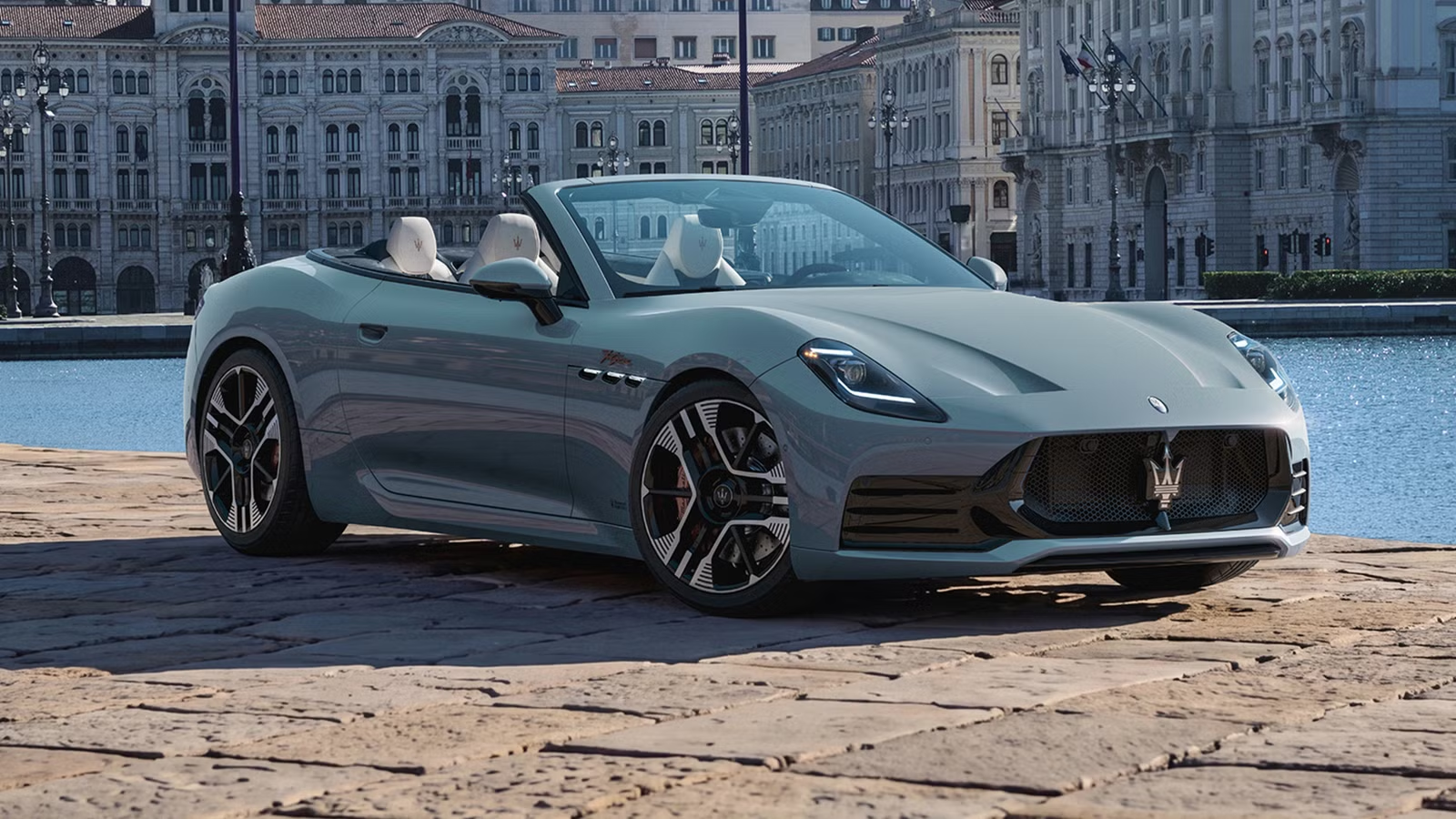
Maserati is reportedly considering a manual transmission and a V6 engine for a future supercar—a combination that would place the brand in direct opposition to nearly every trend currently reshaping the performance car market. Carscoops broke the story on June 20, 2026, describing the Italian marque as “flirting with a stick shift and a powerful V6” at a moment when most rivals are racing toward electrification and dual-clutch automatics.

For a brand that has spent the better part of a decade struggling to articulate why enthusiasts should care, this is a significant signal. A manual-equipped, naturally aspirated, or lightly boosted V6 supercar would be a deliberate statement of intent—the kind of halo moment that either resets a brand’s credibility or confirms it’s out of ideas. Given where Maserati stands right now, the stakes couldn’t be much higher.
Why A Manual V6 Would Be Such A Dramatic Departure
The broader industry context makes this reported consideration genuinely striking. Paddle-shifted dual-clutch transmissions have become the default for performance cars because they’re faster, more consistent, and easier to optimize around hybrid powertrains. Manual gearboxes require a different kind of engineering commitment—and a willingness to accept that some buyers will shift poorly, that lap times won’t be class-leading, and that the car’s appeal is rooted in feel rather than figures.

That’s exactly the point. A manual transmission communicates something a DCT cannot: that the driver’s involvement is the product. Paired with a V6—an engine configuration with a distinct acoustic character and a rev-happy nature that turbocharged units often flatten—the combination would position a Maserati supercar as an analog experience in an increasingly digital segment. It’s the anti-trend play, and it’s one that a small number of buyers are actively searching for.
Maserati already has relevant hardware to build from. The Nettuno V6, which powers the GranTurismo and MC20, is a twin-turbocharged unit developed with Ferrari input, featuring a pre-chamber combustion system borrowed from Formula 1. Whether a future supercar would use a turbocharged variant of the Nettuno or a different configuration entirely isn’t confirmed by the Carscoops report—but the engine family exists, and Maserati has confirmed it isn’t going away.
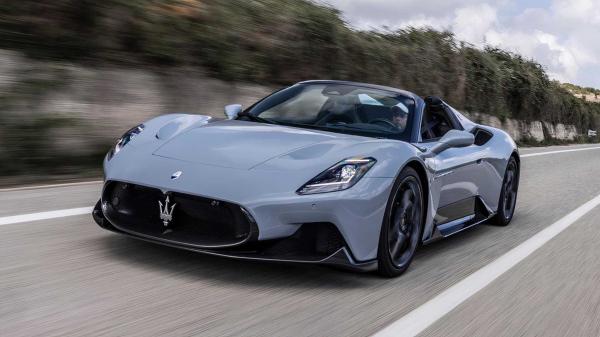
Maserati’s Hopes To Be Profitable This Year, But It Won’t Be Easy, Says CEO
After a tumultuous 2024, the Italian luxury sports car automaker recognizes the big hurdles ahead to return to profitability.
A Brand That Badly Needs A Halo Moment

Maserati’s recent history reads as a cautionary tale about brand dilution. The push into SUVs and crossovers—the Levante, then the Grecale—brought volume but eroded the sporting identity the trident badge once carried. The MC20 was a genuine step forward when it launched, but it hasn’t generated the cultural traction the brand needed. Sales have remained sluggish, and Stellantis has been openly reassessing Maserati’s place within its portfolio.
The 2027 lineup refresh—updated GranTurismo, GranCabrio, and Grecale models with revised styling and incremental power gains from the V6—signals that the brand is still alive and investing. But a facelift cycle isn’t a narrative. A manual supercar would be.
For the segment of buyers who’ve written Maserati off, a stick-shift V6 supercar would demand a second look. It’s the kind of product that generates magazine covers, waiting lists, and the sort of word-of-mouth that no marketing campaign can manufacture. The MC20 showed the brand can build a credible mid-engine car. Adding a manual gearbox to that formula—or to a successor—would transform it from a competent sports car into a genuine enthusiast object.
What Carscoops Reports—And What Remains Unconfirmed

The Carscoops report is careful to frame this as consideration rather than confirmation. No production timeline, no specific displacement or output figures, and no official Maserati statement accompany the story. That’s worth keeping in mind: the gap between an automaker exploring a concept and committing to a production car is wide, and Maserati has a history of promising more than it delivers on schedule.
What the report does establish is that the conversation is happening internally—that someone at Maserati is making the case for a manual gearbox and a V6 as the foundation of a future halo car. In the current environment, that alone is newsworthy. Most performance car programs are moving in the opposite direction, and the brands that have committed to manual transmissions—Porsche with select 911 variants, BMW with the M2 and M3—have been rewarded with outsized enthusiasm relative to their sales volumes.
Maserati would be joining that conversation late. But late is better than never, and if the brand can execute a manual supercar with the character its engine family suggests is possible, the timing might actually work in its favor. Enthusiast fatigue with electrification is real, and a pure-driving-experience Maserati would arrive in a market that’s increasingly receptive to exactly that message.
Nothing is confirmed yet, and Maserati has earned some skepticism. But the reported direction—manual transmission, V6 engine, supercar format—is the right one. If the brand follows through, it won’t just be building a car. It’ll be making an argument for its own survival.
Sources: Carscoops, Carbuzz

Related posts



Latest Post


No Comments