
Why EV Charging Stations Have Always Been A Security Blind Spot, And How Tesla Just Changed The Rules
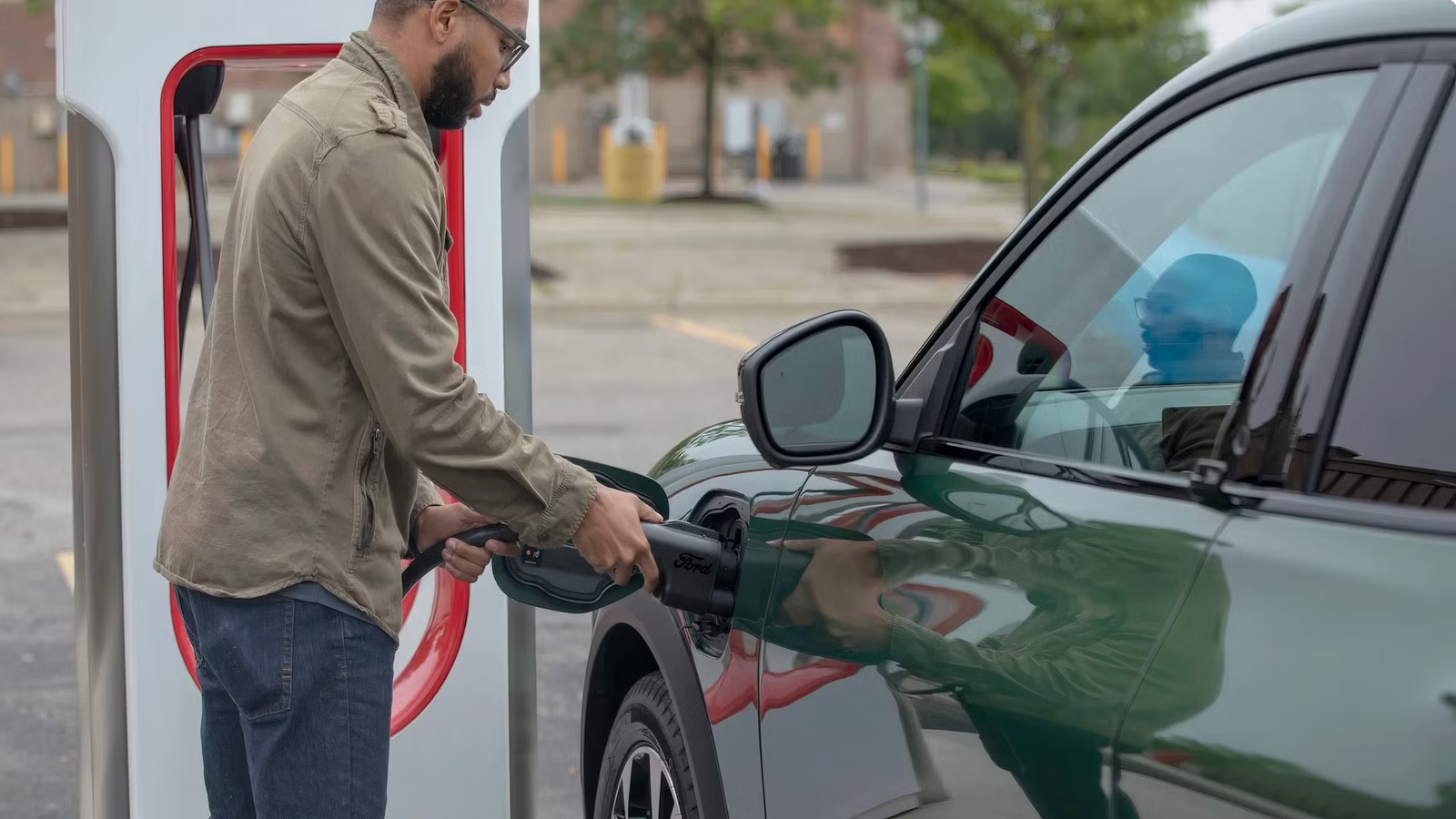
Every EV plugged into a DC fast charger shares the same quiet vulnerability: the car can’t move. The charging plug locks into the inlet to keep high voltage from arcing if someone yanks it loose, which means getting away from a charging stall has always required stepping outside and manually releasing the connector first. Tesla just gave drivers a way around that, and the timing isn’t a coincidence.

The automaker is rolling out Emergency Drive Away, a feature delivered through software version 2026.38.3 that lets a Tesla override its own charging interlock and pull away from a Supercharger while still plugged in. It’s a direct response to the August shooting in Twin Falls, Idaho, where a gunman opened fire near a Supercharger station outside an In-N-Out, killing three people and injuring several others, including a driver who couldn’t drive away while connected to a charger. Tesla’s senior director of charging for North America, Max de Zegher, called the new feature “a feature we hope you never need.”
How The Interlock Works And Why Tesla Built An Exception Into It
Under normal operation, a Tesla stays locked in Park the moment a Supercharger cable connects, and it won’t shift into Drive or Reverse until the connector is released through the touchscreen, the Tesla app, or the manual latch on the charging handle. That lockout isn’t a Tesla quirk. Every vehicle on a DC fast charger is held the same way, because the plug carries enough voltage that yanking it free mid-session could damage the port, the cable, or worse.

Emergency Drive Away carves out a narrow exception. Shift into Drive while still connected, and a warning screen pops up on the center display. The driver has to hold the brake pedal and tap “Activate” to confirm before the car will move, a two-step gate meant to prevent someone from triggering it by accident. De Zegher said Tesla had gone back and forth on the decision for years before deciding it was the right call, adding bluntly: “Don’t abuse it, so we don’t have to restrict it.”
What Actually Breaks When You Drive Away Plugged In

This isn’t a clean disconnect. Tesla’s own demonstration video shows the charging port door going limp and the Supercharger’s cable snapping back hard as the connector tears free, with coolant visible spilling from the cable. Tesla says using the feature requires a mandatory service visit to the vehicle’s charge port afterward, and repair costs on the Supercharger side, covering the damaged cable and the station’s electrical and civil engineering work, can run as high as $25,000 depending on the equipment involved.
Tesla isn’t quietly hoping nobody notices misuse, either. Camera footage from each activation is automatically sent to the company, and Tesla has warned that deliberate abuse will “invoke additional penalties,” though it hasn’t detailed what those look like.
Who Gets It, And Who’s Still Locked Out

Emergency Drive Away isn’t universal yet. It requires the 2026.38.3 update and only works on 2021-and-later Tesla Model S and Model X, plus Model 3 and Model Y. It’s also limited to Tesla’s own Superchargers, not third-party DC fast chargers and not home Wall Connectors, and for now it only functions in the United States. European Teslas don’t get it at all, since UN Regulation 100, the safety standard the EU applies to electric vehicles, mandates that a plugged-in car can’t move under any circumstance.
Before Tesla built this in, the only workaround was aftermarket, namely adapters like EVject that physically defeat the interlock. Tesla had previously flagged those third-party devices as a fire risk, which makes a factory-backed version with built-in warnings and logged footage the more defensible fix.
A Precedent Other EV Makers Will Have To Reckon With

The inability to drive away mid-charge has been a known gap since public DC fast charging took off, and it’s never really been treated as Tesla’s problem alone to fix. Stellantis has its own patent in the works for a related idea, a high-voltage battery quick-release system that lets an EV physically eject a thermally compromised battery pack and limp away on 12-volt power, though that’s aimed at fire emergencies rather than personal safety.
As public charging networks keep expanding and more drivers spend more unattended minutes tethered to a stall, a built-in override like this is likely to become table stakes rather than a Tesla-only feature. The automaker that first treats charging lockouts as a safety-engineering problem, rather than something a driver should just avoid getting into, sets the bar the rest of the industry gets measured against.

Related posts






Latest Post


No Comments