The Hyundai That Delivers Genesis GV80 Luxury Without The Badge Tax
8 minutes reading
Thursday, 27 Aug 2026 18:30 0 40 autotech
Today’s car consumers frequently encounter a persistent financial premium on luxury cars. Premium brands typically demand substantial financial markups while providing identical mechanical underpinnings. High-end three-row SUVs challenge this established structure by offering an elite cabin experience without the typical badge markup.
Automotive reviewers repeatedly compare these flagship mainstream trims directly to dedicated luxury counterparts. Executive and family buyers now have a dedicated stealth-wealth option that delivers top-tier features without requiring extra spending. This is especially true for a specific full-size South Korean SUV thanks to a luxurious flagship trim.
Hyundai and Genesis operate as distinct entities under the Hyundai Motor Group, targeting completely different automotive segments. Hyundai originated in 1967 as a volume automaker focused on affordable, practical transportation. In contrast, Genesis began in 2008 as a flagship Hyundai sedan before officially launching as a standalone luxury marque late in 2015.
Hyundai targets mainstream consumer and family buyers by offering high-value vehicles with flexible powertrains, ranging from practical internal combustion engines to mass-market hybrids and electric vehicles. Genesis targets premium, luxury-tier consumers, explicitly competing against established European brands like BMW, Mercedes-Benz, and Audi through bespoke rear-wheel-drive platforms, refined build quality, and elevated dealership concierge services.
In the U.S. both brands play complementary roles in driving overall market share. Hyundai relies on the massive volume of high-selling hybrid SUVs to lead mainstream market sales. Genesis functions as the halo brand, earning top industry accolades. This is evidenced by an overall ranking in the 2026 J.D. Power U.S. Initial Quality Study, while recording strong U.S. sales growth driven by its popular luxury SUVs.
How The Palisade Calligraphy Blurs The Lines Of Luxury
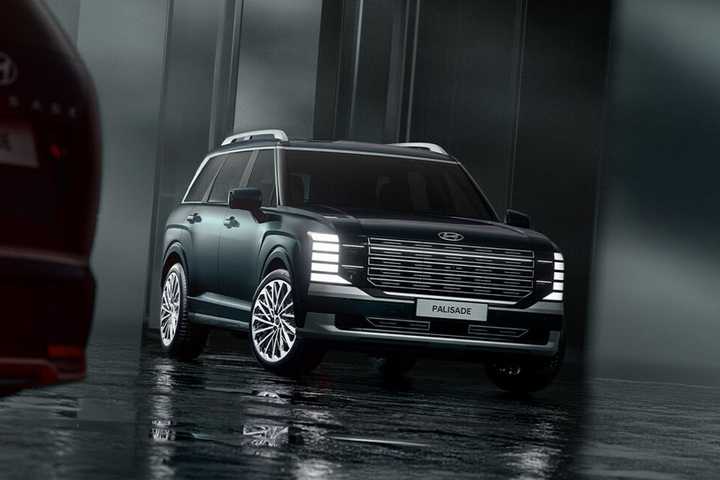
Front 3/4 shot of 2026 Hyundai Palisade parkedHyundai
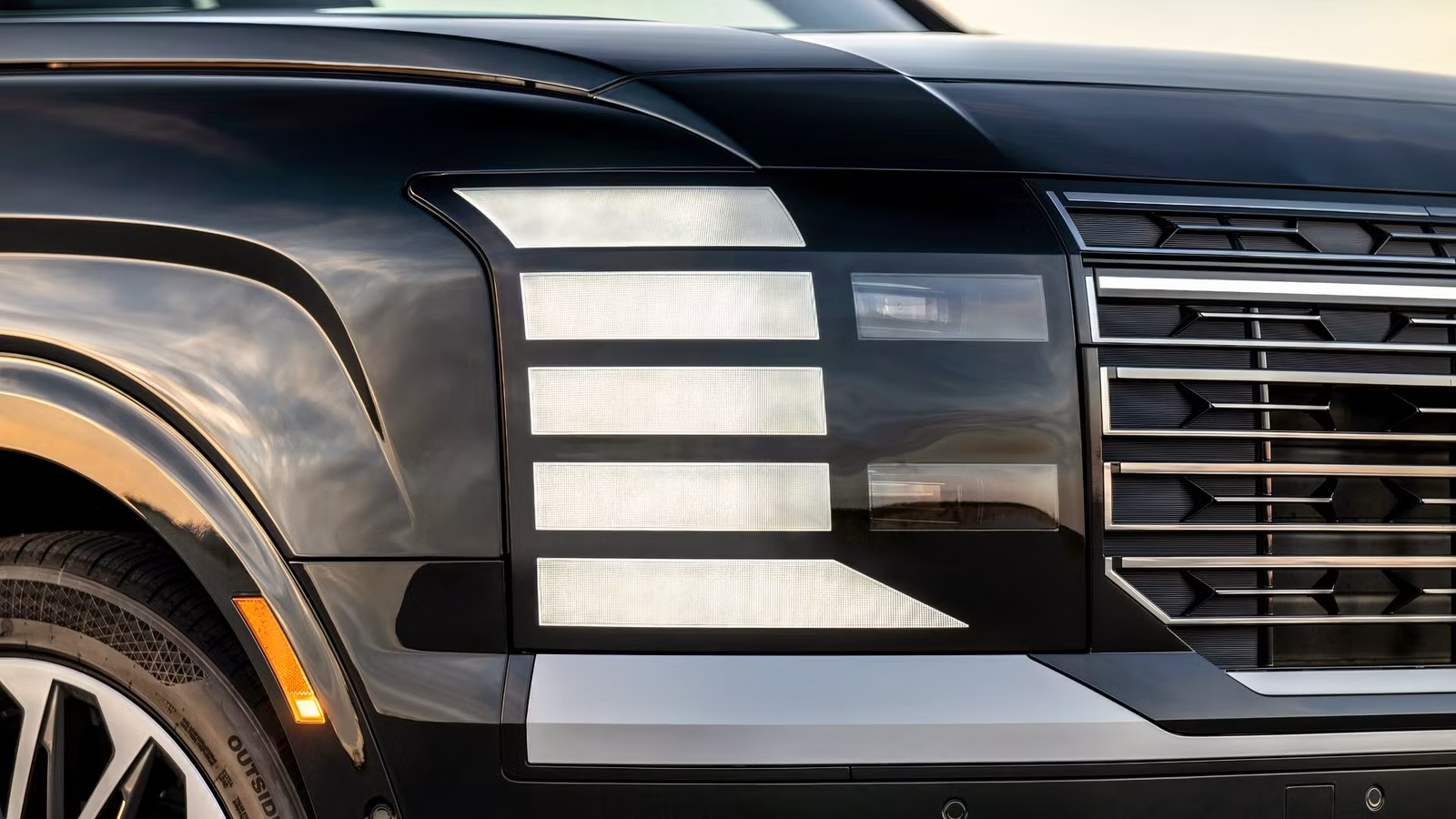
Modern vehicle shoppers frequently encounter a persistent market tax on luxury automotive badges. Premium brands often demand substantial financial markups while providing identical mechanical underpinnings. The 2026 Hyundai Palisade Calligraphy challenges this luxury hierarchy by offering an elite cabin experience without the typical badge markup. Automotive reviewers repeatedly compare the Palisade Calligraphy to the Genesis GV80 rather than mainstream competitors like the Honda Pilot or Toyota Highlander. Executive and family buyers now have a dedicated stealth-wealth option that delivers luxury features without requiring extra spending.
Pricing for the 2026 Hyundai Palisade Calligraphy starts at $56,160 for the non-hybrid trim. Adding all-wheel drive increases the overall purchase price by roughly $2,000. Hyundai also offers a Palisade Hybrid Calligraphy variant, which features a starting MSRP of $56,780. This competitive pricing structure gives the Calligraphy trim a clear advantage over traditional premium options.
The Palisade Puts The GV80 At Risk
Genesis
The primary benchmark for the Palisade Calligraphy remains its corporate sibling, the Genesis GV80. The base Genesis GV80 starts at $57,700, but that entry tier features a turbocharged four-cylinder engine and synthetic leatherette seating. Equipping a GV80 with a comparable six-cylinder engine and Nappa leather requires stepping up to higher trims that exceed $73,000. German competitors require even higher expenditure. The 2026 Audi Q7 carries a base MSRP of $62,000, while the full-size 2026 Mercedes-Benz GLS-Class commands a starting price of $91,600. Selecting additional cabin packages on these European models widens the cost gap further.
The interior of the 2026 Hyundai Palisade Calligraphy directly matches features found in premium vehicles. The South Korean brand opts for premium Nappa leather seating surfaces. Front passengers benefit from relaxation-mode seats equipped with extendable leg cushions for extended long-distance trips. The dashboard houses dual 12.3-inch digital displays that handle driver instrumentation and infotainment functions. Drivers also receive an integrated massage function that alleviates physical fatigue on long journeys. The Palisade Calligraphy provides these high-end features as standard equipment rather than forcing buyers to add expensive option packages.
A Full-Size SUV Fit For Large Families
Shot from third row of 2026 Hyundai Palisade showing interiorHyundai
Beyond its rich feature set, the 2026 Palisade offers functional spatial advantages over its luxury counterparts. The SUV provides a spacious cabin with a total passenger volume of 161.9 cubic feet. Front-row occupants receive 44.2 inches of legroom, 40.1 inches of headroom, 61.4 inches of shoulder room, and 58.8 inches of hip room. Second-row passengers enjoy generous proportions, including 41.4 to 43.0 inches of legroom, 40.0 inches of headroom, 60.6 inches of shoulder room, and 56.7 inches of hip room.
Third-row seating accommodates extra passengers with 32.1 inches of legroom, 37.7 inches of headroom, 55.6 inches of shoulder room, and 45.3 inches of hip room. Utility remains a primary focal point, offering 19.1 cubic feet of cargo space behind the third row, expanding to 46.3 cubic feet behind the second row, and reaching a maximum capacity of 86.7 cubic feet with both rear rows folded flat.
In comparison, the Genesis GV80 offers 140 cubic feet of passenger volume. This design difference provides 21.9 cubic feet of extra space inside the Hyundai cabin. The additional interior room directly improves legroom and shoulder room across all three seating rows. Family shoppers gain genuine three-row functionality in the Palisade, whereas the GV80 reserves its third row as an expensive optional extra that compromises second-row legroom.
The Palisade’s More Extensive Warranty Strengthens Its Appeal
Front 3/4 action shot of 2026 Hyundai Palisade towing a boatHyundai
Long-term ownership costs further distinguish the Palisade Calligraphy from dedicated premium brands. Hyundai provides a five-year or 60,000-mile new vehicle limited warranty alongside a 10-year or 100,000-mile powertrain warranty. German luxury rivals like Audi and Mercedes-Benz limit their standard factory protection to four years or 50,000 miles. Genesis offers a competitive 10-year powertrain plan, but its higher purchase price reduces overall value. Hyundai protects buyers from long-term component risks, offering financial peace of mind that standard luxury warranties fail to equal.
The modern automotive market often tempts consumers to trade capital for brand prestige. However, the 2026 Hyundai Palisade Calligraphy proves that genuine comfort, advanced technology, and cabin refinement do not require a premium emblem. The Palisade delivers high-end trim materials, superior interior volume, and exceptional warranty coverage at an accessible price point. Smart consumers can reject aspirational automotive pricing and choose the Hyundai Palisade Calligraphy as the ultimate stealth-wealth choice.
Powertrains On Par With The Best Luxury SUVs
Close-up shot of 2026 Hyundai Palisade Engine BayHyundai
The 2026 Hyundai Palisade offers two distinct powertrains depending on buyer preference for traditional displacement or electrified efficiency. The standard powertrain features a 3.5-liter naturally aspirated V-6 producing 287 horsepower and 260 pound-feet of torque, mated to an eight-speed automatic transmission. This setup provides a 0-60 MPH time of 6.6 seconds, an electronically limited top speed of roughly 130 MPH, and a maximum towing capacity of 5,000 pounds when properly equipped.
Alternatively, the new hybrid variant combines a 2.5-liter turbocharged four-cylinder engine with dual electric motors to yield a system total of 329 hp and 339 lb-ft of torque. Channeling power through a six-speed automatic transmission, the hybrid matches the standard model’s 6.6-second 0-60 MPH sprint and 130 MPH top speed while offering a maximum towing capacity of 4,000 pounds.
2025 Genesis GV80 Coupe EngineWilliam Clavey | TopSpeed
The 2026 Genesis GV80 offers two gas powertrains, both paired with an eight-speed automatic transmission and standard all-wheel drive. The base engine is a 2.5-liter turbocharged inline-four producing 300 hp and 311 lb-ft of torque. This trim achieves a 0-60 MPH acceleration time of 6.4 seconds and reaches an electronically limited top speed of 137 MPH.
Upgrading to the 3.5-liter twin-turbocharged V-6 yields 375 hp and 391 lb-ft of torque, dropping the 0-60 mph sprint to 5.4 seconds while maintaining the same 137 MPH top speed limit. Across both engine offerings, the GV80 delivers a maximum towing capacity of 6,000 pounds when properly equipped.
How The Market Responds To The Palisade
Shot of 2026 Hyundai Palisade interior showing front cabinHyundai
In third-party evaluations, the 2026 Hyundai Palisade earns a J.D. Power overall score of 82/100, receiving an 84/100 rating for quality and reliability, 84/100 for the driving experience, 85/100 for resale value, and 71/100 for the dealership experience. Long-term ownership data from iSeeCars projects a five-year depreciation rate of 45.3 percent, retaining $21,570 of its value to perform slightly better than the midsize SUV segment average loss of 46.3 percent.
The 2026 Hyundai Palisade range currently sits with a 4.2/5 average score in the consumer reviews section. Key strengths highlighted by the 34 submissions include its value proposition, cabin insulation, and ride quality.
Recalls That You Need To Be Aware Of
Hyundai Palisade Hybrid rear drivingHyundai
It is worth noting that the 2026 Hyundai Palisade and Palisade Hybrid face three safety recalls registered with the NHTSA. The most prominent action involves a recall for Limited and Calligraphy models regarding the second-row and third-row power-folding seats, which fail to detect an obstruction during automated folding maneuvers. This defect prompted a temporary dealer stop-sale order alongside a software update patch delivered over-the-air or through dealership service departments.
Additionally, Limited and Calligraphy trims face a recall for damaged internal wiring within the third-row driver-side seat belt buckle, which causes inaccurate status reporting on the instrument cluster. A broader software recall also affects various 2026 Hyundai models to fix a glitch that causes the digital instrument panel display to go blank. Owners receive all recall remedies, including software updates and wiring harness replacements, free of charge at authorized Hyundai service centers.
Base Trim Drivetrain
All-Wheel Drive
Make
Hyundai
Model
Palisade
Segment
Midsize SUV
Sources: Hyundai, J.D. Power, Edmunds, and iSeeCars.











No Comments