
Ford Spent Millions On A Failing Supercar Until This Unknown British Mechanic Fixed It In A Weekend
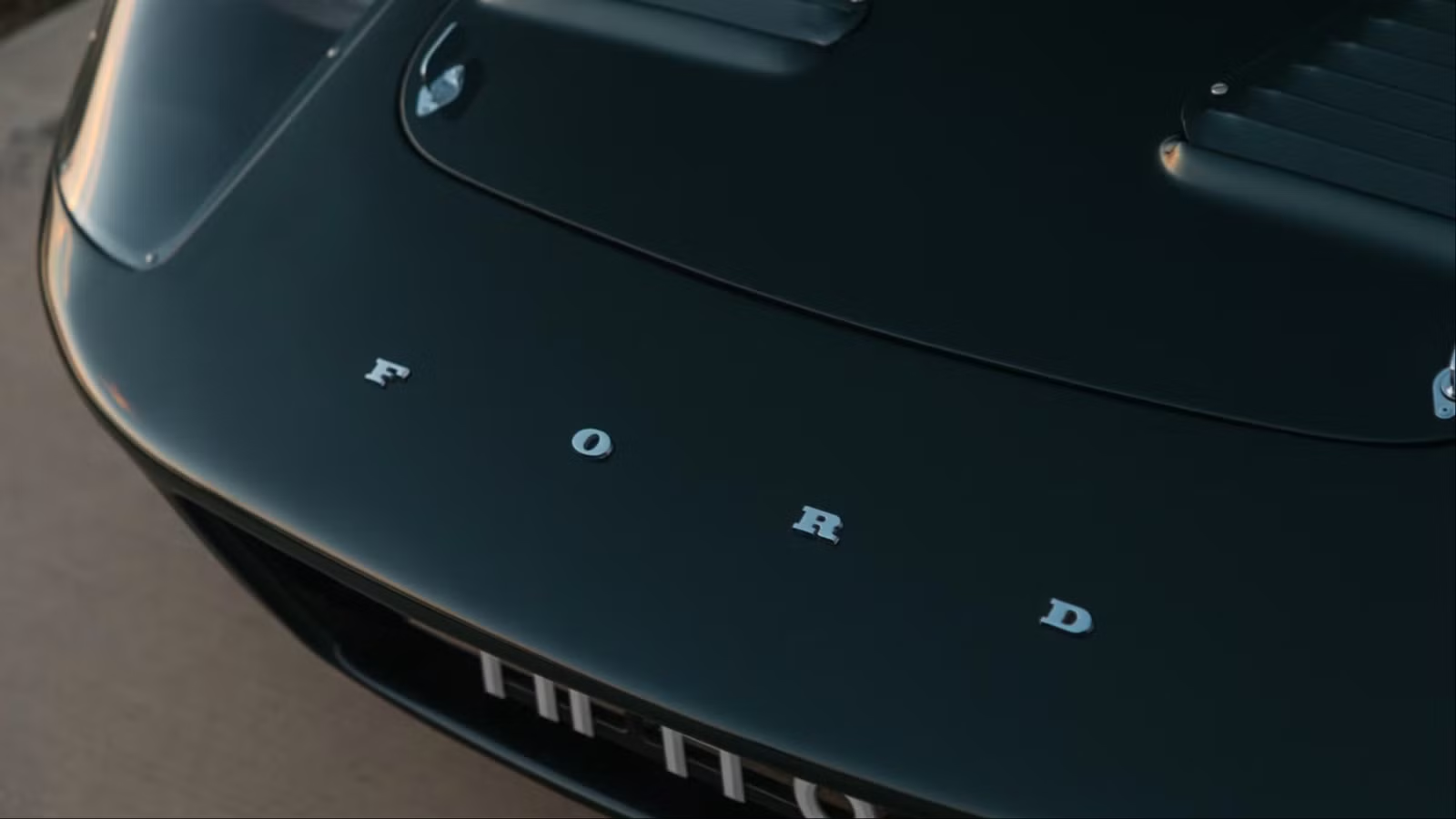
This Sunday is a very spcial anniversary for car movie buffs. Why? Because it was on November 15, 2019, that one of the best automotive movies in recent times was released: Ford Vs Ferrari. This real-life tale of dastardly betrayal, plucky determination, and an epic battle between two automotive giants on the racetrack was a huge hit, buoyed by solid lead performances by Matt Damon and Christian Bale. But while the movie focuses on the triumph of the Ford GT40 at Le Mans, it doesn’t tell you so much about the failure of the car — and how a mechanic with a wrench turned it from deathtrap to winner in just a few hours.
The Basis Of The GT40 Wasn’t A Ford After All

Actions speak louder than words. No one really knows who said that first, but it was probably ringing in the ears of Henry Ford II when he left a meeting with Enzo Ferrari in the early ’60s. Ferrari’s il Commendatore wanted to sell the company, and Ford desperately wanted it. But after 22 days of negotiations, Enzo pulled out, went and grabbed some lunch, and left Ford empty-handed and apparently muttering something about kicking a backside. At that moment, the GT40 was born.
What a lot of people don’t realize is that the GT40 already kind of existed at this point. Ford asked British firm Lola to develop the GT40, and with little time to develop a brand-new racecar that had a chance of beating Ferrari, they used a model that was already built. The Lola Mk6GT had a production run of just three vehicles and started racing in 1962, but it would go on to be the basis for one of the most famous supercars in history. The Mk6GT had a lot going for it, featuring a monocoque construction at a time of space frames, and the slippery body was the perfect home for a large, powerful, and resilient American V8.
But The GT40 Was A Multi-Million Dollar Disaster

All the pieces of the puzzle were there: a great car, huge financial might, and a ton of experts. But the Ford GT40 was turning out to be a disaster. With the MK6’s first outing at Le Mans crippled by a lack of time to set it up, followed by a crash into a wall through gearbox failure, it was back to the drawing board. In 1965, the new GT40 was still coming across like a rolling development vehicle. While showing potential, the cars were besieged by problems from gearbox issues to a full-on fire that gutted a GT40 at Le Mans 1964.
By 1965, Ford was expected to have ironed out the problems with the GT40, and having thrown millions at the project, needed a result. But even with Carroll Shelby now running the struggling program, the GT40 MkII, with its 4.7-liter V8, was knocked out of Le Mans by mechanical problems. Anyone who has seen the movie will know that the GT40 would ultimately bounce back to defeat Ferrari at Le Mans ’66 the following year, and that’s because they had a secret weapon.
Ken Miles Fixed The GT40 With Some Scotch Tape And A Ball Of Wool
Ken Miles was a racing engineer, mechanic, and professional driver who was born in Britain’s drizzly-sounding Sutton Coldfield but moved to sunny California, making his name as something of a magician when it came to setting up and testing cars. Shelby had recruited Miles, played by Bale in the movie, as the GT40 lead development engineer, hoping that he could iron out the issues with the car. Miles gave Shelby his money’s worth straight away, testing the 7.0-liter 427 big-block V8 in the GT40 chassis, resetting the suspension for better high speed stability, and developing methods to stress test engines. But there was one change that Miles made that likely contributed to the GT40’s success more than any other.
The Solution Was Low Tech

During testing at Willow Springs International Raceway in the Mojave Desert, Ford was using equipment the size of an ice box to try to identify problems with aerodynamics. While Miles no doubt spent weeks, if not months, working on solutions himself, the movie Ford Vs Ferrari famously depicts the moment when Miles ignores the computer data and oversees Scotch tape and a ball of wool being applied to the body of the car. This reveals where air flow is getting stuck, causing the front to lift unnervingly at high speed. With this simple test, Miles sidesteps endless wind tunnel testing and, according to movie legend at least, produces a new, reshaped nose with a sharper front lip, better cooling that recovers 76 hp, and a rear lip spoiler for better stability. All in the space of a few hours, or, as the saying goes, a weekend’s work.
The Joy And Tragedy That Followed
Ford famously went to Le Mans in 1966, and while Ford got the dream one-two-three finish, Miles was relegated to second despite leading the race in the final stages. Bruce McLaren’s car pulled up alongside and the race organizers decided that as the #2 car had started further back down the grid, it was the winner. Sadly, Miles wouldn’t have another chance at getting the Le Mans win. Weeks later, Miles was testing the ‘J-Car’ project, an evolution of the GT40, when the car flew off a bank at 200 mph. Miles was killed in the crash.
The GT40 that he helped to make into a world beater went on to win Le Mans in 1967, 1968, and 1969. Despite the Lamborghini Miura being seen as the world’s first supercar, it could be argued that the GT40 Miles helped to create, which was a road-going model in MKIII guise, was technically around first. While you can enjoy Ford Vs Ferrari today on a streaming platform, there was a chance to see one of the Superperformance GT40 continuation cars that featured in the movie at the recent SEMA Show 2026 in Las Vegas. HotCars was there to see it in all its glory,
Sources: Ford

Related posts




Latest Post



No Comments