
Why Buying A Motorcycle For Your Imagined Lifestyle Can Backfire
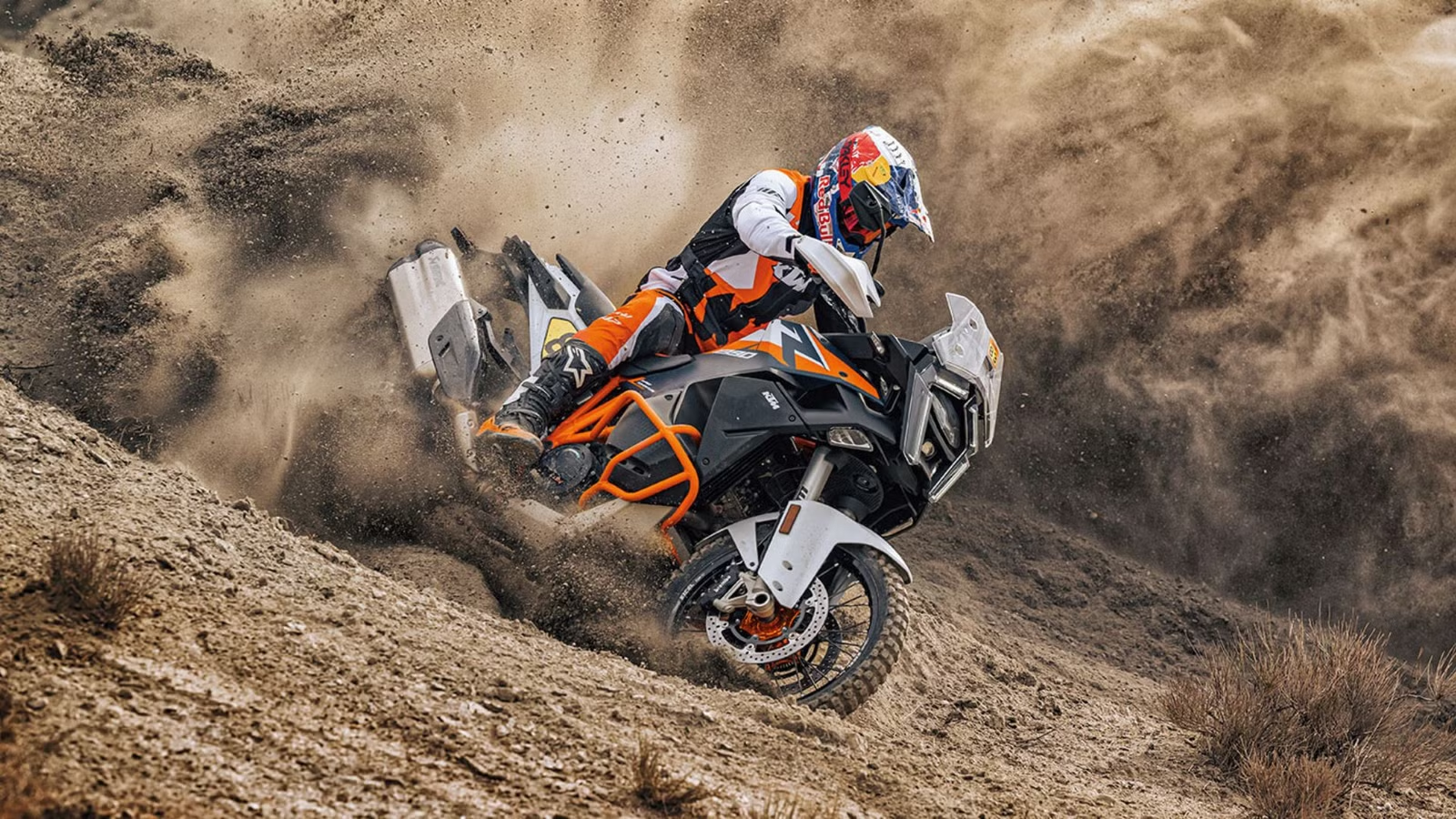
Motorcycles have always been about more than getting from one place to another. They’re expressions of personality, freedom, and sometimes even ambition. It’s why we gravitate toward machines that promise experiences we’d love to have, whether that’s crossing continents, tackling technical trails, or carving up a racetrack. But somewhere between watching promotional videos and signing the paperwork, it’s easy to forget what our everyday riding actually looks like. And that disconnect can turn an exciting purchase into an expensive lesson.
Motorcycle Manufacturers Are Really Good At Selling Dreams

There’s a reason motorcycle advertisements rarely feature someone sitting in rush-hour traffic or searching for parking outside a grocery store. Instead, we’re treated to spectacular mountain passes, empty desert trails, and professional riders pushing motorcycles to their limits. It’s aspirational marketing, and it works because we don’t just see ourselves riding these machines. We imagine ourselves becoming the people riding them, complete with the skills, confidence, and freedom that make those adventures possible.
Social Media Makes The Fantasy Even More Convincing

Social media has taken this phenomenon to another level. Scroll through Instagram or YouTube, and you’ll find adventure riders exploring remote landscapes, superbike owners attending exclusive track days, and enduro enthusiasts conquering terrain that would defeat most recreational riders. These experiences are absolutely achievable, but what we don’t always see is the money, training, preparation, and free time required to make them happen. Instead, the motorcycle becomes the most visible part of the equation.
This creates an interesting situation where purchasing a particular motorcycle becomes a shortcut to adopting an identity. We start convincing ourselves that we need specialized equipment before we’ve even developed an interest in using it properly. There’s nothing wrong with having ambitious riding goals, of course. But spending thousands of dollars on a motorcycle designed around an imagined lifestyle doesn’t automatically make that lifestyle practical, accessible, or even enjoyable.

Buying Into The Fantasy Can Become Expensive Cosplay

Here’s where things get interesting. Some of the coolest motorcycles on the market are also among the most specialized, and specialization almost always involves compromises. A machine engineered to perform exceptionally well in one environment isn’t necessarily enjoyable everywhere else. Yet it’s common to see riders choose motorcycles based on their ultimate capabilities rather than their typical usage. The result is sometimes a very expensive piece of equipment that’s spectacular at activities its owner rarely participates in.
Adventure Bikes Aren’t Always The Adventure You Expect

Take the 2026 Yamaha Ténéré 700, for example. At $10,999, it offers a 689cc parallel-twin engine, a fully adjustable 43mm inverted fork with 8.3 inches of travel, 21-inch front and 18-inch rear wheels, and selectable ABS. It’s an impressively capable adventure motorcycle, but its 34.4-inch seat height and 459-pound wet weight also demand consideration. These characteristics make sense when tackling rough terrain, but they can become cumbersome when most journeys involve urban traffic and pavement.
The more specialized Ténéré 700 World Raid takes things further, with a 6.1-gallon fuel tank, 9.1 inches of front suspension travel, a 35-inch seat height, and a 485-pound wet weight. Starting at $12,999, it’s built for riders who genuinely need additional range and off-road capability. But if your adventures consist primarily of weekend highway rides and occasional gravel roads, those upgrades might introduce compromises without delivering meaningful benefits. And that’s before adding luggage, crash protection, and other accessories.
Superbikes Come With Their Own Set Of Compromises

The same argument applies to sport bikes. Consider the 2026 Kawasaki Ninja ZX-6R, which starts at $11,599, or $12,599 with ABS. Its 636cc inline-four produces a claimed 127 horsepower at 13,000 rpm and 52.1 pound-feet of torque at 10,800 rpm. With adjustable suspension, traction control, selectable power modes, and an upshift-only quick shifter, it’s a serious performance machine. But its aggressive ergonomics and high-revving character also make everyday commuting less appealing than riding on a racetrack.
The problem isn’t that these motorcycles are too powerful or too capable. It’s that their strengths often become difficult to appreciate in ordinary riding conditions. A superbike’s committed riding position makes perfect sense when you’re hanging off through corners, but less so when navigating congested streets. Likewise, a hardcore enduro’s lightweight construction and long-travel suspension are fantastic on technical trails, but its narrow seat, aggressive tires, and demanding maintenance schedule can become frustrating on longer road journeys.
The Best Motorcycle Is The One That Matches Your Reality

Perhaps the biggest misconception in motorcycling is that more capability automatically means a better riding experience. In reality, an approachable motorcycle can be more rewarding precisely because it doesn’t demand so much from its rider. A machine that’s comfortable, manageable, and easy to maintain encourages spontaneous rides rather than requiring elaborate planning. It’s also easier to develop your skills when you’re not constantly managing the compromises of equipment designed for conditions you seldom encounter.
Consider the 2026 Yamaha MT-07, starting at $8,599. Its 689cc parallel-twin engine, 403-pound wet weight, and 31.7-inch seat height make it an accessible everyday motorcycle. It also gets a 41mm inverted fork, dual 298mm front brake discs, ABS, and a six-speed transmission. It doesn’t offer the outright track performance of a supersport or the expedition-ready hardware of an adventure bike, but its versatility makes it an excellent example of how usable performance can translate into more enjoyable riding.
There’s Nothing Wrong With Buying Your Dream Motorcycle

None of this means enthusiasts should stop buying motorcycles simply because they love them. If owning a Ducati Panigale makes you happy, even if you never take it to a racetrack, that’s a perfectly legitimate reason to buy one. Motorcycling has always been an emotional pursuit, and reducing every purchase to a practical calculation would take much of the enjoyment out of it. Besides, buying an aspirational motorcycle can motivate riders to attend training courses, explore unfamiliar destinations, and develop new skills.
The distinction comes down to understanding what you’re actually purchasing. Are you buying a motorcycle because its capabilities genuinely complement the riding you enjoy, or because you hope owning it will transform your lifestyle? Both motivations are understandable, but only one guarantees that the machine suits your current needs. Ultimately, the best motorcycle isn’t necessarily the fastest, most expensive, or most technically impressive. It’s the one that makes you look forward to riding, even when the destination is nothing more exciting than your favorite coffee shop.
Source: Various Manufacturers

Related posts

Latest Post


No Comments