The Toyota SUV That Feels More Expensive Than It Really Is
8 minutes reading
Saturday, 29 Aug 2026 13:00 0 49 autotech
The luxury SUV segment in the U.S. is currently experiencing a period of growth and mainstream dominance. Over the past five years, premium and luxury crossovers and SUVs have cemented their position as the preferred choice for affluent consumers who prioritize a blend of versatility, advanced technology, and elevated status.
Sales trends indicate that full-size offerings are becoming increasingly pivotal to profitability, with established premium manufacturers from Europe and Japan currently leading the sales race by maintaining strong brand loyalty and constantly refreshing their diverse portfolios to balance traditional luxury expectations with modern innovation.
Front interior picture of a 2026 Toyota Crown SigniaToyota
Mass-market manufacturers are responding to this trend by increasingly infusing their mainstream SUV lineups with premium design elements. This includes high-quality materials and sophisticated digital systems to satisfy rising consumer expectations for a more upscale daily driving experience. The democratization of luxury is driven by the realization that modern buyers no longer view utility and comfort as mutually exclusive, leading brands to integrate features previously reserved for high-end segments into their volume sellers.
Taking this approach has been highly effective in driving demand. Sales figures over the past few years show increased brand loyalty that expands to a wider demographic of shoppers who seek a premium experience. Consumers are now able to do this without the steep price tag associated with dedicated luxury marques. Consequently, while this shift has successfully boosted sales volume and improved perceived vehicle value, it has also contributed to a consistent upward pressure on the average transaction price across the entire mainstream SUV segment, fundamentally altering the traditional value proposition of the category.
Toyota’s Broad Approach To SUVs
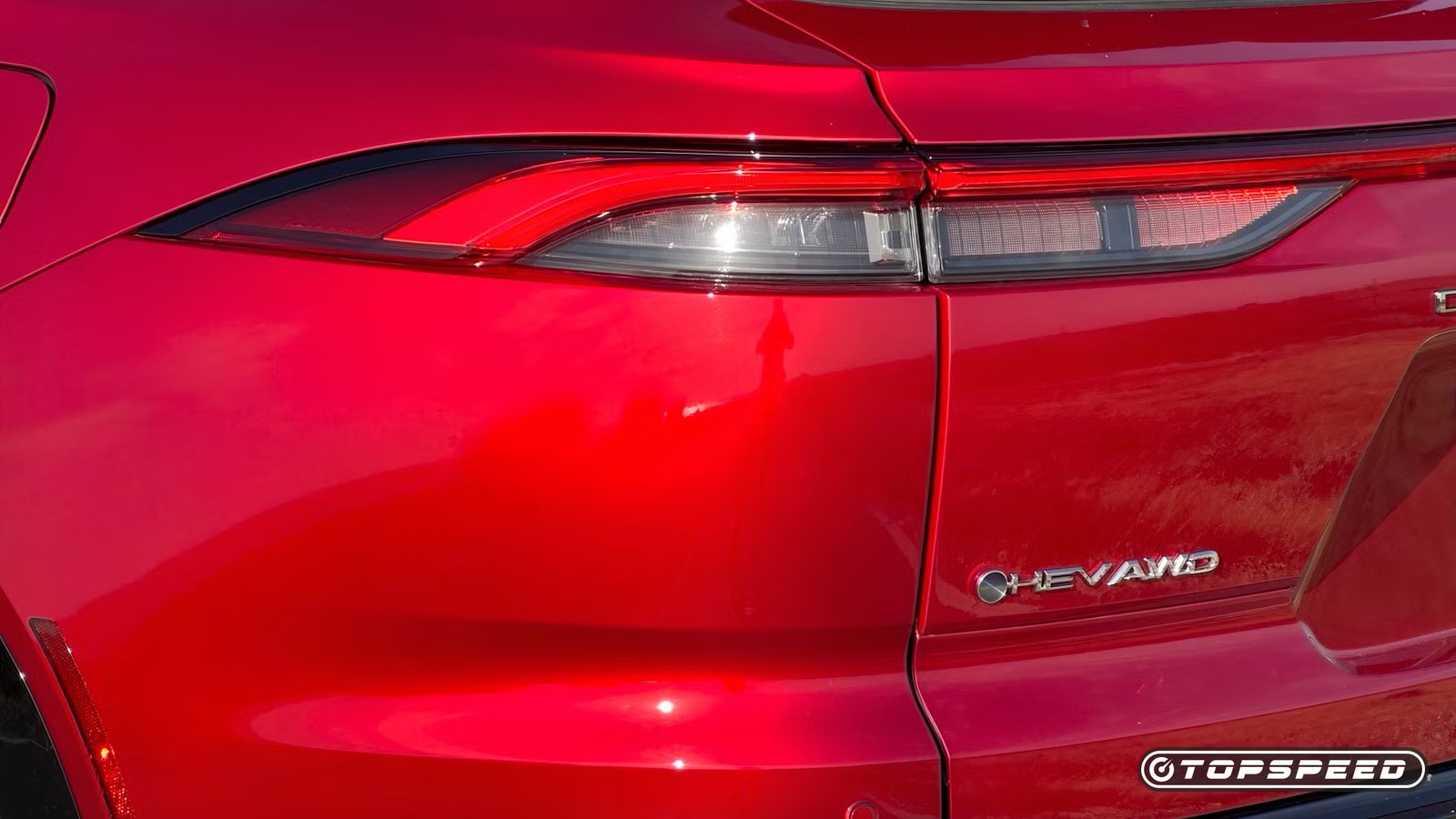
2026 Toyota Crown Signia Limited front badgeLyndon Conrad Bell | TopSpeed
Toyota approaches its SUV portfolio with a disciplined, multi-pathway strategy that leverages its reputable manufacturing philosophy. The Japanese brand bases this on the pursuit of efficiency, waste elimination, and continuous incremental improvement. The result is high-quality, reliable vehicles produced at scale for the global market. Both Toyota’s mainstream division and its luxury Lexus brand prioritize a design language that balances aggressive, athletic aesthetics with functional, driver-focused interiors, often incorporating advanced safety and connectivity technology to remain competitive in a rapidly evolving market.
In the U.S., this approach has proven remarkably successful. This is despite a broader industry navigating supply chain challenges and a decline of demand for EVs. Toyota reports it has maintained a dominant market presence by offering a massive, versatile catalog of electrified and internal combustion options. By aligning its production capacity with shifting consumer preferences and focusing on the widespread appeal of its hybrid technology, the company has managed to sustain strong sales momentum and high brand loyalty, reinforcing its position as a powerhouse within the American automotive landscape.
The Crown Signia Is An Underrated Premium SUV
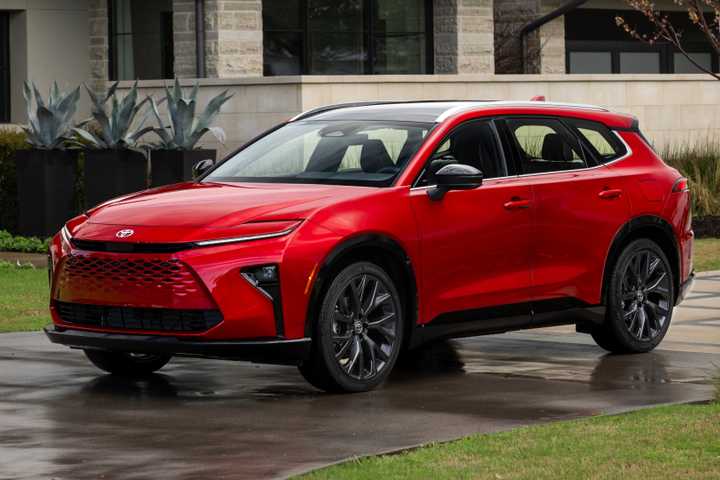
Front 3/4 action shot of 2026 Toyota Crown Signia driving on roadToyota
The 2026 Toyota Crown Signia is a distinctive and high-end niche crossover option in the brand’s expansive catalog. It’s positioned as a premium-leaning hybrid crossover that bridges the gap between mainstream utility and entry-level luxury. Toyota introduced this model to the U.S. market for the 2025 model year. It adopts a sleek, aerodynamic silhouette and a refined, quiet cabin that leans heavily into a near-luxury experience without the premium badge price.
While it acts as a more accessible alternative to traditional luxury-branded wagons and crossovers, its success has been defined by its ability to leverage Toyota’s core strengths. Its most appealing aspects include its fuel-efficient hybrid powertrain and reputation for long-term reliability, making it a high-value proposition. The brand ups the ante by giving it a sophisticated ride quality and comprehensive standard features that you’d typically find in competing near-luxury models.
One Of Toyota’s Poorest-Performing Models
Rear 3/4 action shot of 2026 Toyota Crown Signia driving on roadToyota
While it is an appealing luxury crossover value proposition, the Crown Signia has not been a successful product for the brand. As of the first six months of 2026, Toyota confirms to have only sold 11,231 units, reflecting an 8.6 percent sales decline year-on-year. For reference, the Crown Signia shares its platform with the Lexus NX, which the brand reports sold 30,763 units in the same period.
Despite its poor sales, the Crown Signia remains a well-loved crossover option. J.D. Power gives the 2026 model year an 80/100 consumer-verified overall score, including 82/100 for quality and reliability, 79/100 for the driving experience, 79/100 for resale, and 76/100 for the dealership experience.
On the Edmunds consumer reviews portal, the same model holds a 4.6/5 average score, with key pros being its fuel efficiency, visual presence, ride quality, and reliability and manufacturing quality. It draws criticism for poor engine performance and a problematic infotainment system.
Being a Toyota, the Crown Signia benefits from attractive long-term ownership costs that are substantially lower than its pure luxury counterparts. CarEdge indicates that you can expect to spend $42,358 over the course of five years. Some of these costs include $6,080 on fuel and $2,041 on maintenance. You can also expect to lose an estimated $14,200 of its value in depreciation.
iSeeCars publishes a $15,773 or 35.5 percent depreciation estimate over the same period, which is on par with value losses from hybrid SUVs in its segment.
The Crown Signia’s Well-Appointed Cabin
2026 Toyota Crown Signia Limited interiorLyndon Conrad Bell | TopSpeed
The 2026 Toyota Crown Signia provides a well-appointed experience even at the entry level, with the XLE trim serving as a sophisticated foundation for $44,490. For reference, Lexus starts pricing the mechanically identical NX at $47,120, making the Crown relatively affordable by premium standards. The Signia’s base trim includes leather upholstery, eight-way power-adjustable and ventilated front seats, and a heated steering wheel. The dashboard features a 12.3-inch Toyota Audio Multimedia touchscreen, complemented by a 12.3-inch digital instrument cluster, wireless Apple CarPlay and Android Auto compatibility, and a Qi wireless charging pad.
Stepping up to the Limited trim costs $48,890. This trim significantly enhances the cabin’s atmosphere and convenience, introducing an 11-speaker JBL premium audio system, a fixed panoramic glass roof with a power sunshade, and heated rear seats for improved passenger comfort. The Limited also adds practical refinements such as rain-sensing automatic windshield wipers, driver’s seat memory settings, and an upgraded lighting array, along with enhanced parking support through front and rear parking sensors with automatic braking. Across both trims, the vehicle maintains a focus on modern ease-of-use with standard features like dual-zone automatic climate control and the comprehensive Toyota Safety Sense 3.0 suite.
Safety Suites Rivaling The Most Luxurious SUVs
A front view of a 2026 Toyota Crown Signia being driven on a roadToyota
The 2026 Toyota Crown Signia is equipped with dynamic active features, including the standard Star Safety System. This suite features enhanced vehicle stability control, traction control, and anti-lock brakes. Passive safety relies on rigid crumple zones and eight standard airbags, including dual-stage front airbags, side curtain airbags, and knee airbags.
Advanced driver assist functionality centers on the standard Toyota Safety Sense 3.0 suite. This package combines Dynamic Radar Cruise Control, Pre-Collision System with Pedestrian Detection, Lane Tracing Assist, Lane Departure Alert with Steering Assist, Road Sign Assist, and Proactive Driving Assist. Standard Blind Spot Monitor and Rear Cross-Traffic Alert complete the protective configuration.
Toyota’s Trusty Hybrid Powertrain
Close-up shot of 2026 Toyota Crown Signia Limited engine bayLyndon Conrad Bell | TopSpeed
The 2026 Toyota Crown Signia is powered by a 2.5-liter Dynamic Force four-cylinder hybrid engine paired with an electronically controlled continuously variable transmission and standard electronic On-Demand All-Wheel Drive. This system generates a combined output of 240 horsepower and 178 pound-feet of torque.
Toyota indicates that the crossover will achieve a 0 to 60 MPH time of 7.1 seconds. While Toyota does not officially publish a top speed limit for this model, it is designed for efficiency and refined daily drivability rather than high-speed performance. Additionally, the vehicle offers a maximum towing capacity of 2,700 pounds, providing sufficient capability for light-duty recreational hauling.
Compact Crossover Interior Proportions
Shot of 2026 Toyota Crown Signia Limited Interior showing rear seatsLyndon Conrad Bell | TopSpeed
The 2026 Toyota Crown Signia offers a spacious and premium interior designed for comfort, featuring seating for five passengers. In the front row, occupants enjoy 39.1 inches of headroom and 42.1 inches of legroom, while the rear seating area provides 38.9 inches of headroom and 37.1 inches of legroom.
Cargo flexibility is a key highlight of the cabin. With the rear seats in their upright position, the vehicle provides 25.8 cubic feet of cargo space. When the second-row seats are folded completely flat, the maximum cargo capacity expands to 68.8 cubic feet, offering a versatile area for larger items.
Impressive Fuel Consumption Returns
2026 Toyota Crown Signia acceleratingToyota
Being a hybrid, the Signia’s most notable strength is its incredible EPA-estimated consumption and range figures. The XLE and Limited share the same estimates despite featuring different wheel sizes. This comes in at a 39/32/38 MPG result on the city/highway/combined cycle, together with a 551-mile range claim from the 14.5-gallon tank and 0.9 kWh lithium-ion battery pack.
The EPA estimates up to $3,000 in gasoline savings over five years and about $1,600 per year in fuel costs. It will cost you $2.70 to drive 25 miles and $59 to fill the tank all the way up. Granted, these are not class-leading figures, but it’s one of the best balances of efficiency and performance that you’ll find in the premium hybrid crossover market.
Base Trim Engine
2.5-liter 4-Cylinder Hybrid
Base Trim Transmission
CVTi-S
Base Trim Drivetrain
All-Wheel Drive
Base Trim Horsepower
188 HP @6000 RPM
Base Trim Torque
178 lb.-ft. @ 4300 RPM
Make
Toyota
Model
Crown Signia SUV
Segment
Compact SUV
Sources: Toyota, J.D. Power, Edmunds, CarEdge, and the EPA.









No Comments