
Why BMW Middleweights Might Be The Smartest ADV Buys In 2026
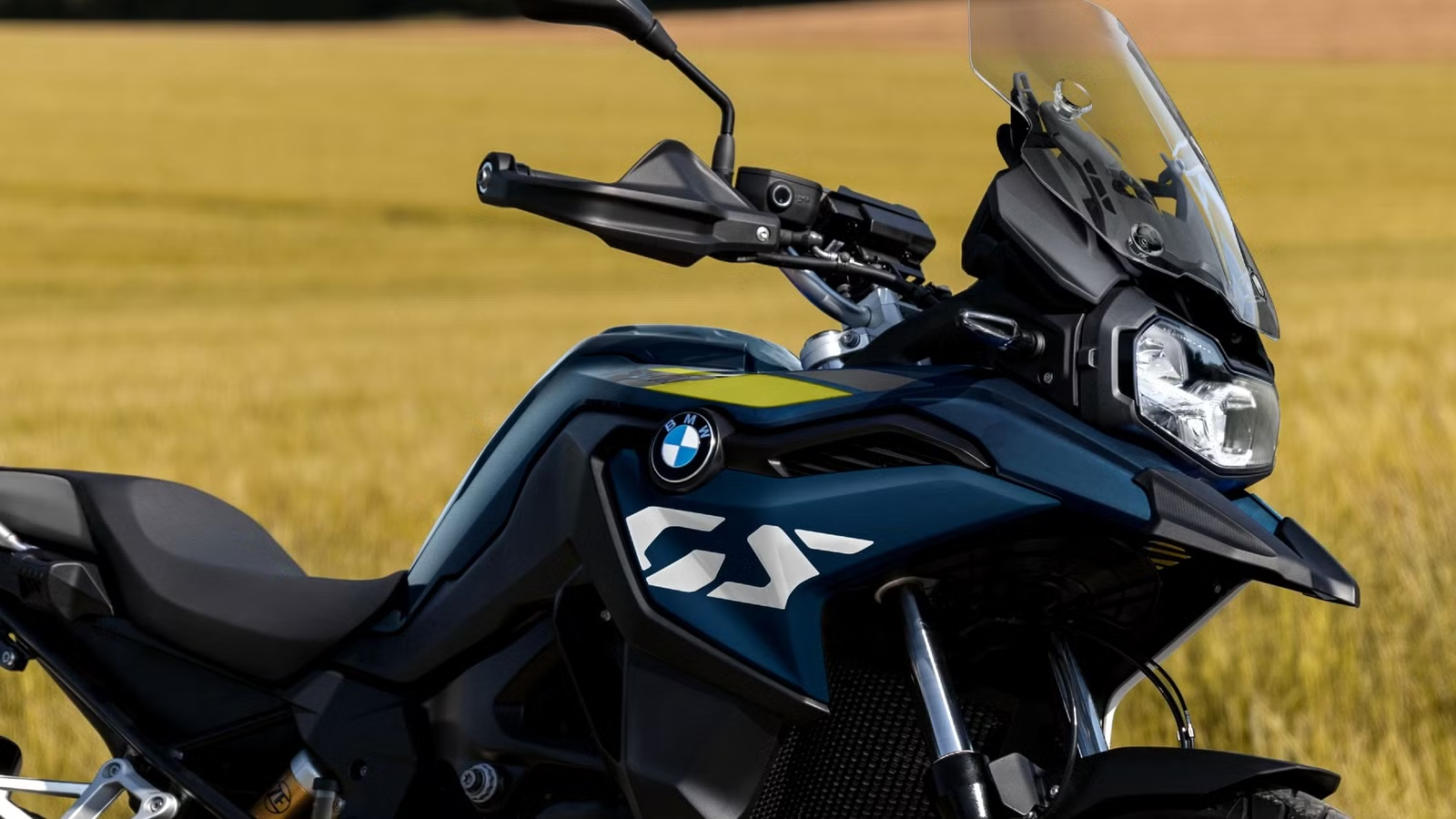
Adventure bikes are meant to traverse the world, enabling the rider to conquer just about any terrain and still be able to ride it to work with barely a fuss. This means doing opposing jobs, so simply buying the biggest one isn’t the straightforward solution for everyone. The biggest ADVs are like large off-roaders that come on their own in the right environment, but in the city and urban landscape, they’re quick to feel misplaced. BMW’s boxer-powered R 1300 GS models remain the flagships, yet the middleweight range now covers what makes an ADV genuinely useful. For many riders in 2026, the better buy may be the GS that gives up unnecessary excess.
A Smart Adventure Bike Needs More Than A Smaller Engine

Let’s start with weight, because the middleweight label can be misleading in this class. A smaller engine does not guarantee a lighter motorcycle once fuel, protection, and touring equipment are slapped on. A 20 or 30-lb difference can also disappear quickly beneath the added bulk of luggage. Weight only becomes a major advantage when the whole motorcycle is designed around reducing it or, at least, not making it felt.
Cost is more straightforward. A lower entry point leaves money for luggage, tires, protection, training, or simply more riding. It can also make taking the bike onto a rocky trail feel less financially intimidating. A scratch on a brand new 1300 GS on a tight trail where it’s unavoidable is going to hurt much more than a lower-priced equivalent. And adventure riding is a space where expensive bodywork and hard ground meet pretty often.

An ADV also needs enough power to cruise, pass traffic with luggage, and handle elevation, but hitting the dirt and the loose terrain rarely needs huge horsepower. In fact, more power is detrimental to better bike control on the dirt. Throttle response, gearing, traction, and rider confidence become more useful tools as grip drops. A middleweight can therefore surrender substantial peak output without losing real adventure capability.

All of this, however, only works if the chassis suits the job. A road-biased bike use should not make its owner tolerate a tall rally setup every day, while a dirt-focused model should not carry additional touring hardware bulk that it may not ever need. BMW intelligently avoids asking one middleweight GS to cover all of this and instead bifurcates the duties onto three distinct 2026 F-series motorcycles.
BMW Has Three Different Middleweight ADV Solutions

The F 800 GS, F 900 GS, and F 900 GS Adventure share BMW’s 895cc parallel-twin, but they are not merely three equipment grades. The F 800 GS makes 87 horsepower and 67 pound-feet, while both F 900s produce 105 horsepower and 68.6 pound-feet. BMW then changes wheels, suspension, fuel capacity, ergonomics, weight, and equipment around that engine. One is road-biased, another is built to spend more time in the dirt, and the third GS adds the necessary hardware for longer tours.
The F 800 GS Is Built For The Road

At $10,995, the F 800 GS is the cheapest and most approachable of the trio. Its 32.1-inch seat, 19-inch cast front wheel, 4.0-gallon tank, and 500-lb road-ready weight suit commuting, pavement, poor roads, and easier gravel sections more than any technical off-road riding. The 87 horsepower tune still has enough performance for interstate riding and luggage carrying, but without making the motorcycle needlessly aggressive. Heated grips, ABS Pro, Dynamic Traction Control, a 6.5-inch TFT, and two riding modes come standard.
The F 900 GS Drops Weight

For riders who frequently leave the pavement seeking the off-the-beaten-path, the $14,395 F 900 GS is the key model. It gets a 21-inch cross-spoke front wheel, 9.05 inches of front travel, an adjustable 43 mm fork, wider enduro footpegs, and a 34.2-inch seat height, yet weighs 482 pounds ready to ride. Its 3.8-gallon tank limits the range, but the smaller plastic tank contributes to a broader weight-saving solution over the old F 850 GS. If rough terrain is the priority, carrying less fuel can be preferable to carrying unnecessary mass through every difficult section.
The F 900 GS Adventure Adds Weight But For A Reason

The F 900 GS Adventure proves why displacement is a poor proxy for size. At 542 lb, it is 19 lb heavier than the standard R 1300 GS, so this is not a lightweight boxer alternative by any means. Instead, $15,195 buys a 6.0-gallon tank, adjustable touring screen, comfort seat, aluminum engine guard, luggage rack, and the same 105-horsepower parallel-twin. Its purpose, however, is to package touring hardware below flagship money.
Its natural comparison is the R 1300 GS Adventure. That bike brings 7.9 gallons, shaft drive, 145 horsepower, 110 pound-feet, and more technology, but weighs 593 pounds and starts at $23,795. The F 900 GS Adventure is 51 pounds lighter and $8,600 cheaper while retaining a 21-inch front wheel and more than nine inches of front suspension travel.
BMW’s Middleweights Keep You From Paying For Unused Performance

The standard R 1300 GS complicates the comparison because BMW has kept its weight under control. At 523 pounds, it is only 41 pounds heavier than the F 900 GS, while offering tech like the Telelever front suspension, cruise control, and electronics. The F 900 GS nevertheless saves $6,000, enough to materially change the ownership proposition. The question is not whether the boxer offers more, but how often a rider will use what the extra money buys.
The F 800 GS appeals to its buyers for different reasons. It is only 23 pounds lighter than the R 1300 GS, so its case rests on its lower seat height, friendlier road-biased nature, and a huge $9,400 lower MSRP rather than drastic mass reduction. These are differences that matter every day, and not only on an ambitious trip.
Rival Middleweights Bring Out BMW’s Compromises

Yamaha’s 2026 Ténéré 700 starts at $10,999, almost exactly beside the F 800 GS, but its 21-inch front wheel and 689cc platform give it a stronger dirt bias. Riders who prioritize trail work may prefer the Yamaha by default. That makes the F 800 GS better suited to riders whose adventures include substantial pavement use, and that’s what should dictate the choice.
The 2026 KTM 890 Adventure R puts similar pressure on the F 900 GS with its $16,299 MSRP, 21/18-inch wheels, 9.45 inches of suspension travel, and roughly 474 pounds fully fueled weight, making it the harder-core off-road tool. However, BMW’s strength in 2026 is the space it leaves between those extremes. Across the three F-series GS models, BMW has effectively separated price, ergonomics, and intended terrain use instead of pretending that displacement solves all three use cases in one unified high-power package.
Source: BMW Motorrad

Related posts



Latest Post


No Comments