
VW Bosses Just Sounded A Public Alarm, And The Words They Used Should Worry Every GTI And Golf R Buyer
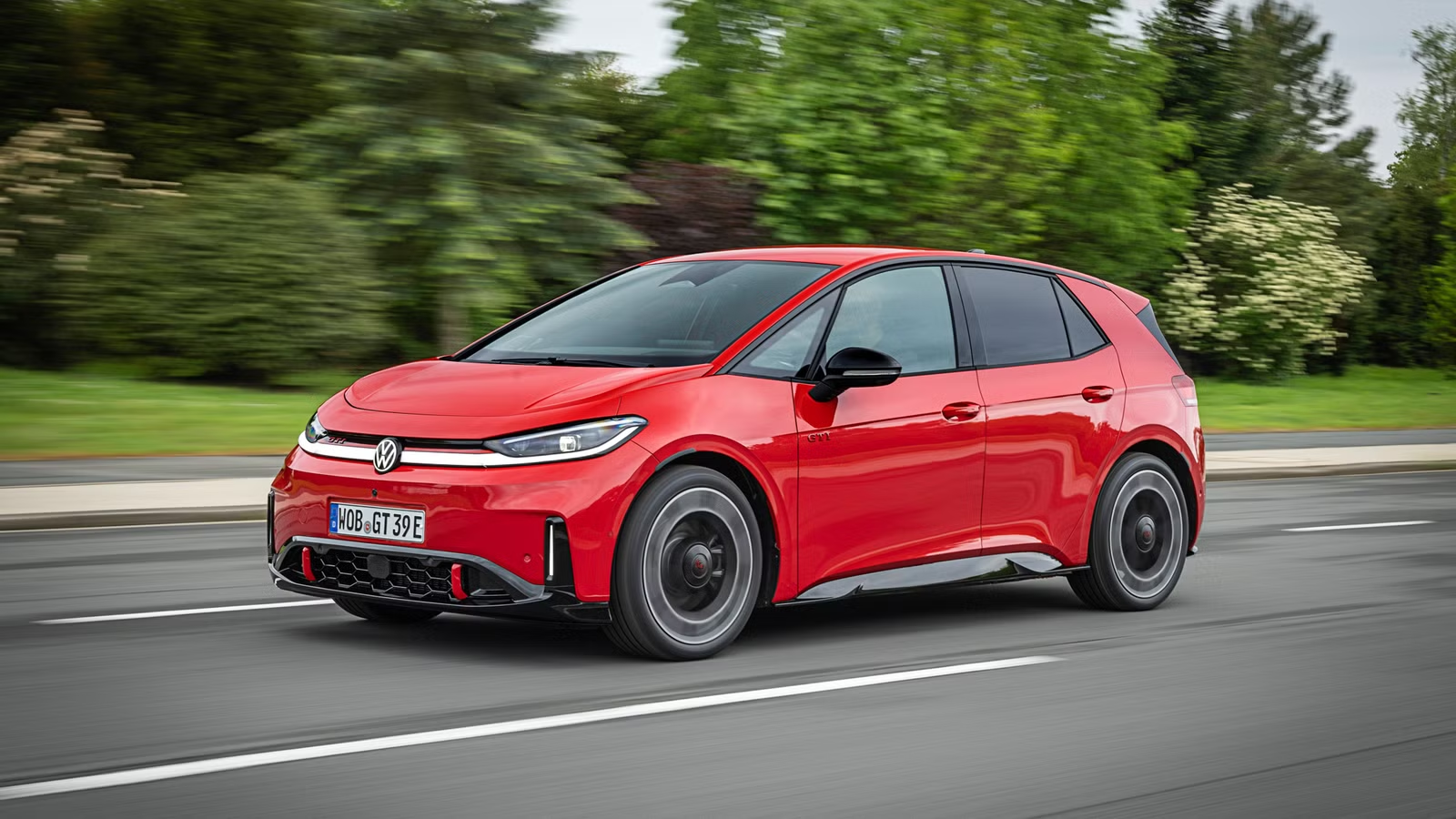
Volkswagen Group’s finance chief Arno Antlitz didn’t mince words when he spoke to Bloomberg this week. “The market changes are profound and lasting,” he said. “We have no time to lose.” That kind of language from the CFO of one of the world’s two largest automakers isn’t a quarterly earnings hedge — it’s a public alarm, and it landed alongside a forecast cut that should make every GTI, Golf R, and ID. owner pay attention.

The group has slashed its 2026 operating-margin outlook from a projected 4.0–5.5% down to no more than 1% — a figure that, on annual revenue exceeding €300 billion, puts the entire conglomerate near breakeven. CEO Oliver Blume was equally blunt in his own statement: “If we don’t want to live off our reserves, we must continue to act decisively. We cannot accept ten consecutive quarters of profit below the prior-year period.” The restructuring that follows is the largest in Volkswagen’s history, and its consequences stretch well beyond the balance sheet.
What Pushed VW To This Point
The crisis didn’t arrive from a single direction — it’s a convergence of pressures that have been building for years and hit simultaneously. Tariffs on the U.S. market have squeezed margins on European-built vehicles. Demand in China, historically VW’s most important growth engine, has contracted roughly 20% with Antlitz explicitly noting “there are no signs of consolidation.” Chinese domestic automakers have simultaneously flooded European markets with lower-cost competition. And rising energy costs in Germany have made manufacturing more expensive at exactly the wrong moment.

The EV transition adds a painful layer. European legislation is accelerating the phase-out of profitable combustion-engine models while pushing sales of battery-electric vehicles that currently carry far thinner margins. VW’s electric sales are growing — the ID. lineup is expanding — but those sales aren’t replacing the profit that combustion cars generated. The €10 billion in special charges flagged in VW’s September 18 regulatory filing includes roughly €6 billion in goodwill impairment tied specifically to Porsche, whose operating profit collapsed 92.7% year-over-year in fiscal 2025, with return on sales falling from 14.1% to just 1.1%.
What The Restructuring Plan Actually Targets

The numbers in VW’s restructuring plan are staggering in scope. The group plans to cut 100,000 jobs across all brands by 2030 — a figure that doubled from earlier projections after a transformation agreement reached just two weeks before this latest profit warning. Model variety is set to shrink by up to 50%, and component variety by as much as 75% on next-generation vehicles. That last figure is worth sitting with: three-quarters of the unique parts currently spread across VW Group’s lineup could disappear in favor of shared components across more models.
Specific plants are already in limbo. VW’s Emden, Zwickau, and Hanover sites, along with Audi’s Neckarsulm factory, have no new models allocated beyond their current-generation vehicles. The Touareg has already been confirmed dead. A gradual phase-out of the SEAT brand is officially under consideration. Ducati has been reported as a potential sale candidate. The Osnabrück plant, which currently builds the T-Roc Convertible, is being repurposed as a defense and security competence center. VW’s stock has fallen nearly 30% since the start of the year, and the group was dropped from the Euro Stoxx 50 index in September — a mechanical consequence of its shrinking market valuation that forces index-tracking funds to sell their holdings.
What This Means For GTI, Golf R, And ID. Owners

The enthusiast concern here is concrete, not abstract. A 75% reduction in component variety sounds like an accounting exercise until you’re three years into ownership and need a specific part for a Mk8 GTI or a Golf R’s Haldex system. Shared platforms and parts bins can work in owners’ favor — more vehicles using the same components means higher production volumes and potentially longer supply windows — but a rapid, forced consolidation creates transition gaps where legacy parts get discontinued before the supply chain has fully adapted.
For ID. owners, the stakes involve software as much as hardware. The ID. lineup depends on over-the-air updates and dealer network infrastructure that require ongoing investment. A group operating at 1% margins has less room to fund that infrastructure, and dealers facing uncertainty about the broader VW Group’s stability may make their own decisions about network participation.
Porsche’s situation deserves a separate mention. With a 1.1% return on sales and another 4,100 job cuts approved by VW’s supervisory board on top of the roughly 8,900 already announced, the brand that was supposed to be VW Group’s profit engine is now a liability on the balance sheet. Porsche has committed to employment guarantees at Zuffenhausen and Weissach through 2035 in exchange for those cuts — which suggests the brand isn’t going anywhere — but the financial pressure is real and ongoing. Q3 results are due October 29, and they’ll be the next hard data point on whether the restructuring is gaining traction or falling short.
Deutsche Bank, for what it’s worth, rates VW shares a buy and argues the headline margin figure “significantly overstates the deterioration in the underlying business” — noting that stripped of one-off charges, the underlying margin sits around 4%. That’s a reasonable counterpoint. But the executives running this company aren’t speaking in those terms. They’re using words like “profound,” “lasting,” and “no time to lose.” Gearheads who’ve invested in the GTI, Golf R, or any VW Group product should take the people running the company at their word.

Related posts




Latest Post


No Comments