
Chevy’s Sneakiest Muscle Car Looked Like a Commuter And Humiliated GTOs
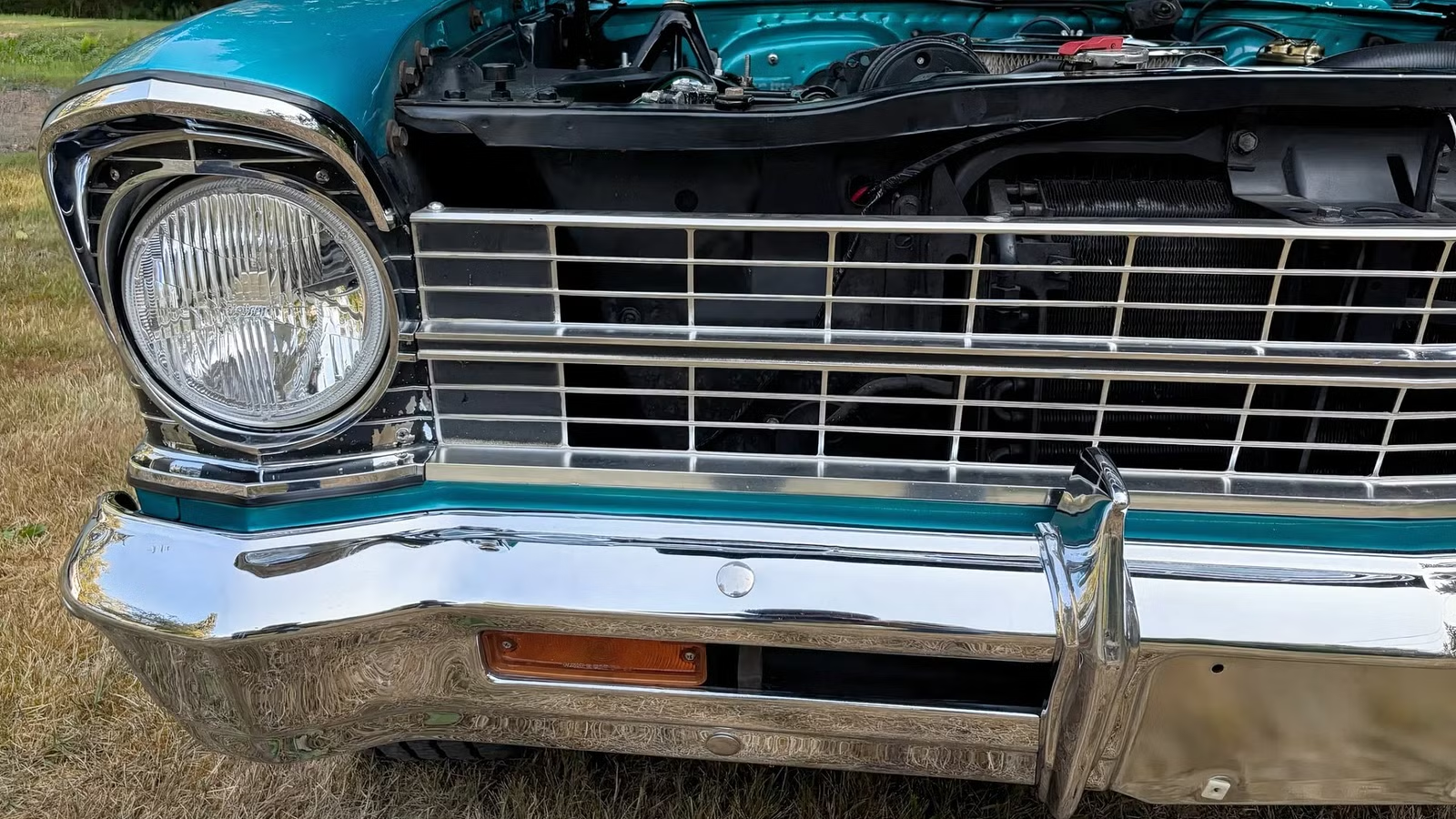
American muscle cars didn’t always need aggressive styling or oversized bodies to deliver serious performance. Sometimes, the most interesting ones looked like ordinary economy cars, hiding enough V8 power to make much bigger machines sweat. Chevrolet had a compact that took this idea further than most, combining a lightweight body with an engine it also sold in the Corvette. From the outside, it looked like an unassuming runabout. Under the hood, it had the ingredients for a genuine sleeper. The catch? Finding one with the right engine was another story.
Chevrolet’s Compact Car Was Never Supposed To Be A Muscle Car

When Chevrolet introduced its compact car for the 1962 model year, the mission was pretty straightforward. It needed to be an affordable, practical alternative to bigger American cars, one that could take on the Ford Falcon without asking buyers to sacrifice half their paycheck at the gas station. The emphasis was on sensible transportation, not tire-smoking performance.
But American car buyers weren’t particularly interested in keeping things sensible for long. By the mid-1960s, manufacturers were discovering that compact cars could make surprisingly effective performance machines. Chevrolet was already testing that potential. By 1964, buyers could order a small-block V8, and a year later, a larger-displacement option pushed the envelope further. The economy car was turning into something far more interesting. The clever part was that Chevrolet didn’t need to start from scratch. It could keep an existing platform and familiar styling, then simply offer a lot more power, giving buyers a car that handled the daily commute without looking like it had just escaped from a drag strip.
The Muscle Car Wars Were Getting Out Of Hand

By the middle of the 1960s, horsepower sold cars, and American manufacturers were locked in a fierce battle for performance-minded buyers. Bigger engines, stronger drivetrains, and increasingly specialized performance packages were turning ordinary showroom cars into serious street machines.
Chevrolet had plenty of ammunition for the fight. The Chevelle offered a larger, more conventional muscle car package, while the Corvette occupied its own performance territory. Then the Camaro arrived to take on the Ford Mustang in the booming pony car market. Yet bigger wasn’t automatically better. A powerful engine in a heavy car has to work harder to produce the same acceleration as one in a lighter machine, so a compact with a strong V8 could deliver a nasty surprise without needing the biggest engine in Chevrolet’s catalog.
There was also the question of appearance. The muscle car market increasingly rewarded loud styling, but not every performance buyer wanted to advertise their intentions. A car with modest trim drew less attention from rivals while still packing serious hardware, and one version of Chevrolet’s compact would become exceptionally hard to find.
Chevrolet Gave The 1967 Chevy II Nova SS A Serious V8

The car is the 1967 Chevrolet Chevy II Nova SS, and the engine that makes it special comes with a twist most retellings skip. The L79 was Chevrolet’s high-performance 327-cubic-inch small-block V8, rated at 350 hp and 360 lb-ft of torque in 1966 under the period’s SAE gross rating system. It shared major components with the Corvette’s 365-hp L76, including 11.0:1 compression and big-valve heads with 2.02-inch intake valves, but used a hydraulic-lifter camshaft instead of the L76’s solid-lifter setup.

A four-barrel Holley carburetor completed the package. That’s Corvette-grade equipment in a car designed to save money. Here’s the twist. The 1967 Nova’s L79 was rated at 325 hp, while Chevrolet’s regular ordering information listed the 275-hp L30 327 as the compact’s top V8. The L79 was off the regular menu, yet compiled production records indicate that six 1967 Novas received it anyway.
That makes these cars a factory oddity, not a package anyone could casually tick on a dealer order form. The Super Sport trim kept things restrained, too. It brought bucket seats and sportier details, but none of the extravagant bodywork that screamed high performance, so the car gave away very few clues about what was under the hood. Chevrolet also put the L79 in the Chevelle and the Corvette. What made the Nova so interesting was how that output worked with the smaller car’s lower weight.
The Nova’s Low Weight Made Its V8 Even More Effective

The proof showed up fast. A period road test of a 1966 L79 Nova SS hardtop ran the quarter-mile in 15.1 seconds at 93 mph, and that car was loaded with options including air conditioning, weighing 3,530 pounds as tested. The testers were far less impressed with the 9.5-inch drum brakes, which had no business trying to stop that much engine. The engine’s character mattered as well. Rather than relying on enormous displacement, the L79 made its peak power at a lofty 5,800 rpm, and Chevrolet only offered it with a manual transmission, giving drivers full control over keeping the engine in its power band.
Drag racers were quick to notice. The Nova’s low advertised shipping weight and 350-hp rating helped put the L79 into NHRA’s A/Stock class, where it faced much larger engines, including the 426 Street Hemi. In 1966, Bill “Grumpy” Jenkins took an L79 Nova into one of that season’s great drag racing rivalries against Jere Stahl’s Hemi-powered Plymouth Belvedere, with both cars running in the high 11s at close to 120 mph. Stahl came out on top more often than not. Still, a small-block compact trading blows with a Hemi said plenty about what Chevrolet had built.
Chevrolet’s Understated Sleeper Became A Muscle Car Cult Classic

So why did the L79 vanish from the 1967 order sheet? The popular theory points at the new Camaro, since an L79 Nova would have out-muscled the Camaro SS and its 295-hp 350 on paper. It’s a tidy story, but no documentation confirms it, so it belongs in the enthusiast lore file rather than the history books.
The production numbers need no embellishment. Compiled production figures list 5,481 L79-equipped Chevy IIs for 1966. For 1967, the commonly cited total drops to just six, which turns a sleeper into a needle in a haystack for collectors. That rarity is what keeps the 1967 car special. Chevrolet never built thousands of 325-hp Nova sleepers that year, but a handful of plain-looking compacts carrying Corvette-grade hardware slipped out the factory door after the option had officially disappeared. For a car that started life trying to save buyers money at the gas station, that’s a pretty wild way to be remembered.
Sources: Classic.com, Bring A Trailer, Mecum, Mac’s Motor City Garage

Related posts



Latest Post


No Comments