
Volvo XC60 and XC90 plug-in hybrids get longer electric ranges
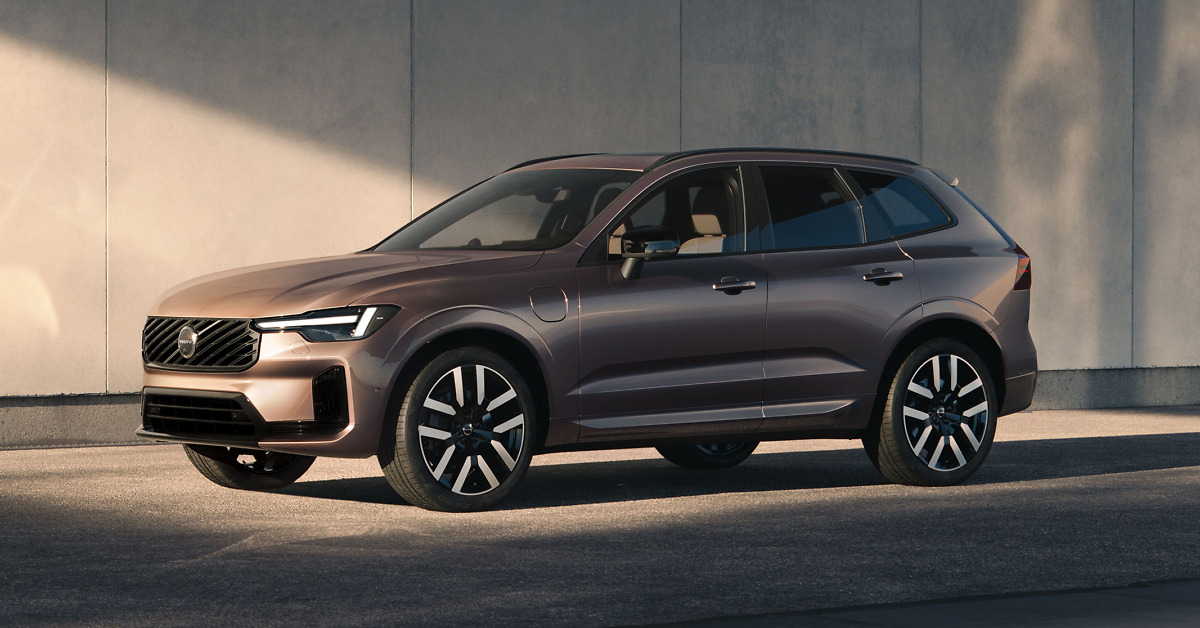
Volvo has announced new long-range plug-in hybrid versions of the XC60 and XC90, capable of travelling up to 124 miles and 99 miles respectively on electric power alone.
The new powertrains more than double the electric range available from the existing plug-in hybrid versions of both SUVs, using larger batteries and more powerful electric motors.

That puts the two Volvos well beyond the electric range traditionally associated with plug-in hybrids and should allow many owners to complete most routine journeys without starting the petrol engine, provided they regularly recharge.
The XC60 competes with premium family SUVs including the BMW X3, Audi Q5 and Mercedes-Benz GLC, while the larger seven-seat XC90 sits alongside models such as the BMW X5, Audi Q7 and Mercedes-Benz GLE.
Up to 124 miles on electric power
The headline change is a new, larger battery integrated into the floor of both models, accompanied by a more powerful electric motor. Volvo says this increases the XC60’s electric range to up to 124 miles, while the larger XC90 can cover up to 99 miles before its petrol engine is required.

That’s a substantial increase over the plug-in hybrids currently on sale. In the UK, Volvo quotes up to 49 miles of WLTP electric range for the current XC60 plug-in hybrid, while the equivalent figure for the XC90 is 43 miles.
The new XC60 can therefore travel roughly two-and-a-half times as far on battery power, while the XC90’s electric range has more than doubled.
The long-range models appear set to replace the existing plug-in-hybrid powertrains rather than sit above them as additional versions. Volvo hasn’t yet detailed the exact UK model line-up, but has confirmed that both SUVs will continue to be offered with mild-hybrid petrol engines alongside the new PHEVs.
Volvo hasn’t yet provided further technical details, including the new battery capacity, electric motor output, combined power output or charging speeds.
XC60 gets design refresh
Alongside its new powertrain, the XC60 receives a styling and technology update. The front end has been redesigned with a new grille, bumper, bonnet and front wings, accompanied by revised ‘Thor’s Hammer’ Matrix LED headlights and new alloy wheel designs.
Changes continue at the back, where Volvo has redesigned the LED tail lights, tailgate and rear bumper.
The cabin has also been extensively updated with a new dashboard and door panels, along with additional trim and upholstery choices.
An 11-inch central touchscreen runs Volvo’s latest infotainment interface, while Google’s Gemini AI assistant allows drivers to use conversational voice commands for functions including navigation and messaging.
New safety technology
The XC60 also gains Volvo’s latest generation of cameras, radar units and other sensors, supporting an expanded range of safety and driver assistance systems.
Automatic emergency braking can intervene if the car detects an impending collision, while automatic emergency steering can help the driver manoeuvre around an obstacle. A door-opening warning can alert occupants to an approaching cyclist or other road user before a door is opened.
Driver assistance technology also includes lane-change assistance, while an upgraded 360-degree parking camera provides a three-dimensional view around the vehicle.
Smaller changes for XC90
The XC90 doesn’t receive the same redesign, having already undergone significant styling and technology updates more recently. The seven-seat SUV also gains Google’s Gemini AI assistant as part of its infotainment system, while the existing Bowers & Wilkins sound system remains available as an option.
Both the XC60 and XC90 will continue to receive over-the-air software infotainment updates after purchase.
Order books for the new models, including ‘Black Edition’ versions, are opening in selected markets now, with production scheduled to begin later this autumn. UK pricing, specifications and launch timings have yet to be announced.

Related posts




Latest Post


No Comments