
Toyota MR2 Revival: Mid-Engine Sports Car Below the GR GT
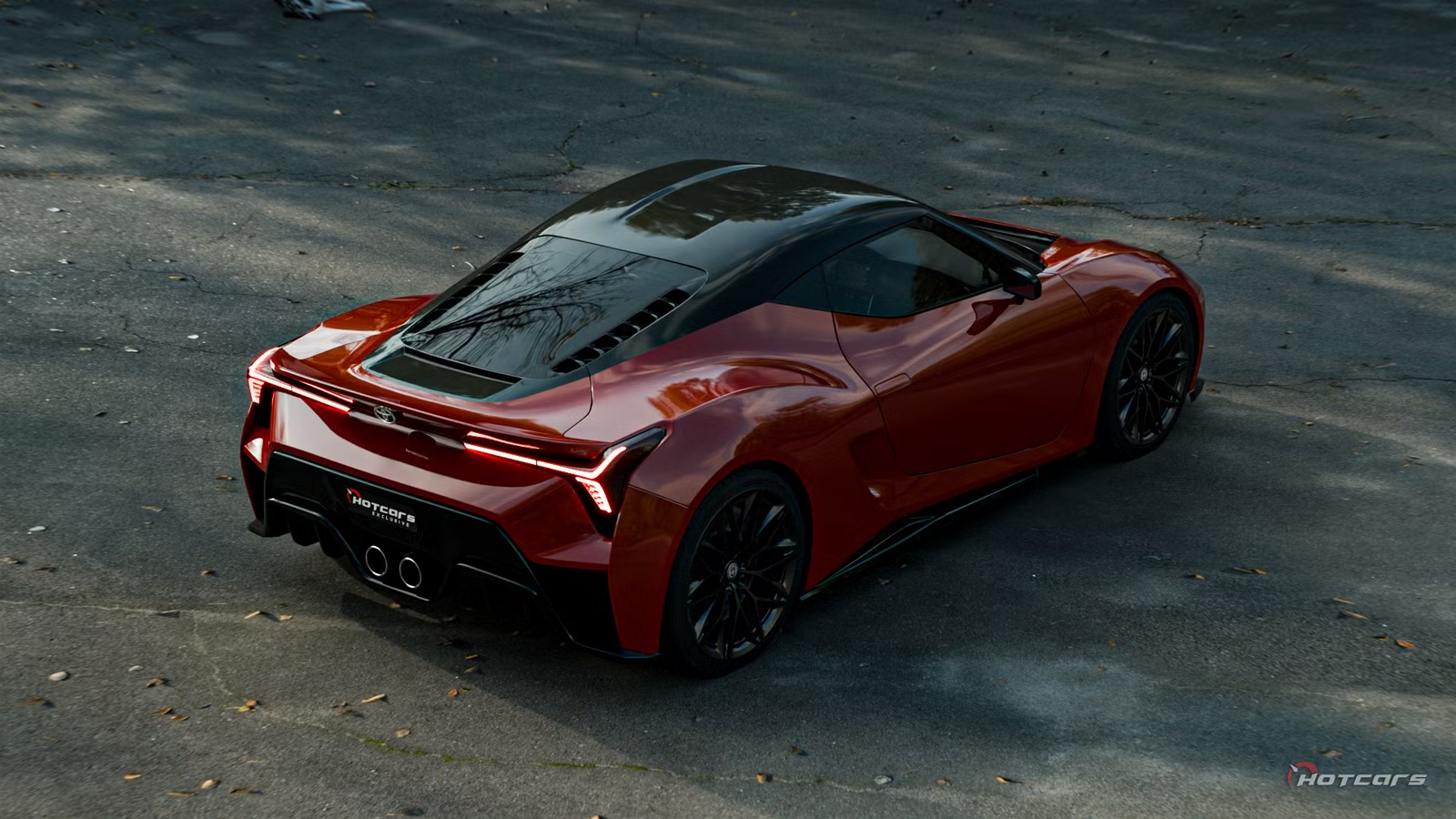
Toyota is building a genuine Sports Cars ladder for the first time since the 1990s, and the MR2 is coming back to anchor the middle of it. According to Autocar, the mid-engine two-seater will return powered by Toyota’s new turbocharged 2.0-liter G20E four-cylinder engine, mounted behind the seats and targeting more than 400 hp in road-going trim. That puts it directly below the GR GT supercar in a Gazoo Racing hierarchy that is expanding faster than anyone expected.

The timing matters. Motor1 reported this week that Toyota’s own Senior Vice President of Automotive Operations, Andrew Gilleland, admitted the GR GT flagship “makes no financial sense” — and yet the company is pushing forward with it anyway, and planning to grow the lineup downward from there. The Celica is reportedly coming back too, likely using a front-engined variation of the same G20E engine as a more affordable entry point. Toyota hasn’t officially named either model, but the evidence — prototype sightings, trademark filings for “GR MR2,” and on-record comments from executives — points in one direction.
The G20E Engine Is the Key to the Whole Lineup
The G20E turbocharged 2.0-liter four-cylinder is the engine that makes this sports car ladder possible. Toyota has been developing it for some time, using the mid-engine GR Yaris M Concept as a rolling test bed in Japan’s Super Taikyu endurance championship — the same philosophy Akio Toyoda has championed for years, building road cars through racing rather than boardrooms.

In the GR Yaris M Concept, the G20E reportedly produces somewhere between 300 and 340 kW (roughly 400 to 455 hp). Engineers have indicated that motorsport-spec versions, with larger turbochargers, could push past 600 hp. For the road-going MR2, the target is over 400 hp — which would make it one of the most powerful production four-cylinder cars available, rivaling the Mercedes-AMG A45 S’s 416 hp. The Celica would use a detuned front-engine variant of the same unit, slotting below the MR2 on price and positioning while still sitting comfortably above the GR86’s naturally aspirated 228 hp.
What the MR2 Revival Actually Looks Like

A heavily disguised prototype was spotted testing at Toyota’s own Fuji Speedway earlier this year, wearing side air intakes consistent with a mid-engine layout and proportions that drew comparisons to Toyota’s 2023 FT-Se concept. Overseas trademark filings for the “GR MR2” name have added further weight to the reports.
Unlike the original MR2’s pure rear-wheel-drive setup — which Gazoo Racing boss Tomoya Takahashi has acknowledged was both the car’s greatest strength and its tendency to snap into oversteer — the new model is widely expected to use all-wheel drive. The GR Yaris M Concept’s drivetrain architecture can vary torque distribution between axles, sending everything rearward in normal conditions and pushing up to 50 percent forward when grip demands it. Reports from Japan suggest Torsen limited-slip differentials at both ends. Whether a manual transmission survives alongside an eight-speed automatic remains an open question, and one that enthusiasts will be watching closely.
The Existing GR Lineup Shows How Serious Toyota Is

It helps to see where the MR2 and Celica would fit. Right now, the GR lineup runs from the GR86 (228 hp, naturally aspirated flat-four, rear-wheel drive) through the GR Corolla and GR Yaris (300 hp from the 1.6-liter turbocharged three-cylinder, all-wheel drive) up to the GR GT supercar — a hybrid-assisted 4.0-liter twin-turbo V8 making 641 hp, priced north of $250,000 and capped at roughly 200 to 250 U.S. units for the first allocation. The Supra is also confirmed to return.
Add a 400-plus-hp mid-engine MR2 and a front-engine Celica between the hot hatches and the supercar, and Toyota suddenly has something it hasn’t had since the Celica GT-Four and original MR2 Turbo were on sale simultaneously in the early 1990s: a real, coherent performance hierarchy with something for every budget.
Toyota Is Doing This Despite Its Own CEO Saying There Are Too Many Models

Here’s the tension worth noting. Toyota’s current CEO, Kenta Kon, has publicly stated the company already has too many models and needs to trim the count. At the same time, the brand is actively developing a supercar that its own senior vice president calls financially indefensible, resurrecting two discontinued nameplates, and spinning Gazoo Racing into a standalone performance division. Both things are true simultaneously.
Gilleland’s explanation, offered to The Drive during an engineering briefing at Laguna Seca, is that the GR GT isn’t really about the GR GT. It shows what the company is capable of, creates a halo, and — as Akio Toyoda’s founding principle goes — proves Toyota is done making numb cars. The MR2 and Celica would follow that same logic: low-volume, high-passion projects that justify themselves through brand identity and motorsport development rather than spreadsheet returns. Whether that argument survives contact with a tighter economy and rising Chinese competition is the real question hanging over all of this. For now, Toyota is betting it does.
The MR2 and Celica are not yet officially confirmed by name — Toyota has stayed quiet on specifics while Autocar and Motor1 connect the dots. But with a prototype already turning laps at Fuji Speedway, trademark filings in place, and a senior executive on record defending the financial irrationality of the whole project, the direction is clear. Let’s hope Toyota sticks the landing.

Related posts
Latest Post


No Comments