
Toyota’s Near-Perfect Avalon Officially Disappeared From American Dealerships After 28 Years
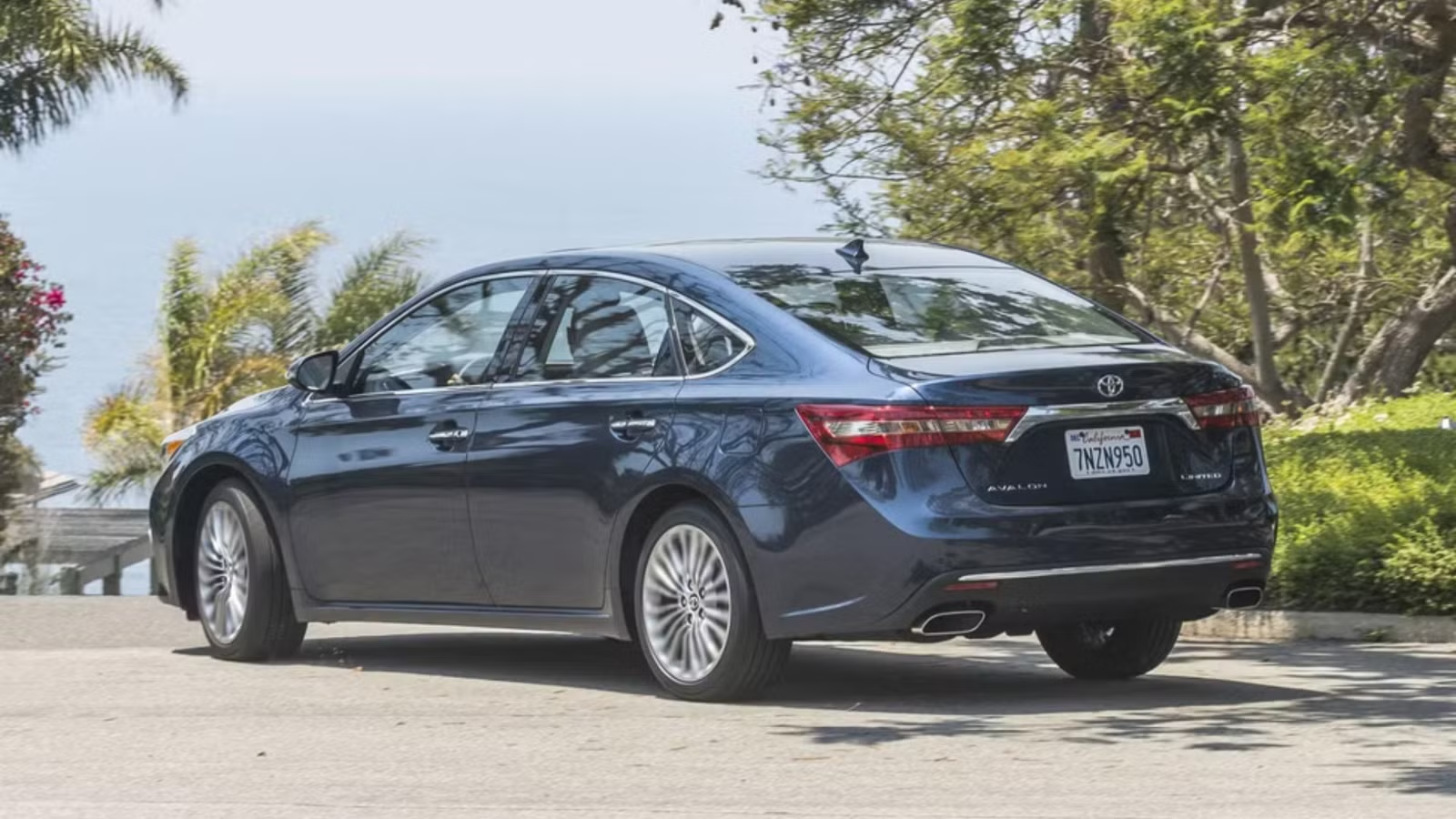
Toyota introduced the Avalon in 1994 as a 1995 model, positioning it as the brand’s flagship full-size sedan. It sat at the top of Toyota’s passenger car lineup, directly above the midsize Camry, offering premium features, spacious interiors, and exceptional ride comfort.

Toyota discontinued the Avalon in North America after the 2022 model year. Declining full-size sedan sales driven by consumer shifts toward crossovers and SUVs prompted the decision. Overlapping demand with Lexus models and internal competition from the growing Camry further reduced market share. Toyota replaced the vehicle with the Crown crossover sedan.
The Avalon That Started Toyota’s Premium Sedan Movement
Toyota produced the first-generation XX10 Avalon from 1994 through 1999 as a 1995 to 1999 model year vehicle. In its debut 1995 model year, the entry-level XL trim carried a starting MSRP of $22,988. By its final 1999 model year, the base XL trim starting price rose to $24,698. Power originated from a 3.0-liter 1MZ-FE DOHC 24-valve V-6 engine driving the front wheels through a four-speed automatic transmission. Initial models generated 192 horsepower and 210 pound-feet of torque. A 1997 engine update increased output to 200 hp and 214 lb-ft of torque.

The XX10 succeeded commercially throughout North America. Annual sales volume peaked near 70,000 units, averaging over 60,000 sales annually across its lifespan. Engineers stretched the XV10 Camry platform, creating a total cabin volume of 121 cubic feet. The vehicle introduced an optional front split-bench seat with a column shifter, providing rare six-passenger seating for a Japanese brand. Safety innovations included optional early traction control, standardized ABS, enhanced crash structures, and front seat-mounted side airbags introduced in 1998.
Embracing Modern Powertrains Of The 2000s

Toyota produced the second-generation XX20 Avalon from 1999 through 2004 for the 2000 to 2004 model years. In its debut 2000 model year, the base XL trim carried a starting MSRP of $25,118. By the final 2004 model year, the base XL trim starting price reached $26,560.
Power originated from an upgraded 3.0-liter 1MZ-FE V-6 engine, now featuring VVT-i (Variable Valve Timing with intelligence). The engine produced 210 hp and 220 lb-ft of torque, mated to a four-speed automatic transmission driving the front wheels.
Commercial demand peaked early in the generation run, with annual U.S. sales topping 100,000 units in 2000 before settling between 50,000 and 70,000 units annually toward the end of its cycle.
The XX20 introduced significant technological advancements for Toyota passenger cars. It debuted an optional 115-volt AC power inverter, an integrated touch-screen navigation system, and Vehicle Skid Control (VSC) with Brake Assist. It also featured dual-zone climate control, side-curtain airbags, and a 110-watt JBL premium sound system.
The XX30 Avalon’s Punchy New V-6 Option

Toyota produced the third-generation XX30 Avalon from 2005 through 2012 for the 2005 to 2012 model years. In its debut 2005 model year, the base XL trim carried a starting MSRP of $26,350. By the final 2012 model year, Toyota simplified the lineup, leaving the base model starting at $33,195.
Power originated from a new 3.5-liter 2GR-FE V-6 engine producing 280 hp and 260 lb-ft of torque, mated to a five-speed automatic transmission. For 2006, SAE testing re-certified output to 268 hp. A six-speed automatic transmission replaced the five-speed unit for the 2008 model year.
Commercial performance remained steady initially, with U.S. sales reaching 95,308 units in 2005. Volume declined in later years due to market trends, dropping below 30,000 units annually toward the end of the generation cycle.
The XX30 introduced executive-level comfort features to Toyota’s lineup. It debuted reclining rear seats with sliding adjustment, a flat rear floor structure, laser cruise control, and ventilated front seats. High-tier trims also featured keyless push-button start and power rear sunshades.
Sleek European Styling Adds A Touch Of Class

Toyota produced the fourth-generation XX40 Avalon from 2012 through 2018 for the 2013 to 2018 model years. In its debut 2013 model year, the base XLE trim carried a starting MSRP of $30,990. By the final 2018 model year, the base XLE starting price reached $33,500.
Power came from a carryover 3.5-liter 2GR-FE V-6 engine producing 268 horsepower and 248 lb-ft of torque, mated to a six-speed automatic transmission. Toyota introduced a hybrid variant featuring a 2.5-liter four-cylinder engine paired with an electric motor, generating a net output of 200 hp and utilizing an e-CVT.
Sales volume stabilized during this generation, averaging roughly 60,000 to 70,000 units annually in the North American market.
The XX40 shifted the Avalon toward a bolder design language with an aggressive front fascia and coupe-like roofline. It introduced advanced infotainment technology through the Entune system, capacitive touch controls, and Qi wireless smartphone charging. Safety equipment expanded to include blind-spot monitoring, rear cross-traffic alert, and the Toyota Safety Sense package featuring pre-collision warning and lane departure alert.
The Toyota Avalon Ends On A High Note

Toyota produced the fifth-generation XX50 Avalon from 2018 through 2022 for the 2019 to 2022 model years. In its debut 2019 model year, the base XLE trim carried a starting MSRP of $35,500. By the final 2022 model year, the base XLE starting price rose to $36,825.
Power came from a direct-injected 3.5-liter 2GR-FKS V-6 engine producing 301 hp and 267 lb-ft of torque, mated to an eight-speed automatic transmission. The hybrid variant combined a 2.5-liter four-cylinder engine with electric motors for a net output of 215 hp, paired with an e-CVT. Toyota also offered an all-wheel-drive option on V-6 models starting in the 2021 model year.
Commercial volume declined steadily as consumer preference shifted toward sport utility vehicles, resulting in annual sales dropping from nearly 40,000 units in 2019 to under 20,000 units by its final production year.
The XX50 moved to the TNGA-K platform, which lowered the center of gravity and improved chassis rigidity. It introduced Apple CarPlay integration, adaptive variable suspension, and dynamic torque vectoring. Safety systems were upgraded to Toyota Safety Sense 2.0, adding lane tracing assist and road sign recognition.
How Much A Four-Year Old Avalon Sells For In 2026

According to J.D. Power, the 2022 Toyota Avalon currently sells for anywhere between $22,878 and $35,897, depending on the specification, mileage, and condition. KBB‘s fair purchase value guide suggests that pricing for the same model currently ranges between $25,946 and $31,646. According to Edmunds, a base XLE model in outstanding condition is likely to fetch $25,006 on the private market, while a rough condition will only bring $21,097 via a trade-in.
The Crown Picks Up Where The Avalon Left Off

Toyota discontinued the Avalon in the U.S. after the 2022 model year due to declining demand for large sedans and the market shift toward SUVs and crossovers. In its final years, the Avalon moniker struggled to maintain relevance as buyers favored higher-riding models with similar space and better practicality.
Sales had been falling for years, dropping from around 70,000 examples in 2013 to under 20,000 in 2021, making continued production financially unviable. Toyota introduced the Crown in 2023 as its spiritual successor, featuring sedan-like proportions with crossover-inspired styling and a raised ride height to attract both traditional sedan buyers and SUV owners seeking something different.
Sources: Toyota, Edmunds, J.D. Power, and Kelley Blue Book.

Related posts




Latest Post


No Comments