
Toyota GR GT V8 Limited to 500 Units: What It Means for Collectors
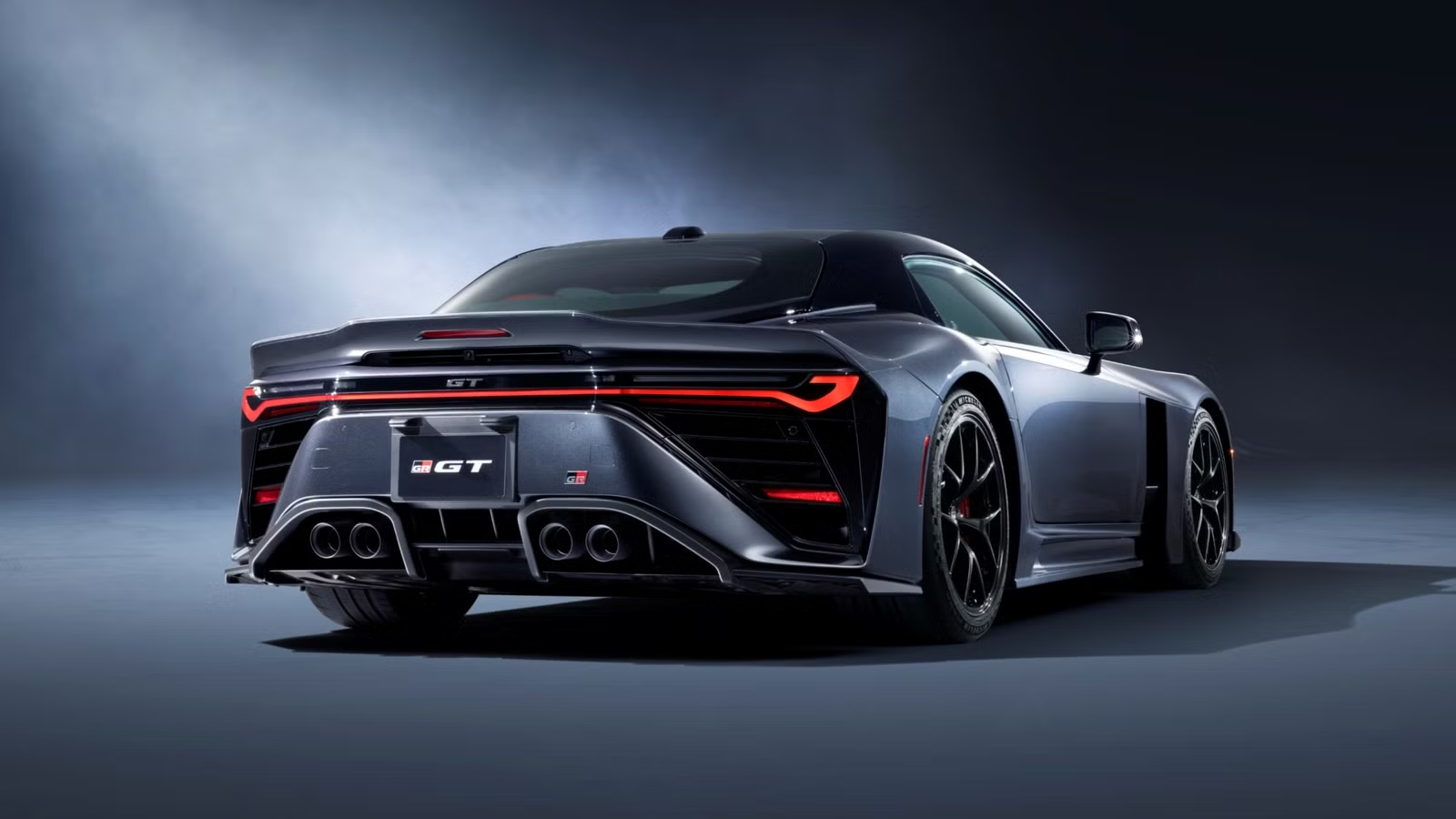
Toyota is reportedly capping production of its upcoming GR GT V8 supercar at approximately 500 units — a number that places it in the same rarefied tier as the Lexus LFA, one of the most consequential collector cars Japan has ever produced. According to Japanese publication Magazine X, via Car Sensor, that 500-unit ceiling is the plan, and it carries serious implications that go well beyond bragging rights.
The LFA also left the factory with exactly 500 examples, built between 2010 and 2012. In the years since, the market has made its verdict clear: 12-month median auction prices now sit at $797,500, with recent sales ranging from $676,000 for a higher-mileage example to $830,000 for a low-mileage specimen. A car that Lexus famously struggled to sell at $375,000 new is now worth more than twice that on the open market. If the GR GT follows even a similar arc, that reported $200,000-plus starting price starts to look like a bargain in hindsight.
Why 500 Units Is The Number That Changes Everything
Production rarity is one of the clearest value multipliers in the collector market, and 500 units sits at a particularly potent threshold. It’s enough to give a car a genuine ownership community — enough examples exist that parts, knowledge, and culture can develop — but far too few for supply to ever catch up with demand among serious collectors.

The LFA proved exactly that. Lexus built the full 500 and then stopped, creating a hard ceiling that the market has rewarded ever since. The GR GT would arrive with the same ceiling baked in from the start, and with the benefit of the LFA’s established precedent to signal to buyers exactly what that number means long-term. Toyota’s decision to mirror that production figure is almost certainly not a coincidence.
Three Variants Could Splinter That 500-Unit Pool Even Further

Here’s where the rarity story gets more interesting. The 500-unit figure reportedly covers the entire GR GT lineup — not just the standard coupe. Magazine X also indicates a tuned performance variant is in development, and a targa-bodied model potentially reviving the Aero Top name from the A80 Supra era is also rumored. A prototype spotted testing at the Nürburgring recently confirmed at least one harder-core variant is real, wearing a more aggressive aero package with a prominent front splitter and a swan-neck rear wing.
If Toyota splits 500 total units across three body styles and performance tiers, individual variants could end up with production runs well below 200 examples. That’s Porsche 918 Spyder territory. For collectors, variant scarcity on top of model scarcity is the kind of math that drives auction rooms into a frenzy a decade down the road.
What The LFA’s Auction Trajectory Actually Suggests
The LFA’s current auction performance isn’t just impressive in isolation — it’s instructive as a model for how ultra-limited Japanese V8 supercars age in the collector market. Four tracked sales over the past 12 months show a remarkably consistent band: $757,750 to $815,000 for well-documented examples, with outliers moving based on mileage and condition. A 2012 car with 4,400 miles brought $810,000 in August 2025. One with 14,000 miles fetched $676,000 in November 2025. The spread tells you that condition matters, but the floor is high.
The GR GT enters with a different powertrain — a twin-turbocharged 4.0-liter V8 paired with a hybrid electric motor, producing at least 641 horsepower and 627 lb-ft of torque — and a lower entry price than the LFA commanded new. That lower barrier to initial ownership could actually accelerate collector accumulation in the early years, which tends to compress the timeline before values start their serious climb.
Toyota’s Confidence In The Collector Market Is The Real Signal

Building 500 units of a bespoke, aluminum-framed, twin-turbo V8 hybrid supercar with no shared platform and a direct motorsport connection to the GR GT3 race car is not a decision Toyota made lightly. The R&D investment is enormous for a company that typically co-develops its performance cars — the current Supra with BMW, the GR86 with Subaru. The GR GT is genuinely standalone.
Capping production at 500 rather than scaling up to recover costs faster is a deliberate signal: Toyota is building for legacy, not volume. The LFA taught the company that scarcity and quality compound over time in ways that broader production never can. Applying that lesson to the GR GT — and potentially fragmenting that pool further across a targa and a track variant — suggests Toyota understands exactly what game it’s playing. Enthusiasts who remember watching LFA prices double should be paying close attention.
The GR GT isn’t expected to reach showrooms until around 2027, with spicier derivatives arriving later in the model’s lifecycle. That timeline gives collectors a window to study the LFA playbook carefully — because if Toyota holds the line at 500 units, the window to acquire one at anything close to sticker price will close fast.

Related posts






Latest Post




No Comments