
Opel’s STX Concept Bets An Electric Wagon Can Save A Body Style America Already Killed
4 minutes reading
Tuesday, 13 Oct 2026 21:30 0 4 autotech
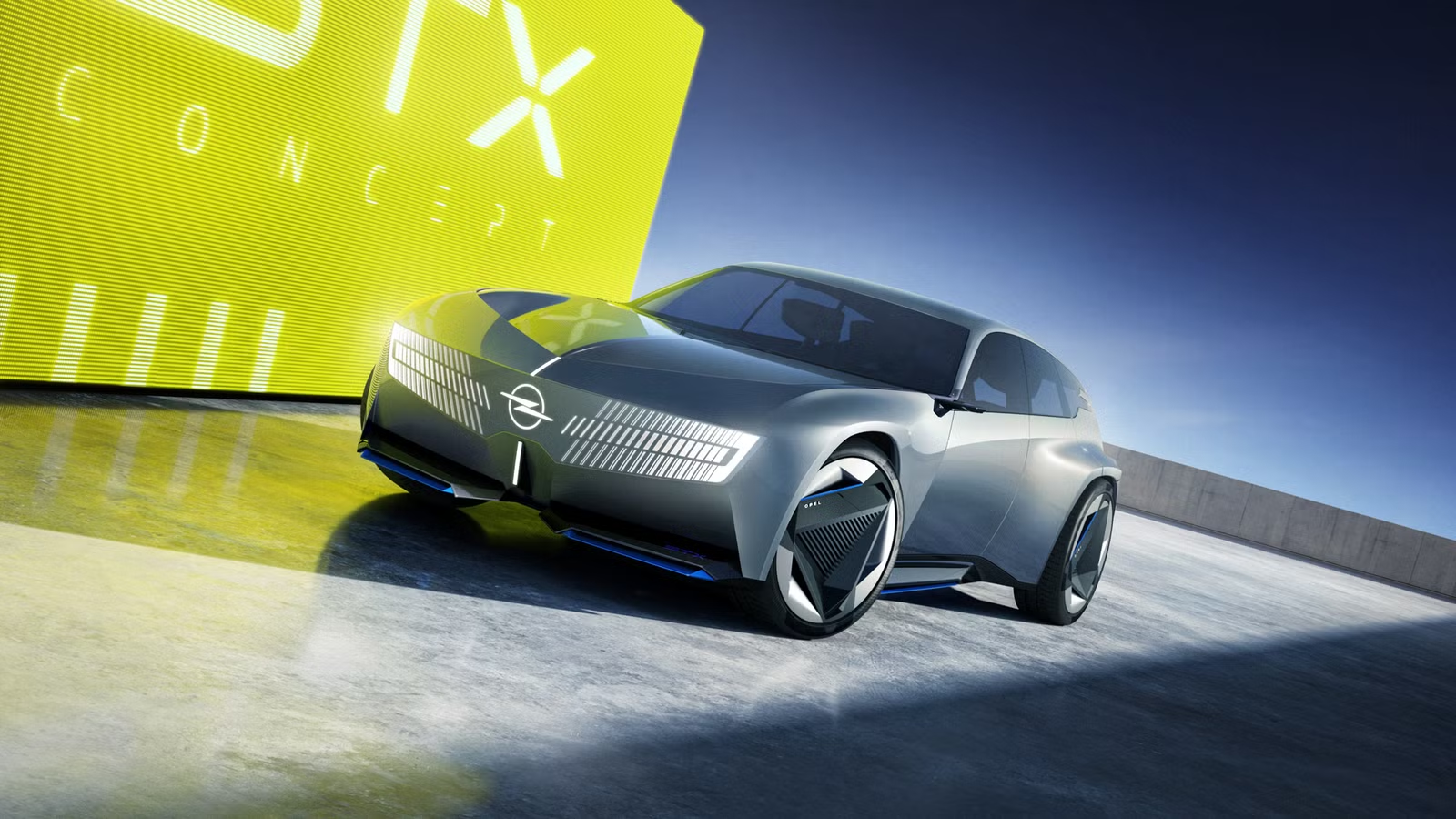
Opel pulled the wraps off the STX Concept at the 2026 Paris Motor Show this week, and the company wants everyone to know it isn’t just a design exercise. Design chief Mark Adams told Auto Express the show car previews the next-generation Astra almost exactly as built, down to the proportions. “It’s not down to the last millimeter in terms of feasibility but the principle is there,” he said.

77 autotech
That’s a bold claim, because the STX isn’t a crossover wearing a wagon badge for nostalgia points. It’s a genuine shooting-brake electric estate, with an illuminated Opel Vizor up front, active rear aero, and 22-inch wheels wrapped in Goodyear rubber. Opel is making the argument that the electric wagon still has a future in Europe, even as American automakers have all but buried the body style in favor of crossovers.
What Opel Actually Showed In Paris
The STX Concept, short for Sports Tourer eXperimental, rides on a low, sculpted body with a steeply raked rear window and a split diffuser that extends outward to generate downforce at speed, then tucks away when it’s not needed. CEO Florian Huettl called it a preview of “how exciting and emotional the estate of tomorrow can be,” pairing that with claims of maximum functionality and efficiency.

61 autotech
Opel says the concept can theoretically hit 124 mph and comes with all-wheel drive, but the company has stayed quiet on motor output, battery size, and range. No interior photos were released either. What Opel has made clear is the design intent: a reworked Vizor face with a taller, more prominent light signature, glass strips running from the rear window into the roof around the C-pillars, and camera housings replacing conventional mirrors. Olympia Rekord Caravan in 1953 through to today’s Astra Sports Tourer, Opel has been building estate cars for over seven decades, and the STX is pitched as that formula’s electric reinvention rather than a clean break from it.
Europe Still Wants Wagons, America Doesn’t
The contrast here isn’t subtle. Ford, Chevrolet, and GMC have spent the better part of two decades walking away from the wagon body style entirely, funneling nearly every non-sedan customer into crossovers and SUVs instead. Opel is doing the opposite with its EV transition, treating the estate shape as something worth preserving rather than something to quietly retire.
That split says something about how differently the two markets think about practicality. European buyers have long treated wagons as the default family hauler, while American buyers largely moved on once SUVs offered similar cargo space with a taller seating position and, fairly or not, more perceived status. Opel’s bet is that the electric powertrain doesn’t change that European preference. It might even reinforce it, since a lower, more aerodynamic wagon shape plays nicely with range and efficiency in ways a tall SUV doesn’t.
Could Any Of This Ever Reach The US?

Opel hasn’t sold cars under its own name in the US since the 1970s, though rebadged versions of its products have shown up here before. The Saturn Astra brought Opel’s hatchback to American dealers in the late 2000s, and the Buick Regal and Verano both leaned on Opel-engineered platforms during the GM ownership years. Stellantis now owns Opel, which raises the obvious question of whether the STX’s underlying electric architecture could ever cross the Atlantic.
Right now, there’s no obvious vehicle in the US lineup that would wear it. Stellantis doesn’t have an American brand positioned to sell a European-flavored wagon, and the market appetite that killed the Buick Regal wagon and the Dodge Magnum hasn’t exactly reversed. If the next Astra ends up looking like the STX, it’ll likely remain something American enthusiasts admire from a distance rather than something they can order.
Whether or not the production Astra lands with this much visual drama, Opel’s willingness to keep betting on the wagon shape for its electric future is notable on its own. Europe hasn’t given up on the body style. America just isn’t being asked the question anymore.

Related posts



Latest Post


37 minute ago
5 autotech

No Comments