
This Supercharged American V8 Is Beating Modern European Engines, And The Numbers Explain Why
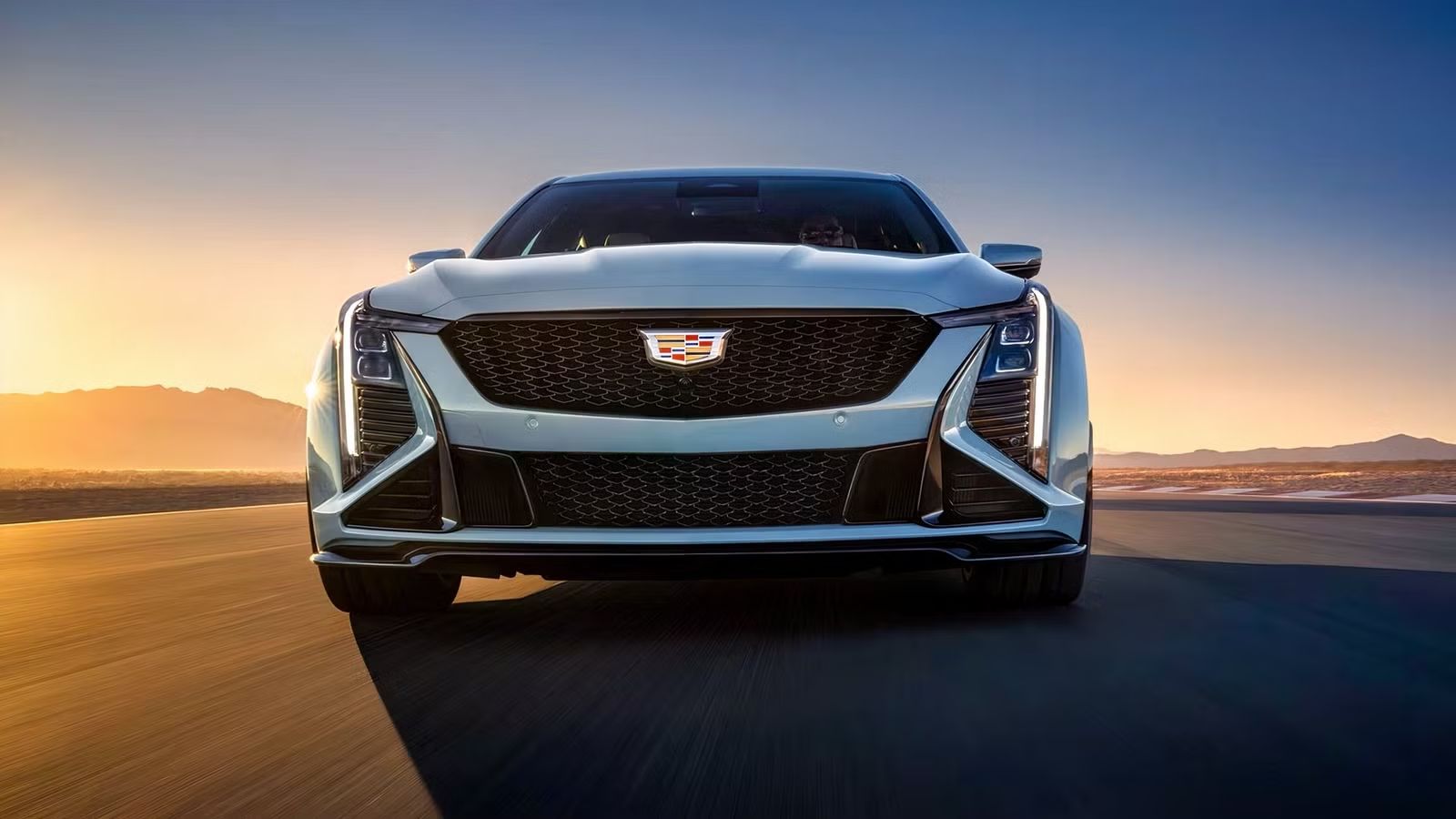
GM’s LT4 supercharged small-block V8 is proving that displacement and forced induction still have an answer for Europe’s turbocharged and hybridized six- and eight-cylinder engines. The 6.2-liter pushrod V8 sends 668 hp and 659 lb-ft of torque to the rear wheels of the Cadillac CT5-V Blackwing, launching the sedan to 60 mph in 3.4 seconds and through the quarter-mile in 11.4 seconds at 127 to 128 mph. In heavy-duty Escalade-V applications, the same architecture is tuned to 682 hp.

Those numbers matter because of how they’re made. The LT4 pairs a 90-degree, cross-plane pushrod layout that traces back to the earliest days of the American V8 with an Eaton R1740 TVS supercharger, direct injection at 2,900 psi, and a 10.0:1 compression ratio that forced-induction engines rarely reach. It’s old-school architecture wearing thoroughly modern hardware, and it’s aging better than the industry expected.
A Roots Supercharger Packed Into A Compact Pushrod Block
The LT4’s Eaton R1740 TVS supercharger sits directly in the engine’s valley rather than bolted on top, which keeps the whole package low enough to fit under a sedan hood without raising the car’s center of gravity. Twin four-lobe rotors with a 160-degree helix twist spin up to 20,000 rpm, generating 9.7 psi of boost that’s routed through dual air-to-liquid intercooler cores before it ever reaches the intake ports.

That compact packaging is only possible because the block underneath is a pushrod design to begin with. A 319-T7 cast aluminum block, six-bolt main caps, a forged steel crankshaft, and forged aluminum pistons with valve reliefs cut specifically for direct-injection fuel atomization give the LT4 a physically small footprint relative to its output. There’s no dual overhead cam valvetrain eating up hood clearance here, just a single camshaft with variable valve timing doing the work through pushrods and rocker arms, the same basic layout GM has leaned on for seven decades.
10.0:1 Compression Is The Real Trick

Most supercharged production engines run low compression ratios to avoid detonation under boost. The LT4 doesn’t. Its 10.0:1 static compression ratio is high for a blown engine, and it’s only achievable because gasoline direct injection at up to 2,900 psi cools the combustion chamber precisely enough to control knock even with a supercharger stacked on top. Titanium intake valves and sodium-filled exhaust valves keep the valvetrain stable to the engine’s 6,600 rpm redline, while Active Fuel Management cylinder deactivation and continuous variable valve timing handle the efficiency side of the equation.
The result is an engine that makes peak torque at 3,600 rpm and peak power at 6,400 rpm, meaning the Blackwing has real shove low in the rev range instead of waiting for a turbo to spool or an electric motor to fill in. That’s the philosophical crux of the LT4’s case: European rivals have spent the last decade chasing efficiency through smaller displacement, turbocharging, and hybrid assistance, while GM kept the big pushrod V8 relevant by bolting modern engine management onto a fundamentally simple architecture.
The Blackwing’s Chassis Backs Up The Engine

None of this would matter if the Blackwing couldn’t put the power down, so Cadillac built a chassis around the LT4 rather than just dropping it into an existing platform. The CT5-V Blackwing uses a double-pivot MacPherson strut front end and an independent five-link rear, with Magnetic Ride Control 4.0 dampers that read road conditions every millisecond and adjust in under five. Stiffer springs, hollow stabilizer bars, and a tuned electronic limited-slip diff work with Michelin Pilot Sport 4S tires to keep the rear-wheel-drive sedan planted.
That’s a notably different approach than European performance sedans, which typically lean on all-wheel drive and air suspension to manage weight and power. The Blackwing skips the front-axle hardware entirely, which shaves weight and sharpens turn-in in a way heavier AWD rivals can’t fully match. Combined with five-way Performance Traction Management settings, it’s a package built to compete on chassis feel, not just horsepower.
A Legacy Engine On Its Way Out

The LT4 is also, by GM’s own admission, near the end of its road. GM isn’t developing new iterations of the LT4 itself, and future performance efforts are shifting to a sixth-generation V8 family alongside the automaker’s Ultium electric push. That makes the LT4 one of the last factory pushrod supercharged V8s GM will build, which adds a bit of weight to its current dominance. Before the architecture gets phased out by emissions rules and electrification, it’s still putting up numbers that plenty of smaller, more complex European engines can’t touch at the low end.

Related posts




Latest Post


No Comments