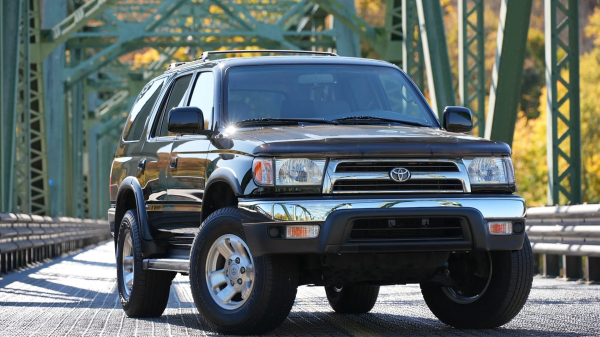
When most people envision a vehicle built to last, their minds automatically turn to a very specific, old-school automotive archetype. They picture a boxy, unyielding 1990s diesel Mercedes, a military-derived body-on-frame tank, or a classic Toyota 4Runner plowing through some remote corner of the world. The other thing we think of is their simplicity. These vehicles felt indestructible because they were structurally simple and massively over-engineered. They used heavy iron blocks, oversized mechanical gears, and thick steel frames designed to withstand industrial-grade punishment.
While vehicles like the 4Runner and G-Wagon still exist, it’s not always easy to find a regular SUV with the same rigidity. Largely, this is due to automakers prioritizing fuel economy targets, which typically results in complicated powertrains. It’s also an incredibly difficult feat to cut modern SUVs down to target weight classes; manufacturers have stripped away heavy-duty metal in favor of lightweight composite plastics and complex electronic systems. Despite the regulations and weight-saving design, there is a mainstream family vehicle currently sitting in thousands of suburban driveways that completely bucks the trend.
The Anatomy Of Durability: What Actually Makes An SUV Last?
File photo of a 1979 Mercedes-Benz G-Class, the first civilian version of the SUV.Mercedes-Benz
To understand why a modern SUV ages poorly, you have to look past the marketing brochures and study how a vehicle manages three harsh realities: physical chassis stress, thermal wear, and power transmission. When a vehicle is tasked with hauling seven or eight passengers, a weekend’s worth of cargo, and potentially towing a trailer, every pothole and expansion joint forces the entire structure to twist.
In under-engineered vehicles, that continuous twisting force leads to a phenomenon known as chassis fatigue. Over five to ten years, micro-flexing in the frame slowly stretches the factory welds and loosens the plastic clips holding the interior together. This is why an aging SUV slowly starts to “feel” old—developing permanent dashboard rattles, door alignment issues, and a loose, hollow ride quality over bumps.
Structural Adhesives And Torsional Rigidity
2023 Honda Pilot FrameHonda
A vehicle can only feel solid at 150,000 miles if its foundational core resists twisting under load. Truly built-to-last vehicles utilize a massive increase in structural adhesives—essentially industrial aerospace glue applied along the chassis seams before welding. This permanently fuses the body panels into a single, ultra-rigid safety cage, completely eliminating the metal-on-metal flex that creates long-term cabin rattles and structural degradation.
The 12 Best SUVs For Long-Term Reliability
When you want to keep your SUV for many years, you want one of the best SUVs for long-term reliable, dependable, and capable driving.
The Redesigned Honda Pilot: The Unlikely Suburban Gladiator
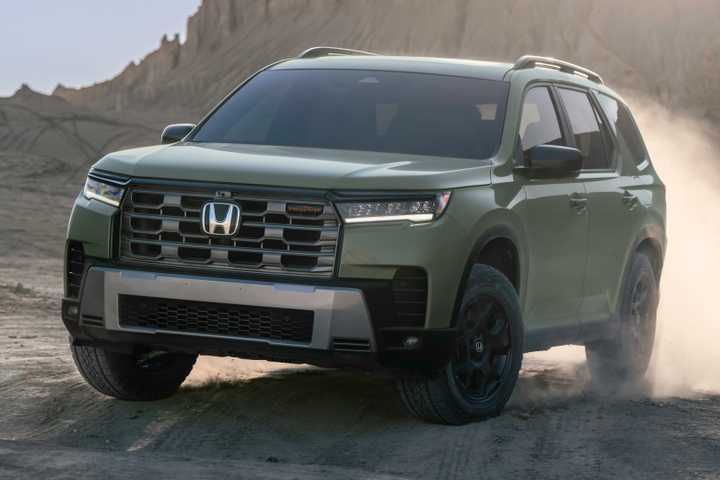
Front 3/4 action shot of 2026 Honda Pilot driving on roadHonda
On paper, the Pilot seems like the ultimate, peaceful suburban utility vehicle—the car you buy specifically to haul three rows of kids, sports gear, and family groceries. But underneath that ever-so-civilized sheet metal lies a profound surprise. While most of the automotive industry has surrendered to the trend toward fragile, downsized, high-pressure powertrains to meet strict efficiency targets, Honda quietly built this generation of the Pilot on an over-engineered, heavy-duty light-truck architecture. It actively rejects modern, cost-cutting shortcuts to deliver a vehicle that doesn’t just mimic capability with plastic cladding; rather, it relies on pure mechanical brawn.
Rejecting The Fragile Trends Of The Modern Crossover
Rear 3/4 action shot of 2026 Honda Pilot driving off-roadHonda
There is no denying that small engines have gotten a lot more powerful with the assistance of forced induction, and the gas mileage speaks for itself, but if you’re in the market for something simple, the options are becoming rarer unless you are going for a full-size pickup. Step onto a modern dealer lot, and almost every midsize crossover you see uses a tiny, highly stressed, turbocharged four-cylinder engine or a delicate, belt-driven Continuously Variable Transmission (CVT). These setups are fine for lightweight commuter hatchbacks, but when forced to pull a 4,500-pound three-row family vehicle through heavy traffic or mountain passes, they run exceptionally hot and work at the absolute limit of their mechanical tolerance.
Base Trim Engine
3.5-liter V6
Base Trim Transmission
10-speed automatic
Base Trim Drivetrain
Front-Wheel Drive
Base Trim Horsepower
285 hp
Base Trim Torque
262 b-ft
Make
Honda
Model
Pilot
Segment
Midsize SUV
Honda chose a different path for the Pilot. They held the line with a legendary naturally aspirated 3.5-liter V6 engine pushing 285 horsepower. Because it doesn’t rely on massive turbo boost pressure to make its power, the engine breathes easily and operates under significantly lower internal stress. More importantly, Honda completely skipped fragile CVTs, pairing this robust V6 with a traditional, in-house geared 10-speed automatic transmission. By using actual interlocking metal gears instead of rubber or metal belts, the Pilot delivers power with smooth, mechanical predictability—ensuring it isn’t running at maximum stress just to merge onto a highway or pull a boat up a ramp. According to J.D. Power quality and reliability metrics, this traditional approach consistently saves owners from the premature powertrain fatigue plaguing modern downsized engines.
The Long-Lasting Japanese SUV That Rarely Needs Repairs
A new update successfully brings this outdated but rock-solid SUV into the world of modern design and advanced technology.
The Mechanical Smart-AWD System
Front 3/4 action shot of 2026 Honda Pilot driving off-roadHonda
Many family SUVs use basic, reactive all-wheel-drive systems that rely on the vehicle’s brakes to manage slipping wheels—a setup that overheats quickly and wears components down under pressure. The Pilot uses a highly sophisticated mechanical system that proactively shuffles power before a tire ever loses grip.
Second-Generation i-VTM4 Torque Vectoring
2026 Honda Pilot wheelHonda
The Intelligent Variable Torque Management (i-VTM4) system uses dual electro-hydraulic clutch packs at the rear axle. It actively sends up to 70 percent of the engine’s power to the rear, and can shuffle 100 percent of that power side-to-side to the single wheel with grip. It ensures smooth execution and zero physical strain in snow, mud, or rain, distributing mechanical loads evenly across the drivetrain rather than stressing a single differential.
Trail Torque Logic (The TrailSport Hardware)
2026 Honda Pilot rear shotHonda
On the rugged TrailSport trim, Edmunds reviews highlight the brilliance of “Trail Torque Logic.” When the vehicle detects that a front tire is suspended in mid-air over a severe rut, the system physically locks up the rear clutches and redirects massive torque to the tires firmly on the ground. This prevents sudden transmission wrap and drivetrain shock, preserving the half-shafts and universal joints from the high-impact snapping forces that kill lesser crossovers.
10 Used SUVs That Are Still Great For Overlanding
While modern overland rigs are loaded with technology, classic SUVs remain a favorite for their durability, simplicity, and off-road ability.
Industrial-Grade Protection Hidden In Plain Sight
2026 Honda Pilot wheelNicole Wakelin/TopSpeed
The Pilot doesn’t just rely on rugged styling to look tough; it utilizes functional, commercial-grade armor underneath the vehicle where it matters most. For families who plan on keeping their vehicle for a decade, this underbody defense prevents catastrophic structural damage from hidden road hazards.
Thick Steel Skid Plates And Forged Recovery Points
2026 Honda Pilot Trailsport Exterior closeupHonda
Look under a 2026 Pilot TrailSport, and you won’t find the flimsy plastic splash guards common to the class. Instead, Honda bolts on actual steel plates protecting the engine oil pan and fuel tank. These plates are engineered to support the entire weight of the loaded SUV sliding over an obstacle. Furthermore, the frame rails include integrated, forged steel recovery tie-downs. If you find yourself high-centered in deep snow or mud, these points can handle the immense kinetic force of a recovery winch without bending the frame—a level of structural integrity usually reserved for heavy-duty pickups.
The Toyota Most Owners Don’t Know Can Last Over 400,000 Miles
Toyota’s reputation for durability is well-established, but the true extent of that longevity often surprises even experienced owners.
The Ultimate Suburban Tank In A Family Wrapper
The true genius of the modern Honda Pilot is how seamlessly it disguises its heavy-duty foundations. It gives families exactly what they want on the surface—crisp infotainment screens, panoramic views, three rows of genuinely comfortable seating, and a whisper-quiet highway ride—all without forcing them into the compromised, disposable lifecycle of a typical modern crossover. It successfully bridges the gap between two eras of car building: the digital convenience of the 2020s and the bulletproof mechanical integrity of the 1990s.
While it feels like vehicles are increasingly built like short-lived consumer electronics nowadays, Honda’s willingness to stick with a robust, naturally aspirated V6, a physical, gear-driven transmission, and a truly rugged light-truck chassis layout is a refreshing anomaly. It hides the mechanical durability of a true overland truck beneath a polished, neighborhood-friendly exterior. For the family looking to escape the endless loop of three-year lease cycles and actually buy a vehicle to keep for the next 150,000 miles or more, the Pilot stands alone. It represents the rarest commodity in the modern automotive landscape: a mainstream family crossover that doesn’t just look the part, but genuinely feels built to last.










No Comments