
This Pint-Sized Fiat EV Is The Golf Cart Alternative Nobody Saw Coming
The U.S. electric car industry continues with its significant transformation in 2026. Buyers are currently faced with a landscape that looks vastly different from the early predictions of total market saturation just two years ago. High interest rates, fluctuating federal tax credit regulations, and persistent charging infrastructure gaps reshape consumer behavior in today’s climate.

Initial mass market enthusiasm for electrification slows as daily commuters struggle with inconsistent public charging networks. The average sticker price for a new battery electric vehicle stays high, which places mainstream options out of reach for a large percentage of households. Consequently, automakers face growing inventories of unsold electric trucks and luxury sport utility vehicles.
How EVs Are Adapting To Modern Cities
Regulatory and economic shifts surrounding EVs in the U.S. are pushing manufacturers to re-evaluate their product strategies. While mainstream adoption stalls, a distinct trend emerges at the upper end of the socioeconomic spectrum. Wealthy individuals increasingly view electric vehicles through a lifestyle lens rather than a purely utilitarian one. This wealthy demographic already owns multiple full-size vehicles for long-distance travel and heavy hauling.

Consumers in higher socioeconomic settings appreciate specialized, small, and highly niche EV options for secondary or recreational use. These buyers prefer efficient, stylish EVs for closed environments, private developments, and coastal towns. EVs suiting these needs serve as statements of style and environmental awareness within controlled spaces.

The Fiat brand has a long history in the U.S. car market that dates all the way back to 1908. The Italian manufacturer started manufacturing and selling small, lightweight cars that contrasted with the larger domestic vehicles, not too unlike its existing portfolio. Fiat paused its mainstream American presence in 1983 before returning in 2011 with the modernized 500 subcompact hatchback. Today, the brand occupies a distinct niche within the vast Stellantis corporate portfolio.
The current North American lineup focuses heavily on compact urban mobility. Under the comprehensive direction of Stellantis, Fiat transitions aggressively toward total electrification. The parent company provides deep technological resources and shared platforms to accelerate this process, allowing Fiat to introduce pure electric models without carrying out individual development costs. As of 2026, the Italian marque uses electrification in an attempt to maintain relevance as global cities implement stricter emissions regulations.
Fiat Introduces A New Urban Concept In America

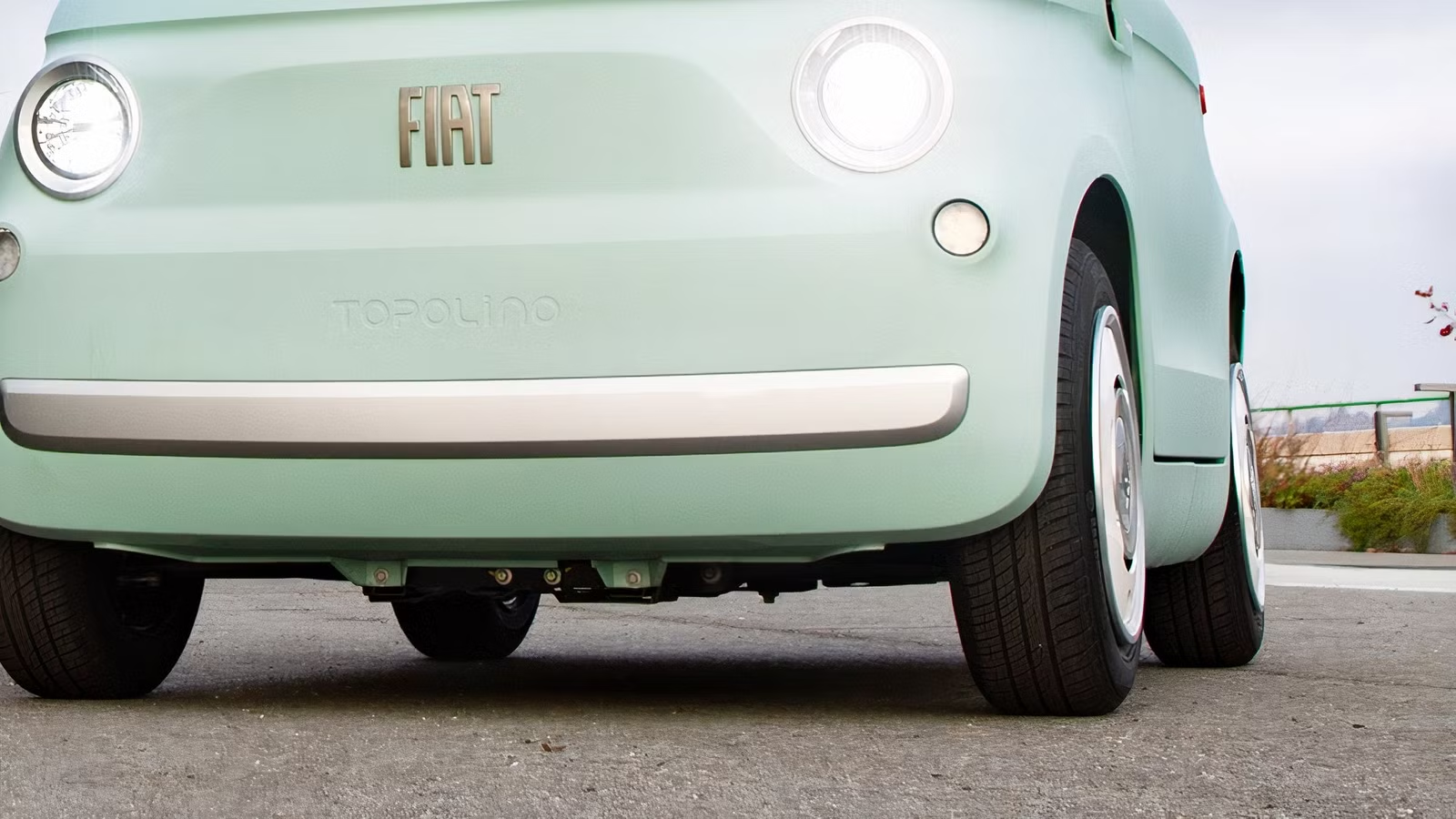
The Fiat Topolino arrives in the U.S. to serve the country’s niche micromobility demand and a complementary product to the 2026 Fiat 500e. The quirky subcompact EV functions as a quadricycle best suited for traversing small and enclosed neighborhoods. The manufacturer targets wealthy property owners, beach community residents, and resort operators who require short-distance transportation.
Fiat produces this micro vehicle at the Kenitra manufacturing facility in Morocco alongside its corporate siblings. The base model enters the U.S. with an initial retail price of $13,995 before destination fees and is available in two distinct body configurations.

The standard model includes solid doors and a glass roof panel, while the open-air Dolce Vita configuration replaces the doors with thick fabric ropes and adds a roll-back canvas roof.
The configuration process remains simple because Fiat offers only one exterior paint finish and one interior color theme. If you intend to operate the vehicle on public streets, you must purchase a street-legal low-speed vehicle conversion kit. This upgrade package raises the final price to $14,985, including destination charges.
Simple And Effective Drivetrain Engineering For Suburban Environments

The mechanical layout of the Fiat Topolino consists of an ultra-compact rear-wheel drive configuration. A single electric motor sits on the rear axle, generating eight horsepower. While severely underpowered, it produces a modest torque output that provides immediate throttle response from a complete stop. In its standard factory configuration, the vehicle limits your top speed to 19 MPH, which takes 10 seconds to reach. This speed restriction ensures compliance with private property and resort safety regulations.
The energy storage system consists of a 5.4 kWh lithium-ion battery pack that sits beneath the seats. This is enough to get you up to 46 miles of range on a single charge. Because the Topolino operates at low speeds, it only consumes 11 kWh per 100 miles. You can charge the battery from zero to 100 percent in approximately five hours by using a standard 110-volt household electrical outlet. The onboard charger limits peak charging speeds to 2.3 kW, which eliminates the need for expensive public fast charging networks.
Aesthetic Elements That Pay Tribute To Fiat’s Historic Model

The design language of the vehicle draws direct inspiration from the 1957 Fiat 500 Jolly beach car. The exterior lines feature a completely symmetrical body layout where the front and rear body panels share similar shapes. This production choice reduces manufacturing complexity and keeps replacement costs low. Vintage-style 14-inch steel wheels feature full chrome covers that mimic the classic look of mid-century Italian city cars.
LED headlights and matching circular taillights provide good illumination without sacrificing their retro aesthetic. Fiat offers the vehicle exclusively in a single pastel paint finish known as Verde Vita. Fiat’s exclusive light mint green shade reinforces the coastal personality. The body utilizes high-impact molded plastics that resist scratches and saltwater corrosion in coastal environments. The vehicle measures just 99.6 inches in total length, which allows you to park perpendicular to the curb in tight spaces.
Minimalist Cabin With Comprehensive Standard Features

The Topolino’s interior design embraces a functional minimalism to make the best use of the available space for two adult occupants. Fabric upholstery covers the bucket seats, which feature a fixed backrest design to save weight. The dashboard utilizes a clean layout with integrated storage facilities and a central smartphone holder. This holder takes the place of a traditional infotainment screen, so you rely on your personal device for navigation and media playback. A small digital instrument cluster sits directly behind the steering wheel to display speed, battery level, and remaining range.
Standard convenience features include a single USB-C charging port and an integrated defroster system for the glass windshield. The cabin provides 2.2 cubic feet of internal storage space distributed across small nets and a dedicated luggage zone behind the seats. Fiat fits a distinctive chrome luggage rack to the rear exterior deck, which allows you to strap down a vintage suitcase or a beach bag. The open-air Dolce Vita model features a glove box extension that functions as a beach towel holder, which emphasizes the leisure focus of the cabin layout.
The Topolino Is Only Suited For Low-Speed Driving Conditions

Safety equipment on the vehicle reflects its legal classification as a neighborhood electric vehicle rather than a fullsize passenger car. Standard equipment includes three point seatbelts and an acoustic pedestrian alert system that emits a warning sound at low speeds. The street legal upgrade kit adds a rearview backup camera, an interior rearview mirror, and dual side mirrors. You will not find advanced driver assistance systems like autonomous emergency braking, lane keep assist, or blind spot monitoring on this vehicle. Airbags are entirely absent from the cabin configuration as well.
Global crash test authorities, including the European New Car Assessment Programme, do not subject this class of vehicle to standard passenger car crash testing. The lightweight chassis utilizes a tubular steel frame that offers basic rollover protection but lacks substantial crumple zones. The vehicle relies on its low operating speeds to minimize impact forces during a collision. It’s important to understand that the Topolino offers significantly less physical protection than a conventional subcompact car, which restricts your safe operation to low-speed environments.
Why The Topolino Will Be A Tough Mass-Market Sell In The U.S.

The Topolino represents a clever marketing strategy for Fiat because it adds distinct variety and visual flair to American showrooms. It generates conversational interest and draws foot traffic into dealerships. However, this micro vehicle is highly unlikely to achieve any noteworthy financial or volume success in the U.S.
The vehicle sits too far removed from the core demands of the average American road user, who requires highway capability, extensive crash protection, and weather-sealed utility. The Topolino remains an expensive luxury toy for a very small segment of wealthy buyers.

Available Models
Fiat
- Founded
-
1899
- Founder
-
Giovanni Agnelli
- Headquarters
-
Turin, Italy
- Owned By
-
Stellantis
- Current CEO
-
John Elkann (Acting)
Sources: Fiat

Related posts




Latest Post


No Comments