
Tom Cruise Is Officially Back In Days Of Thunder Sequel
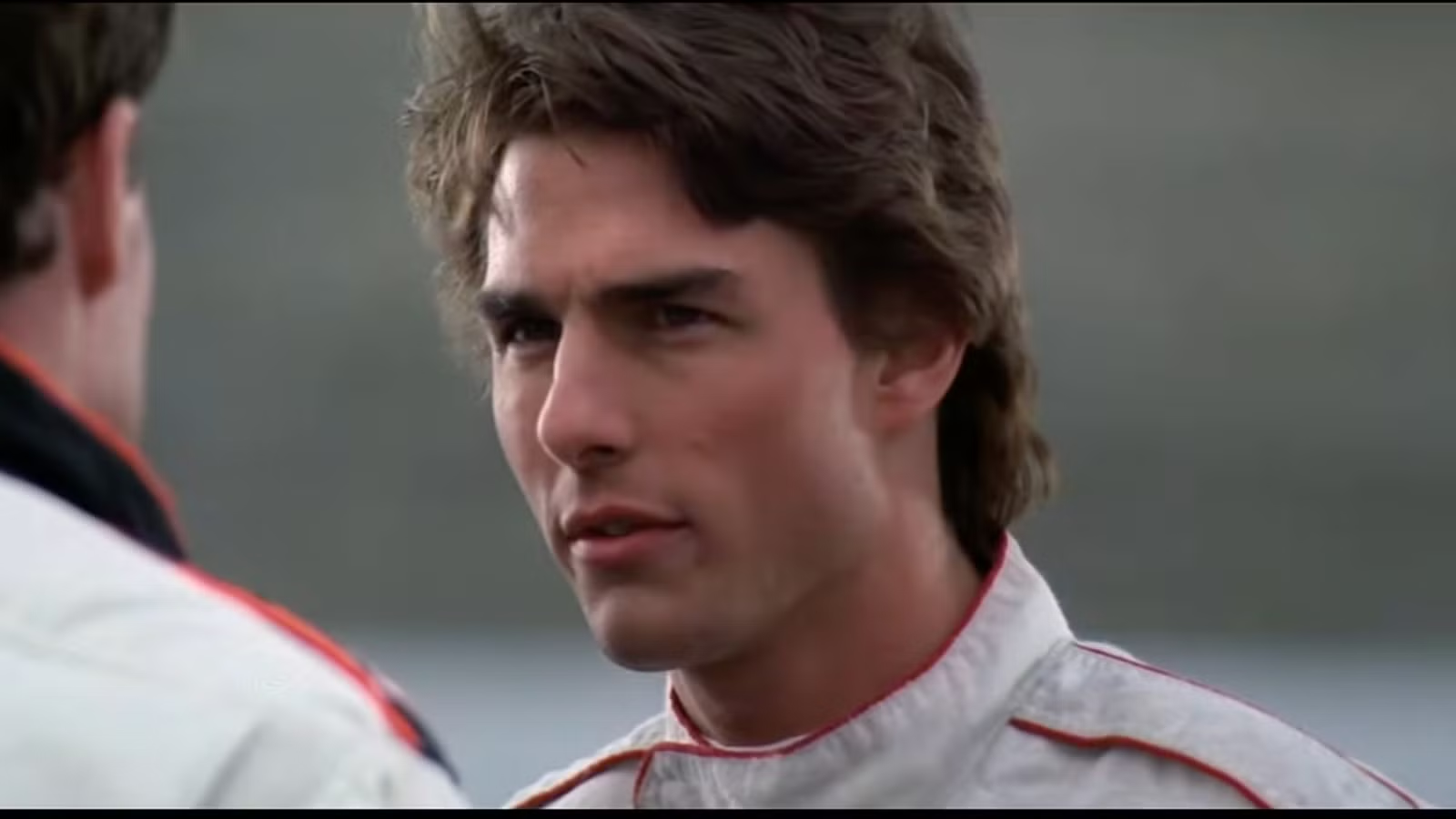
Tom Cruise is heading back to the high banks. Paramount Pictures has greenlit Days of Thunder 2, with Cruise reprising his role as Cole Trickle more than 35 years after the original put NASCAR in front of a mainstream American audience that had barely glanced south of Daytona. The sequel is real.
Days Of Thunder 2: What We Know So Far

More than 35 years after Days of Thunder first roared into theaters, Tom Cruise is officially set to return as NASCAR driver Cole Trickle in a long-awaited sequel. Paramount Pictures is developing Days of Thunder 2, with Cruise once again teaming up with legendary producer Jerry Bruckheimer, who worked on the original 1990 film. Jonathan Levine is reportedly the studio’s top choice to direct, with talks currently underway.
While Paramount has yet to reveal plot details or announce a release date, the sequel continues Cruise’s recent trend of revisiting some of his most iconic roles following the blockbuster success of Top Gun: Maverick. Fans are also speculating about whether other original cast members, including Nicole Kidman, could return, although no additional casting has been confirmed.

The original Days of Thunder wasn’t shot on a closed course with camera cars and stunt doubles pretending to be racers. Hendrick Motorsports supplied actual Cup-level hardware for the production, and the Chevrolet Luminas that filled the frame were the same platform competing every Sunday in the Winston Cup Series. That authenticity mattered — and so did the timing.

What Days of Thunder Did For NASCAR’s National Profile
In 1990, NASCAR was still largely a regional sport. Its television footprint was growing, but the Winston Cup’s cultural center of gravity sat firmly in the Carolinas, Georgia, and Tennessee. The sport’s biggest stars — Dale Earnhardt, Richard Petty, Bill Elliott — were household names in the South but relative unknowns to a casual moviegoer in Chicago or Los Angeles.
Days of Thunder changed that calculus in a way no race broadcast had managed. A Tom Cruise vehicle playing in 2,000 theaters introduced stock car racing’s language — the draft, the loose-tight setup, the wall-riding aggression of superspeedway racing — to an audience that had never watched a green flag drop. The film’s portrayal of NASCAR as a high-stakes, technically demanding sport with genuine physical danger reframed it for people who’d written it off as left-turn monotony.
The sponsorship world noticed immediately. The Mello Yello livery in the film mirrored the real-world sponsorship economy that was beginning to attract national brands beyond the traditional tobacco and auto-parts categories. Days of Thunder essentially served as a feature-length advertisement for what a NASCAR hood could do for a brand’s visibility — a lesson the sport’s marketing apparatus absorbed and ran with through the boom years of the 1990s.
The Long Shadow: NASCAR’s ’90s Expansion And The Film’s Role In It

The numbers tell part of the story. Through the early-to-mid 1990s, NASCAR’s television ratings climbed steadily, new tracks opened in markets like New Hampshire, Las Vegas, and California, and the Winston Cup became a genuinely national series rather than a Southern touring circuit. Days of Thunder alone didn’t cause that expansion — but it seeded mainstream awareness at exactly the right moment, just as the sport was positioning itself for the push.
For gearheads who already knew the Lumina and the Hendrick operation, the film was a validation. For everyone else, it was an introduction. That combination — authenticity for the faithful, accessibility for newcomers — is what made it stick. Cole Trickle may have been fictional, but the cars were real, the tracks were real, and the racing was real. That’s a harder thing to manufacture than a sequel greenlight.
Whether Days of Thunder 2 can recapture any of that cultural moment remains to be seen. The NASCAR of 2026 is a different sport from the one Hendrick Motorsports put on celluloid in 1990 — the Lumina is long gone, the Next Gen car looks nothing like those tube-frame superspeedway weapons, and Cruise is no longer the box-office force he was. But the original film earned its place in stock car history. Here’s hoping the sequel at least remembers why.

Related posts
Latest Post


No Comments