
The Turbo Buick Coupe That Still Humbles Modern Corvettes
When it comes to taking on a Chevrolet Corvette, there isn’t much that offers the same kind of value for money as a 2026 model. With a starting price of just over $71,000 and with a ton of ponies on tap, it is the obvious choice for many.

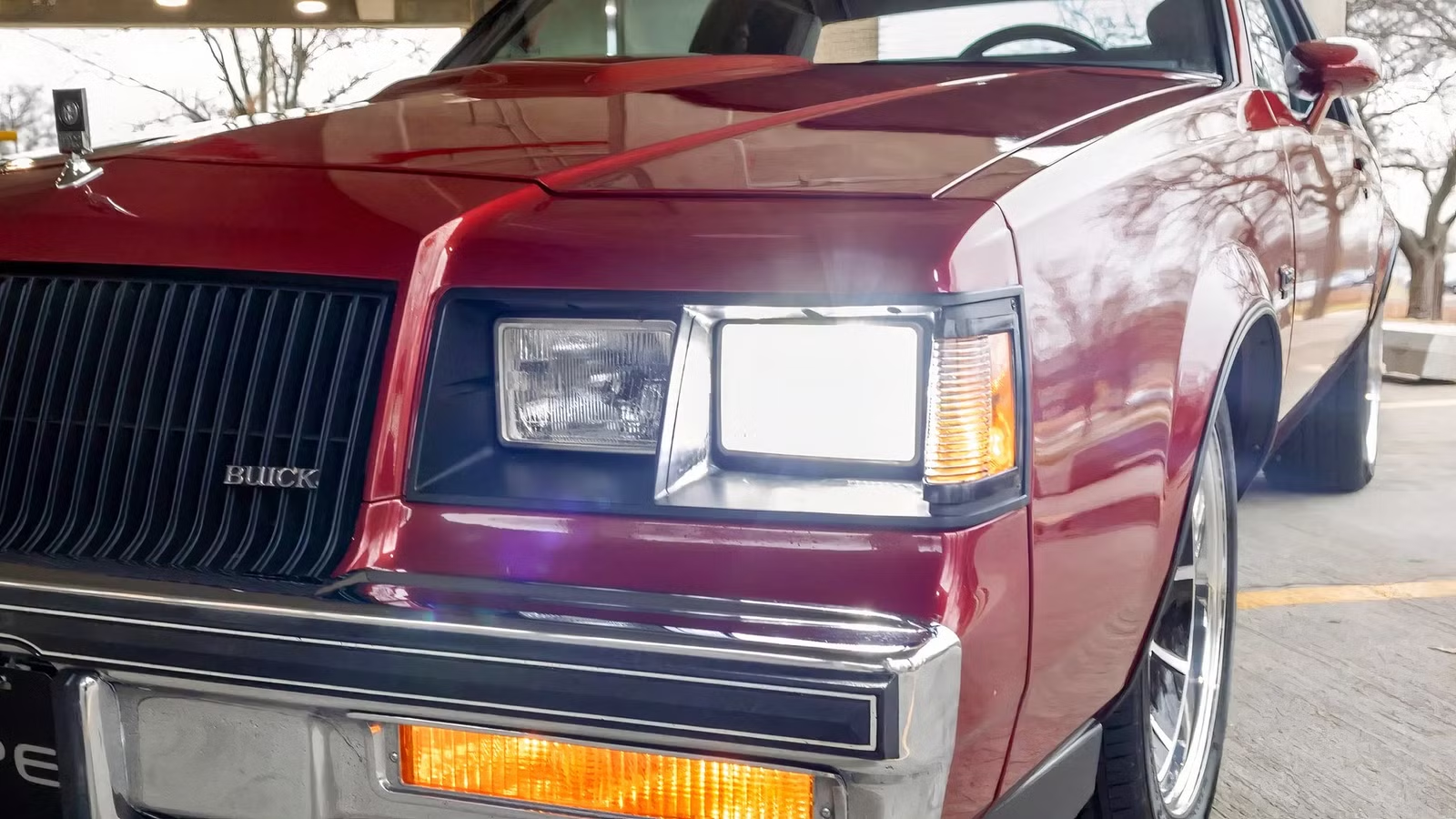
But then there are the older GM coupes that offer an immense amount of sporty goods in a far more covert package. This Buick coupe from the 1980s is what you want if you are after surprising people at the lights. And no, it’s not a Buick GNX.
Modern Corvettes Are Faster Than Ever
The 2026 Corvette lineup is just as loud, American, and fun as you’d expect. The $71,000 Stingray 1LT (Z51) is equipped with a 495-horsepower 6.2-liter LT2 V8, and with the Z51 package, can hit 60 mph in as little as 2.9 seconds, and tops out at 194 mph.

The 2026 Corvette ZR1 costs $182,000 for the coupe, and you get a 5.5-liter bi-turbo flat-plane V8 good for 1,064 horsepower and 0–60 mph times of 2.3 to 2.5 seconds.
The Corvette ZR1X hybrid hypercar is wild, with a combined horsepower output of 1,250, thanks to the 5.5-liter bi-turbo V8, electric motor, and eAWD front drive unit. This translates to 2-second 0–60 mph times.
Massive Power And Sophisticated Chassis Galore

The power and insanity of some new Corvettes doesn’t come like it used to. No longer do they rely just on a sorted mechanical chassis and massive V-engine; today, Corvettes borrow a lot from legit race cars.
All models have a mid-engine layout, which helps with weight optimization; an eight-speed DCT and paddle shifters are standard fare throughout the lineup, and dry-sump lubrication in most engines prevents oil starvation at high G-forces.
If you go for the Z51 Performance Package on the Stingray, you get race-tuned suspension, proper cooling ducts, and a rear spoiler, while Brembo brakes and an eLSD manage stopping power and power distribution.
The Z06 is the most purebred track beast, and gets a flat-plane LT6 V8 that redlines at 8,600 rpm and a wider track width, while the ZR1 and ZR1X get flow-through carbon aero features, and carbon-ceramic brakes.
The Buick Regal T-Type Hits Different

The Buick Grand National Experimental (GNX) and its rarity may be the poster boy for 1980s undercover speed, but the 1983–1986 Buick Regal T-Type is its overlooked cousin that shares a good number of its features.
It may not do a new Corvette for speed, but that’s not the point. For price, V-power, relative rarity, sleeper coupe moves, and old-school driving feel, it is a contender.
The 3.8-Liter Turbo V6 Makes Big Torque

Under the hood is a turbocharged 3.8-liter V6, the same LC2 unit as in the GNX. The ’83 model kicks out 190 horsepower and 280 pound-feet of torque; the 1984 and 1985 models are good for 200 horsepower and 300 pound-feet of torque, thanks to the addition of sequential port fuel injection.
The 1986 model is good for 235 horsepower and 330 pound-feet of torque, thanks to the addition of an intercooler for the turbo; with these models, you are looking at 0–60 mph times in the high-five-second ballpark and a top speed of around 130 mph.
Rear-Wheel Drive And A Proper Driver’s Setup

All models of the short run of the Regal T-Type share the same core mechanical architecture as the GNX, and all models are fitted with a four-speed TH200-4R automatic transmission, with power sent to the rear wheels. The T-Type may have a luxury look about it, but the way it is set up to drive is anything but.
Unlike standard Regals, the T-Type gets FE2 Gran Touring suspension, which has stiffer springs; you also get a thicker anti-roll bar, firmer shocks, a quick 15:1 power steering ratio, and a limited-slip differential, while the transmission has a performance-calibrated valve body for quick shifts.
The G-Body T-Type is body-on-frame, so Buick added the same kind of chassis bracing as the GNX, which includes frame braces behind the front bumper and under the engine, and cross-braces connecting the frame rails and rear seat back. That means you get a very stiff chassis and direct feel.
Buy The Right Buick Regal T-Type

Classic.com says that the Regal T-Type has a benchmark price of $24,468 (October 2026); to put that into perspective, the GNX currently has a benchmark price of just under $192,000. The lowest price fetched within the last year at auction for a T-Type was just $3,050; the highest was $49,000. Like buying any classic car, though, condition matters.
If you want the cheaper GNX kind of drive that makes for a different kind of American prowess to a Corvette, a project T-Type is what you can buy for a lower price. This kind of money will get you something that will need a lot of TLC, removing bad mods, and sorting out the interior.
The fewer miles on the clock, the less modifications (unless done properly), the more paperwork and history, and the more original parts will mean spending the higher amount. The most expensive model sold lately had only 5,000 miles on the clock, had no aftermarket parts, was the most powerful stock 1986 model, and was in perfect condition.
Turbo And Fuel-System Issues Are Part Of The Package

One thing you should check has been seen to or be prepared to sort out with any Regal T-Type is the fuel system and turbo. At 40 to 43 years old, if the high-pressure electric roller-vane pump in the tanks hasn’t been maintained, it has likely degraded. This can lead to failure, or worse, lean running under boost, which can cause a loss of control.
Clogged or worn-out injectors can cause rough running or cylinder detonation; the factory fuel-pressure regulator is equipped with a diaphragm that can tear and lead to a bad air-fuel mix, and if you buy a model that hasn’t had the recommended oil changes, you could be buying a model with worn bearings and seals.
Owners have also complained about cracked vacuum lines, a weak wastegate actuator spring, incorrect engine timing, and weak ignition modules. Not only can all of these ruin the drive, but they can also ruin the engine.
The Regal T-Type Still Makes A Case Against A Modern Corvette


We won’t try to kid you that buying a Regal T-Type is going to be anything like buying a new Corvette. A new Corvette has all the bells and whistles and ridiculous power for its price, but the T-Type has an undercover rarity that the huge number of Corvettes being sold (around 20,000 sold so far in 2026 alone) can’t compete with.
Only roughly 11,600 T-Types were built between ’83 and ’86 before they were rebranded as the Turbo-T, which saw circa 8,500 sold in 1987. They’re not GNX rare, but they are not Corvette “common”.
A Corvette wears its performance on the outside, while the Buick looks like an ordinary ’80s luxury coupe until the turbo spools up. Its rear-drive layout, soft-looking body, and torquey V6 make it a different kind of quick: less about surgical precision, more about a sudden shove that catches most off guard.
You don’t need carbon-fiber aero or a mid-engine layout to make things interesting. The Corvette is faster, grips harder, and brakes better, but the T-Type offers something newer cars struggle to do: providing proper character without a performance costume. The T-Type doesn’t need to beat a Corvette around a track to make its point; sometimes an old Buick catching a modern sports car not looking is enough.
Sources: Buick, GM, Bring A Trailer and Classic.com.

Related posts





Latest Post


No Comments