Forget The BMW X5—This Japanese SUV Out-Luxuries It For Less
9 minutes reading
Saturday, 29 Aug 2026 21:00 0 49 autotech
More U.S. buyers are asking one SUV to do the work of several vehicles. It needs to be comfortable enough for commuting, spacious enough for family use, refined enough to feel premium, and engaging enough that it does not feel like a purely practical purchase. That combination has become harder to find as prices climb and luxury-brand ownership costs become more difficult to justify.
The safest long-term choice is not always the most obvious one. In this case, it comes from a Japanese brand that has quietly moved closer to luxury territory without abandoning mainstream value. It offers two strong powertrain options, upscale materials, confident road manners, and ownership numbers that make the long-term case more interesting than the badge alone suggests.
The 2027 BMW X5 enters its fifth generation as the central midsize luxury SUV in the brand’s lineup, positioned directly above the compact X3 and below the full-size three-row X7. It adopts BMW’s Neue Klasse design language, featuring broader exterior proportions, flush winglet door handles, and a redesigned front fascia. The updated cabin incorporates the BMW Panoramic Vision display system alongside an optional 14.6-inch passenger screen.
The powertrain lineup expands to include 48-volt mild-hybrid gas engines, an upgraded plug-in hybrid model, and the first fully electric iX5 variant. In the U.S. market, the rear-wheel-drive X5 40 starts at an MSRP of $71,250, while the all-wheel-drive X5 40 xDrive begins at $73,550. Electrified options carry higher entry costs, with the X5 50e plug-in hybrid opening at $78,950 and the electric iX5 60 xDrive starting at $81,250.
Why SUVs Are The New Norm In The U.S.
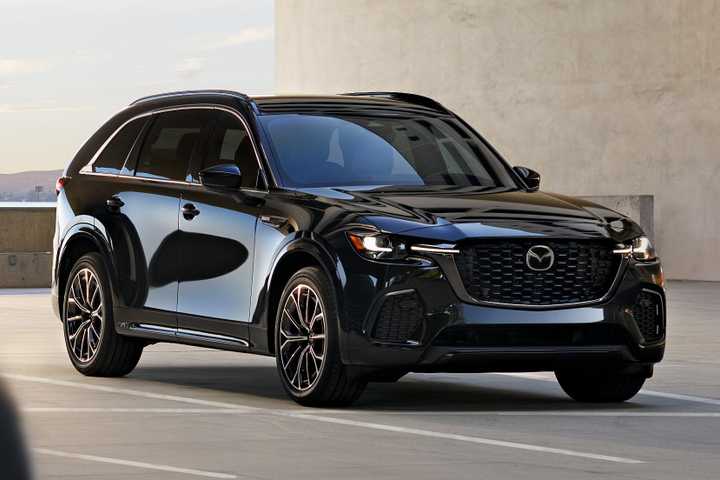
Front top shot of the 2025 Mazda CX-70Mazda
SUVs have become the default daily drivers because they solve more problems than sedans or traditional sports cars can. They offer cargo space, all-weather confidence, a higher seating position, and enough flexibility to handle commuting, errands, road trips, and family use without asking owners to keep a second vehicle around.
That shift has also raised expectations. Buyers no longer want an SUV that is merely practical. They want one that feels refined, drives well, and carries enough technology and comfort features to make every day feel easier. Luxury brands answer that demand, but they also bring higher purchase prices, steeper depreciation, and more expensive maintenance.
That is what makes Mazda’s current SUV strategy so important. The historic Japanese brand has been pushing deeper into near-luxury territory with more upscale interiors, smoother powertrains, and driving dynamics that feel more European than mainstream. The result is an SUV lineup aimed at buyers who want premium execution without fully committing to premium-brand costs. The model that best represents that strategy is also the one that makes the strongest case for long-term ownership.
The Mazda CX-70 Is Mazda’s Most Complete Daily Driver
Rear 3/4 view of the 2025 Mazda CX-70 PHEVMazda
The 2026 Mazda CX-70 is the model that brings Mazda’s near-luxury push into its clearest focus. It uses the same large rear-biased platform as the three-row CX-90, but it trades the third row for a more athletic two-row layout and expanded cargo flexibility. That makes it a better fit for buyers who want premium SUV space and presence without carrying seats they do not need.
The CX-70 and CX-90 duo were supposed to be Mazda’s heroes in its transition to a more premium market, but recent sales performance shows that the duo is just not taking off in terms of sales for 2026. This is a curious result, considering how comprehensive the Japanese brand has made the offering.
The CX-70 Undercuts Luxury SUVs Without Feeling Basic
William Clavey | TopSpeed
The 2026 Mazda CX-70 is offered in seven distinct configurations for the U.S. market, with base MSRPs starting at $42,750 for the 3.3 Turbo Preferred and scaling up to $56,870 for the 3.3 Turbo S Premium Plus. The electrified PHEV SC and SC Plus models occupy the middle bracket at $44,550 and $47,450, respectively, while all models require a $1,455 destination and delivery fee. Standard comfort and convenience features across the line include a 12.3-inch center display with Alexa Built-in, wireless Apple CarPlay and Android Auto, a power sunroof, and heated front seats.
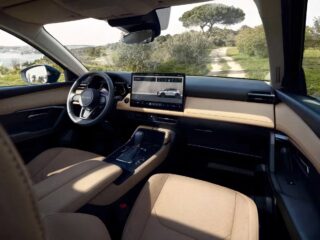
Moving into the Premium and Premium Plus trims adds upscale amenities like a 12-speaker Bose Centerpoint surround system, a 360-degree view monitor, a hands-free power tailgate, and ventilated front seats with Nappa leather. The high-output S trims further elevate the experience with a 12.3-inch fully digital gauge cluster, driver seat memory, and signature LED lighting, while the flagship Turbo S Premium Plus features exclusive tan quilted Nappa leather, a suede-wrapped dashboard, and a 150-watt cargo area power outlet. While most features are grouped by trim, standalone options are largely limited to premium paint colors such as Soul Red Crystal Metallic, Rhodium White, Polymetal Gray, Zircon Sand, or Melting Copper Metallic, each carrying a $595 surcharge.
How Mazda Visually Separates Each CX-70
Rear 3/4 shot of 2026 Mazda CX-70 PHEV parked in garageMazda
The 2026 Mazda CX-70 3.3 Turbo Preferred trim sets the foundational design language for the model line. This trim features blacked-out exterior trim elements, including a piano-black honeycomb mesh front grille, black side moldings, and piano-black side mirror caps. Black wheel arch moldings surround 19-inch dark gray alloy wheels or optional 21-inch black alloy wheels. LED headlights, LED daytime running lights, a power sliding-glass sunroof, and aluminum roof rails in a black finish complete the side and top profile. Gloss black exterior badging and an “Inline 6” fender badge visually identify the powertrain.
2025 Mazda CX-70 front 3/4 shotWilliam Clavey | TopSpeed
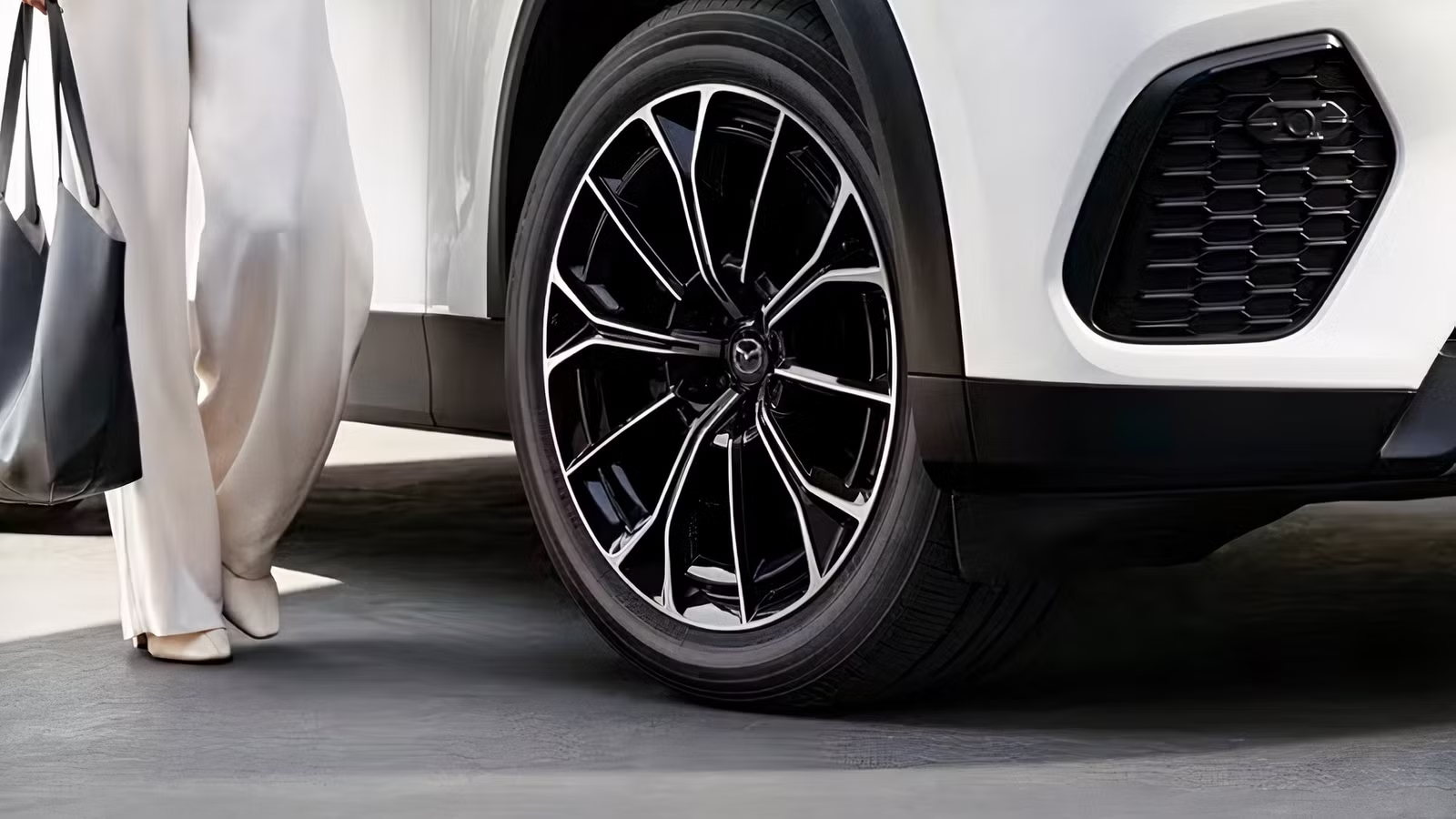
Stepping up to the 3.3 Turbo Premium trim introduces distinct exterior accents. This trim adds a silver valance finish to the front and rear lower bumpers to contrast with the black lower trim. Standard 21-inch aluminum alloy wheels with a black metallic finish fill the wheel wells. Auto-folding side mirrors and a hands-free power tailgate replace the manual mirrors and the standard power tailgate. A roof-mounted shark fin antenna replaces the standard antenna.
The 3.3 Turbo Premium Plus trim alters the roofline and lower side trim. A power panoramic sunroof replaces the standard single-pane sunroof. The bright side lower body trim replaces the black trim along the lower rocker panels. Automatic power-folding side mirrors with driver-side auto-dimming glass sit beside windshield wiper de-icers at the base of the glass. The 21-inch black metallic alloy wheels remain standard equipment.
The high-output 3.3 Turbo S Premium and Turbo S Premium Plus trims showcase performance-oriented exterior cues. These models feature 21-inch aluminum alloy wheels with a dual-tone black metallic and machine-cut finish. High-output badge accents replace the standard fender badges. The Turbo S Premium Plus maintains the power panoramic sunroof, bright lower body trim, auto-dimming mirrors, and gloss black styling accents to signal its position at the top of the range.
The CX-70 PHEV Preferred and PHEV Premium trims mirror the styling of their mild-hybrid counterparts while incorporating unique electrified design markers. e-Skyactiv PHEV fender badges sit on the front wings, and a dedicated PHEV badge mounts on the rear tailgate. A dedicated charge port door sits on the rear quarter panel opposite the fuel filler door. PHEV models roll on 19-inch gray metallic alloy wheels on base setups or 21-inch alloy wheels on higher configurations.
The Inline-Six And PHEV Options Make The CX-70 Feel More Expensive Than It Is
The 2026 Mazda CX-70 features a rear-biased i-Activ all-wheel-drive architecture paired exclusively with an eight-speed automatic transmission, though its performance profile varies significantly across three distinct powertrain calibrations. The entry-level 3.3 Turbo models feature a 48-volt mild-hybrid inline-six producing 280 horsepower and 332 pound-feet of torque. If you prioritize performance, the high-output 3.3 Turbo S variants utilize a more aggressive version of the same engine to produce a robust 340 hp and 369 lb-ft of torque on premium fuel, enabling a 0 to 60 mph sprint in 6.5 seconds.
Alternatively, the PHEV model pairs a 2.5-liter four-cylinder engine with a 68-kW electric motor for a total system output of 323 hp and 369 lb-ft of torque. Thanks to the immediate delivery of electric torque, the PHEV is the quickest off the line with a 0 to 60 mph time of 5.9 seconds. Mazda electronically limits the top speed of these utility vehicles to 130 MPH.
The PHEV Is The Smartest Long-Term Pick For Fuel Savings
A front 3/4 action shot of a 2025 Mazda CX-70Mazda
Opting for the entry-level turbocharged variant yields an EPA-estimated fuel consumption of 24/28/25 MPG on the city/highway/combined cycle. Upgrading to the Turbo S only changes the city consumption to 23 MPG. With an 18.5-gallon fuel tank for the Turbo and a 19.6-gallon tank for the Turbo S, range estimates come in at 462 miles for both engines.
The EPA indicates that the base Turbo will have you spending $1,500 more on fuel compared to the average new vehicle sold in the U.S., together with a $2,700 annual fuel cost and a $4.50 cost to drive 25 miles. The Turbo S model will cost you $4,250 more in fuel over five years, $3,250 in fuel for the year, and $5.45 to drive 25 miles, with a $101 estimate to fill the tank.
The CX-70 PHEV is the model to go for if fuel savings are a priority. This earns an estimated 61 MPGe combined rating from the EPA, together with an all-electric range of 26 miles, transitioning to 26 MPG combined once the battery is depleted. This model features an 18.4-gallon tank and a total gas-electric range of 520 miles. You’ll still spend $2,250 more on fuel over five years and $1,950 on gas and electricity over a year. You can also expect to spend $2.02 to fully charge the battery, $5.24 to drive 25 miles on gasoline, and $100 to fill the tank up.
The Ownership Data Favors Its Affordable Luxury Experience
Exterior shot of the 2025 Mazda CX-70 Mazda
According to J.D. Power, the 2026 Mazda CX-70 holds a consumer-verified overall score of 77/100, which includes 83/100 for the driving experience, 82/100 for resale, and 82/100 for the dealership experience. Interestingly, it only earns 69/100 for quality and reliability. The model holds an outstanding 4.6/5 average rating on the Edmunds consumer review portal, with reliability and manufacturing quality, ride quality, and value being its strongest suits.
According to iSeeCars, the 2026 Mazda CX-70 will lose $18,180 or 43 percent of its value after five years of ownership, which is slightly better than the segment average of 46.3 percent.
CarEdge indicates that you can expect to spend $50,314 on the CX-70 over the same period, which includes accounting for $19,433 worth of depreciation. You’re also likely to spend $9,240 on fuel and $2,649 on maintenance.
Base Trim Engine
3.3L Turbo SKYACTIV-G I6
Base Trim Transmission
8-speed automatic
Base Trim Drivetrain
All-Wheel Drive
Base Trim Horsepower
280 HP @5000 RPM
Base Trim Torque
332 lb.-ft. @ 2000 RPM
Base Trim Fuel Economy (city/highway/combined)
24/28/25 MPG
Make
Mazda
Model
CX-70
Segment
Midsize SUV
Sources: Mazda, the EPA, Edmunds, J.D. Power, iSeeCars, and CarEdge.












No Comments