
The Toyota RAV4’s Biggest Advantage Might Have Nothing To Do With Its Features
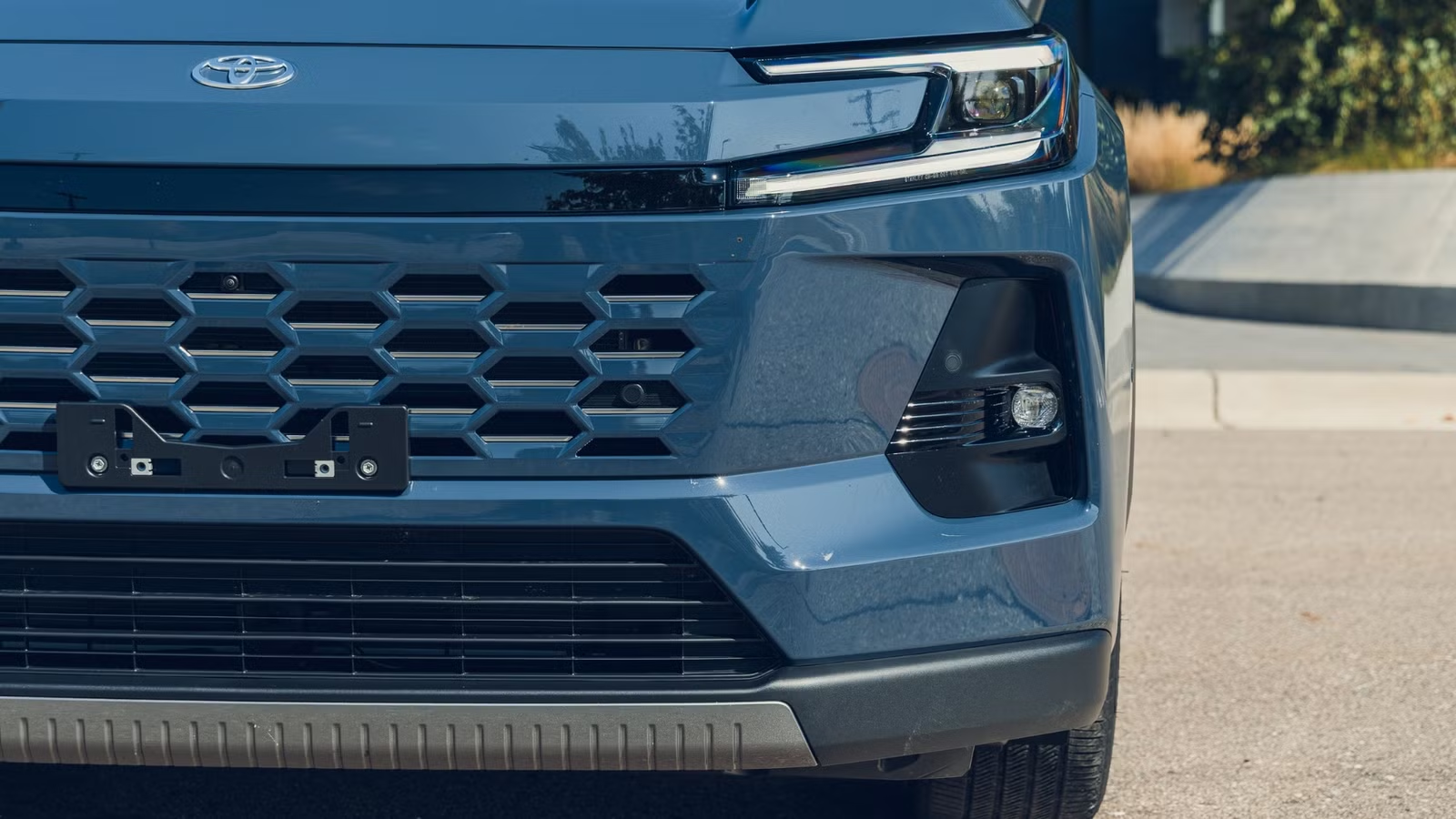
The Toyota RAV4 entered a new generation a year ago, and though the dust has seemingly settled, America’s most popular and best-selling non-truck is still in such high demand. In fact, the RAV4 is in such high demand that inventory is measured by dealers in mere hours, not even days.

But why is the current 2026 Toyota RAV4 such a popular SUV? Its redesign last year simply made it even more desirable, but is its popularity really driven by its features or even its design? Perhaps there is another aspect to why the RAV4 is the default choice of many families, and that’s what we’re hoping to investigate in this article.
RAV4’s Popularity In The Past
To understand the RAV4’s popularity in 2026, we have to go back a couple of decades to see what kind of traits the original model had and then eventually determine how it maintained or improved upon those traits today.
Establishing A Segment That Didn’t Exist

The Toyota RAV4 dates back to 1989, when it was shown as a concept, and in 1994, it became one of the pioneers of the compact crossover SUV segment. RAV4 stands for Recreational Active Vehicle with 4-Wheel Drive (4WD or AWD), though it was also offered in front-wheel drive (FWD). From 1994, its sales doubled and tripled in the succeeding years, firmly establishing the compact crossover SUV segment.
The second-generation model then went on sale in the United States for the 2001 model year, which featured a more rounded but more conventional look. It also grew in size and became more practical. Unsurprisingly, the increased practicality and refinements made the RAV4 even more appealing. By this time, the RAV4 had already become a household name in the United States, as it established itself as a reliable yet comfortable compact crossover SUV with just enough capability for occasional off-roading.
Appealing To A More Mainstream Audience

It was during the third- and fourth-generation models that the RAV4 became even more successful as Toyota continued to make it even more sensible and practical. The third-generation model still had enough distinction versus the rest of the segment, especially when it got an optional 3.5-liter V-6 that made it very potent.
The fifth-generation RAV4 debuted in 2018 for the 2019 model year, featuring a completely new TNGA-K platform, new engines (no V6), a hybrid system with E-Four electronic AWD, and a return to a more stylish and rugged form for the nameplate. It also got several rugged versions, like the TRD Off-Road and the Woodland. The fifth-generation model would become the most successful generation to date, as it became the world’s best-selling car in 2021 and 2024, both according to JATO Dynamics.
It Got The Foundations Right

Today in 2026, the Toyota RAV4 is more popular than ever. In hindsight, though the RAV4 is a lot more feature-packed for this generation, there are Korean rivals that cost less yet offer more features. Clearly, it isn’t primarily the features that people are chasing with the new RAV4.
A Legacy For Reliability
From the moment the RAV4 came out in 1994, it was loved not just for its unique positioning as a compact crossover SUV, but because it did so with reliability and cost-effectiveness. Maintenance was easy, and it was barely a hassle to take care of. Furthermore, if something did break, it was not terribly difficult to repair the vehicle.
That reputation carried through every RAV4 generation—even if the first years of a generational redesign would often introduce an increase in minor problems. Because of the RAV4’s very long legacy, consumers spanning generations have owned a RAV4 and have probably recommended one to their loved ones. Indeed, when you ask a random passerby, it’s almost impossible for them not to be reminded of the RAV4.
And Also, Excellent Resale Value

Because of its reputation that spans across generations of consumers, the RAV4 is very easy to sell in the used market. That’s why the RAV4 often has the highest resale values in the segment, often edging out the Honda CR-V, its fiercest rival. Though the RAV4 isn’t the cheapest, its higher purchase price is offset by its reliability, ease of maintenance, and excellent resale value. The RAV4’s high resale value is also driven by its aforementioned reliability, since this vehicle is known to last a very long time.
According to iSeeCars, the Toyota RAV4 has an average lifespan of 14.9 years or 175,902 miles, and a high 33.2 percent chance of reaching 200,000 miles. It is highly likely that even with its third owner, the RAV4 would still run very well. Though the RAV4 is now all-hybrid for this latest redesign, Toyota’s hybrids have already proven themselves to be robust. There is no need to worry about the battery, as it has a 10-year or 150,000-mile warranty. With the plethora of high-mileage Toyota hybrids on the road still running on their original battery, this is already a testament to how durable the hybrid system is.
Its Features And Character Are Bonuses
Toyota has made a name for itself for its reliable and easy-to-maintain vehicles, but of course, this will simply make a car just a means of transportation and nothing more. Though the RAV4’s primary selling points are its reliability, durability, and high resale value, adding emotional aspects on top of those sensible traits makes the RAV4 both a logical and an emotional choice.
The RAV4 Is Now An Emotional Purchase
In my opinion, the fourth-generation Toyota RAV4 was the most sensible. The succeeding generation was a return to form for a more adventurous RAV4, while the current sixth-generation model has finally become a more emotional purchase. The Hammerhead front end with its C-shaped LED headlights looks sleek and distinct, along with its choice of a sleek, frameless grille or a rugged front end in the case of the Woodland. If you want something sportier in both looks and, to a certain degree, handling, the RAV4 Plug-In Hybrid is available in a sportier GR Sport variant.
And Its Features Are Great, Too

Lastly, of course, Toyota knows that it still needs better features to keep the 2026 RAV4 competitive, and indeed, that’s what they did for this generation. A digital gauge cluster and an infotainment screen in two sizes are now standard, and it runs the new Toyota Arene OS—a foundational step for the brand toward software-defined vehicles (SDVs). The electronic features tied to the OS work extremely well for the RAV4, and they are augmented by physical controls that make the interior user-friendly.
All of the available variants are also well kitted out for their price—though there’s no denying that the Korean brands still tend to lead the value-for-money quotient. Step up to the higher variants to add even more niceties like a powered tailgate, a sunroof, a JBL sound system, and heated and cooled seats, along with nicer interior materials to match a certain variant’s personality. With six different trim levels (or seven when counting the plug-in hybrid variant’s GR Sport), there’s a RAV4 to suit a wide variety of tastes, and this certainly helps diversify its popularity.
Sources: Toyota, iSeecars, RepairPal

Related posts




Latest Post


No Comments