
The Toyota GR Celica Revival We’ve Been Dreaming Of Is Here, In The Digital World
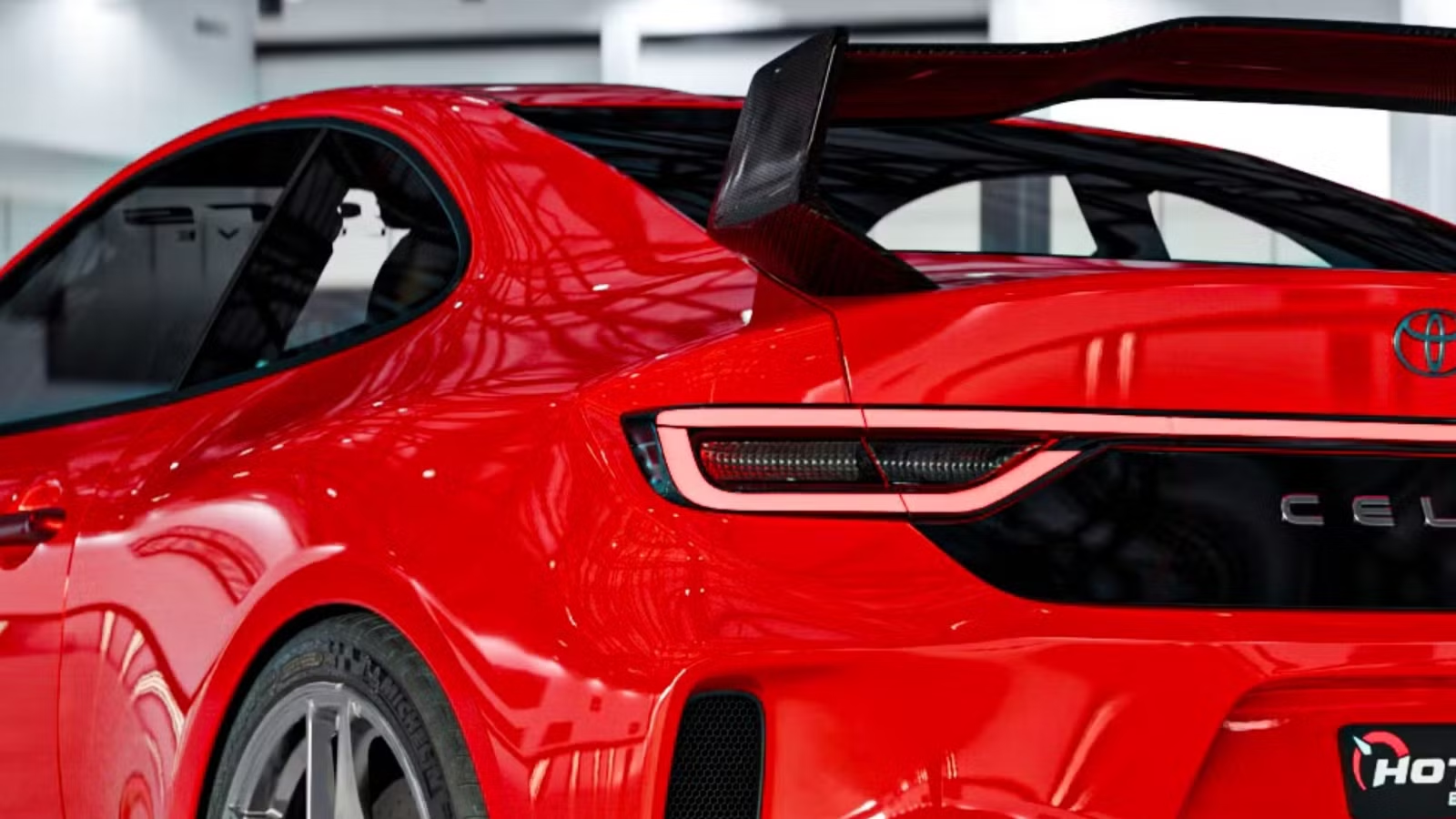
After 20 years of silence, the Celica is coming back, and HotCars render artists have already imagined what that looks like. Toyota’s longest-produced performance car ran seven generations from 1970 to 2006, earning a global following on cheap, reliable speed and a rally résumé that outshone its price tag.

The revival became real at 2024’s Rally Japan, where Toyota EVP Yuki Nakajima confirmed to Best Car that the Celica was happening. Autocar reports the production car will be called the Celica Sport and pair all-wheel drive with a turbocharged 2.0-liter G20E four-cylinder. A camouflaged prototype then surfaced on WRC stages in Portugal in February 2026 — convenient timing, with the Yaris rally car losing WRC eligibility in 2027.
A debut date is still missing, which is where our rendering comes in: a front-engined AWD coupe that reads as a modern Celica without leaning on nostalgia.

Toyota hasn’t put a date on it, but the WRC schedule makes 2027 the safe bet. Until the covers come off, HotCars render artists have taken the prototype shots and built their own vision of the production car: a front-engined AWD coupe with enough substance to pull in former Subaru STI owners alongside the Toyota faithful.
HotCars Delivers The Celica We’ve Been Dreaming Of
This exclusive digital render perfectly channels the spirit of the legendary Celica GT-Four rally car for the modern era. It’s a front-engined AWD coupe that looks like a GR86 that was put on a healthy diet of protein and steroids.
The chunky honeycomb grille is a carryover from the new GR Corolla and Yaris, but with a massive new motorsports-grade carbon fiber splitter sitting underneath. New LED headlights instantly separate the Celica’s nose from other Toyota performance cars. A wide carbon fiber intake sits on the hood and proves that this Celica means business.

This Celica looks bigger and more muscular than the GR86 and taller than a Supra; it sits with a planted, purposeful stance that seems closer to a BMW M2 than anything in Toyota’s current lineup. From the side, the black side skirts look like they came straight from the Supra, though, with functional side vents channeling air into the rear brakes.

Discerning Toyota fans will recognize the GR86’s famous double-bubble roof, which provides the necessary helmet clearance in the cabin. That sleek roofline flows into a fastback tail with a massive, high-mounted carbon-fiber rear wing.

A full-width LED taillight bar serves as a nod to the 5th-gen Celica rear end and proudly highlights the Celica nameplate in the middle. The short rear overhang, muscular haunches, and large rear splitter with dual exhaust tips make the whole rear three-quarter look absolutely menacing and scarier than perhaps any Toyota ever made short of an LFA. And yet it’s still not too over-the-top for mass production.
265-section Michelin Pilot Sport Cup 2s fill the arches perfectly and hint at serious power under the hood, which brings us to the next point.
How Much Power Will The New Celica Make?

While Toyota hasn’t released any official horsepower estimates yet, Gazoo Racing marketing manager Mikio Hayashi told Autocar that a new engine is being developed for the car, and it may end up being a hybrid 2.0-liter four-cylinder. Toyota is currently developing a new line of turbocharged inline-4s for motorsports, too, which are based on the existing G16E turbo three-cylinders in the GR Corolla and Yaris hot hatches.
Dubbed the G20E, the new four-cylinder is allegedly capable of over 400 hp. This kind of power would put the new AWD Celica Sport in the GR Supra territory, and even give it an edge in acceleration. Keep in mind, the most powerful 7th-gen Celicas only made 180 hp. And even if a detuned version of the same engine makes it into the new Celica, it would still ostensibly rival or exceed the 300-hp output of the three-cylinder GR Corolla, giving Subaru WRX STI fans a solid incentive to switch teams (if the Corolla already hasn’t).
The Portugal prototype has already been kicking up dust on WRC stages, so more concrete details and images could drop any day now. In the meantime, Toyota fans have every reason to get hyped. If the real car looks even half this good, it’s going to be an absolute riot.
Why The Toyota Celica Became A JDM Favorite

Long before rumors of its return started circulating, the Toyota Celica had already cemented itself as one of the most recognizable and beloved Japanese performance cars ever built. Its success wasn’t built on one standout generation—it came from decades of evolution, accessibility, and motorsport credibility.
When it debuted in 1970, the Celica was essentially Toyota’s answer to the Ford Mustang formula: an affordable, sporty coupe for the masses. Early models focused more on style and everyday usability than outright performance, but that approach helped the Celica gain traction globally, especially in markets like North America and Europe.
As the years went on, the Celica grew into something far more serious. By the 1980s and 1990s, it had transformed into a legitimate performance machine, particularly with the introduction of the GT-Four (All-Trac Turbo) models. These all-wheel-drive, turbocharged variants brought rally-bred engineering to the street and helped define the car’s reputation.
The Celica’s popularity exploded thanks to its success in the World Rally Championship (WRC):
- Multiple manufacturers’ and drivers’ titles in the early 1990s
- Legendary drivers like Carlos Sainz and Juha Kankkunen behind the wheel
- The GT-Four becoming one of the most recognizable rally homologation cars ever
Beyond motorsport, the Celica thrived because it was attainable. Unlike exotic sports cars, it offered sharp styling, engaging driving dynamics, and Toyota reliability at a price enthusiasts could realistically afford. That combination made it a staple in tuner culture, motorsport, and even pop culture.
By the time production ended in 2006, the Celica had built a fanbase that spanned generations. From classic rear-wheel-drive coupes to high-tech AWD rally machines and lightweight front-wheel-drive sport compacts, it constantly adapted while staying true to its core identity.
That legacy is exactly why its return matters. The Celica isn’t just another nameplate revival—it’s the comeback of one of Toyota’s most important performance cars.
Source: Toyota, Autocar.

Related posts

Latest Post


No Comments