The Daily Driver That Makes 200,000 Miles Feel Effortless
9 minutes reading
Saturday, 15 Aug 2026 16:00 0 37 autotech
Buying a car you can depend on for years is one thing. Finding one that can rack up 200,000 miles without turning every repair into a financial headache is something else entirely. While flashy features and big horsepower numbers grab attention, they’re rarely what keeps a vehicle in the driveway for 15 or 20 years. The real winners are the ones that quietly deliver dependable transportation day after day, mile after mile, with minimal drama. One midsize sedan has built exactly that reputation, making long-term ownership feel far easier than many drivers ever expected.
There aren’t many secrets to making a car last 200,000 miles or more, but the starting point is a car that is well-known for “above-average reliability and lower-than-average maintenance and repair costs”, according to Consumer Reports. This sounds like a simple solution, but not every car fits this description, making it difficult to know which car to buy.
A car that will give you these qualities often has a much simpler engineering philosophy than most. When conservative engineering, horsepower limits that don’t reach peak figures, proven transmissions, and simple maintenance with widespread access to parts are all part of one car, that car has one of the best chances of reaching 200,000 miles or more. It might sound like a fairy tale to find such a car, but one mainstream sedan has become the benchmark for longevity and reliability.
No Car Payment, Lower Insurance, Zero Drama: The Financial Case For Keeping One Car Longer
Close-up shot of 2026 Toyota Camry wheelToyota
Some cars just feel right. They have excellent ride comfort, impressive fuel economy figures, are reliable, and offer predictable ownership costs. Some owners realize the financial benefits of driving a car that remains in good condition even after the payments have ended. Driving a paid-for car means no monthly car bill and the opportunity to lower your insurance costs, if desired, which can be a double financial benefit. There’s one midsize sedan that has made this financial equation work for millions of drivers — and its ownership numbers are surprisingly specific.
Meet The Sedan That Makes 200,000 Miles Feel Routine
A $388 Annual Repair Bill And A 4.0 Reliability Score: What The Camry’s Data Actually Shows
2026 Toyota Camry Front 3/4Toyota
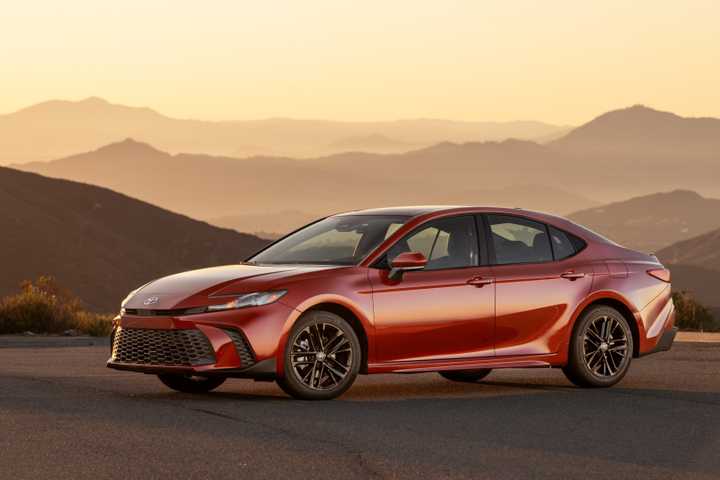
The Toyota Camry is well-known for its reliability, longevity, engineering simplicity, and well-rounded nature. Starting in 2025, the Camry is offered with a hybrid-only lineup, which might cause some people to shudder, but it shouldn’t. Toyota has been refining its hybrid powertrains for decades in the Prius and has offered hybrid powertrains alongside its gas-only powertrains until these recent changes.
The Camry has an average annual repair cost of $388 according to RepairPal, making it one of the most affordable cars to own. Its reliability score is a 4.0 out of 5.0, ranking it third among 24 midsize cars. The 2026 Toyota Camry returns 52 city/49 highway mpg in its base setup, which translates to an average fuel cost of $1,200 per year.
Rear 3/4 action shot of the 2026 Toyota Camry in blue being drivenToyota
Of course, if you don’t want a hybrid Camry, the 2024 model can be had with a gas engine, and you should be able to find one with low miles and good maintenance records to enjoy driving to 200,000 miles or more with proper care.
The Numbers Explain Why So Many Reach 200,000 Miles
Front 3/4 shot of 2026 Toyota Camry parkedToyota
The hybrid-only Camry lineup retains impressive positioning among experts regarding projected longevity and reliability. The 2026 Camry receives an 80/100 from J.D. Power for Quality & Reliability and an 82/100 overall, which puts it in a tie for third place among midsize sedans. The Camry is also projected by iSeeCars to be one of the top 25 vehicles to reach 250,000 miles. It has a 10.2 percent chance of reaching this mileage figure.
Incidentally, the 2024 Camry tied for first place with J.D. Power, earning an 86/100 for Quality & Reliability. The drop in score could be related to the switch to a hybrid-only lineup, but over time, the hybrid models could receive much higher scores.
Even The Camry Has Weak Spots—Here’s The Honest Story
The Known Problems Buyers Should Understand
Shot of 2026 Toyota Camry interior showing cabinToyota
Despite its outstanding reputation, the Camry hasn’t been flawless, and buyers should be aware of the issues associated with specific model years. The biggest concern affects 2007–2011 four-cylinder models equipped with Toyota’s 2AZ-FE engine, which were prone to excessive oil consumption caused by worn piston rings.
Some 2012–2014 Camrys with the six-speed automatic also developed torque-converter shudder, often noticeable as vibration during light acceleration, with Toyota issuing technical service guidance and updated components to address the problem. Early 2018–2019 eighth-generation Camrysoccasionally drew complaints about hesitant or rough shifting in their new Direct Shift eight-speed automatic, prompting Toyota to release transmission software updates via Technical Service Bulletins.
Front 3/4 action shot of 2021 Toyota Camry Hybrid in silver drivingToyota
More recently, Toyota recalled certain vehicles equipped with the 2.5-liter Dynamic Force engine due to manufacturing debris that could damage internal components, and some 2018–2020 Camrys were included in the widespread Denso low-pressure fuel pump recall, which could cause the engine to stall. While these issues are important to know, they affect specific engines, transmissions, or production periods, not every Camry, and any used example should be checked for completed recalls and a documented maintenance history before purchase.
With 22 Million Units Sold, The Camry’s Recall Rate Is Still Below The Industry Average
Front shot of 2026 Toyota Camry in silver parkedToyota
Nearly every car has a recall during its time in service, and cars with much higher-than-average sales are prone to more recalls than others. Despite a few issues, some significant, over its history, the Toyota Camry has been a reliable, long-lasting, and useful sedan for many drivers during its history.
In reality, a car with global sales exceeding 22 million units is going to face some scrutiny and have a few recalls over its lifetime. The frequency is lower than that of other vehicles. The Ford F-150, the most popular pickup truck in America, is expected to have an average of 27.8 recalls, yet it’s still chosen more than any other truck.
Profile action shot of 2026 Toyota Camry in silver being drivenToyota
Recalls aren’t meant to dissuade buyers from driving them, unless the cars are described as being “unsafe at any speed,” a phrase famously attributed to Ralph Nader about the Chevrolet Corvair in the 1960s. Still, before buying a pre-owned Camry, it’s wise to check the vehicle’s recall history and ensure those recalls have been addressed.
Why It Still Costs Less To Own Than Most Rivals
The Camry Costs $750 Less To Maintain Than The Sonata Over Five Years — And That Gap Widens
2026 Toyota Camry Rear 3/4Toyota
A car that can last 200,000 miles and has a good chance of going even further will eventually reward its owner. The Toyota Camry is one of the most affordable cars in terms of ownership costs during the first five years. According to Edmunds, the average maintenance costs during this time are $3,050, and depreciation is $10,710. Compared to a Hyundai Sonata, which incurs $3,800 in maintenance costs and depreciates by $15,252, the Camry is clearly more affordable.
As cars age, a few things happen. Once they get beyond the five-year mark, and sometimes even the ten-year mark, parts begin to break down, increasing repair costs. Although repair costs might increase, depreciation levels off, and maintenance costs decline. These factors, coupled with the lack of a monthly payment and lower insurance costs, can make owning and keeping a Toyota Camry for ten or more years, allowing it to reach 200,000 miles or more, a financial gain.
Why High Mileage Doesn’t Hurt A Camry Like It Hurts Other Cars
2026 Toyota Camry Hybrid Nightshade Edition rear third quarter accelerating viewToyota
According to iSeeCars, the Toyota Camry depreciates 21.4 percent in the first three years, reaching 34.3 percent by year five, 44 percent by year seven, and 59.7 percent after ten years. That means a ten-year-old Camry can still hold up to 40.3 percent of its original value. There is a high demand for used Camrys, which often offsets depreciation. This demand has everything to do with the Camry’s proven reliability, Toyota’s reputation, and its well-rounded nature. Of course, neglected models lacking a documented service history lose this advantage.
Compared with the Camry, the Hyundai Sonata depreciates 26.7 percent after three years, 42.4 percent after five years, 51.7 percent after seven years, and 64.4 percent after ten years. This means a ten-year-old Sonata can only hold up to 35.6 percent of its original value after ten years on the road. The Sonata has only a 5.6 percent chance of reaching 200,000 miles during its lifespan and an average lifespan of 8.3 years, which means most of them don’t make it to 10 years.
Who Should Actually Buy A Camry — And Who Should Look Elsewhere
Buyers Who’ll Appreciate It Most
Profile action shot of 2026 Toyota Camry driving on roadToyota
The Toyota Camry has become such a popular midsize sedan that very few drivers won’t appreciate what it offers. Unless you need more power, sportiness, cargo space, or a different vehicle class, the Camry is generally considered a safe and smart option for many drivers. It’s been widely utilized by daily commuters, growing families, retirees, delivery drivers, and long-term owners alike.
The Verdict: 200,000 Miles Is Possible—Not Automatic
Although the Camry has one of the strongest reputations for reliability and longevity in the midsize sedan class, 200,000 miles is not automatic. You have to ensure proper scheduled maintenance is performed. This is the real secret to longevity for any vehicle, and actually, it’s not a secret, but many drivers forget to budget for maintenance when buying a car.
The Toyota Camry has earned its reputation the hard way—not through flashy marketing or headline-grabbing performance, but by delivering dependable transportation year after year. It isn’t perfect, and reaching 200,000 miles still depends on consistent maintenance and responsible ownership. But few vehicles make that journey feel as uneventful. When repairs are predictable, operating costs stay low, and reliability remains strong long after the odometer reaches six figures, 200,000 miles stops feeling like an ambitious goal and starts feeling like just another milestone on the road.













No Comments