
The Surf-Themed Mopar Only 700 Buyers Ever Took Home
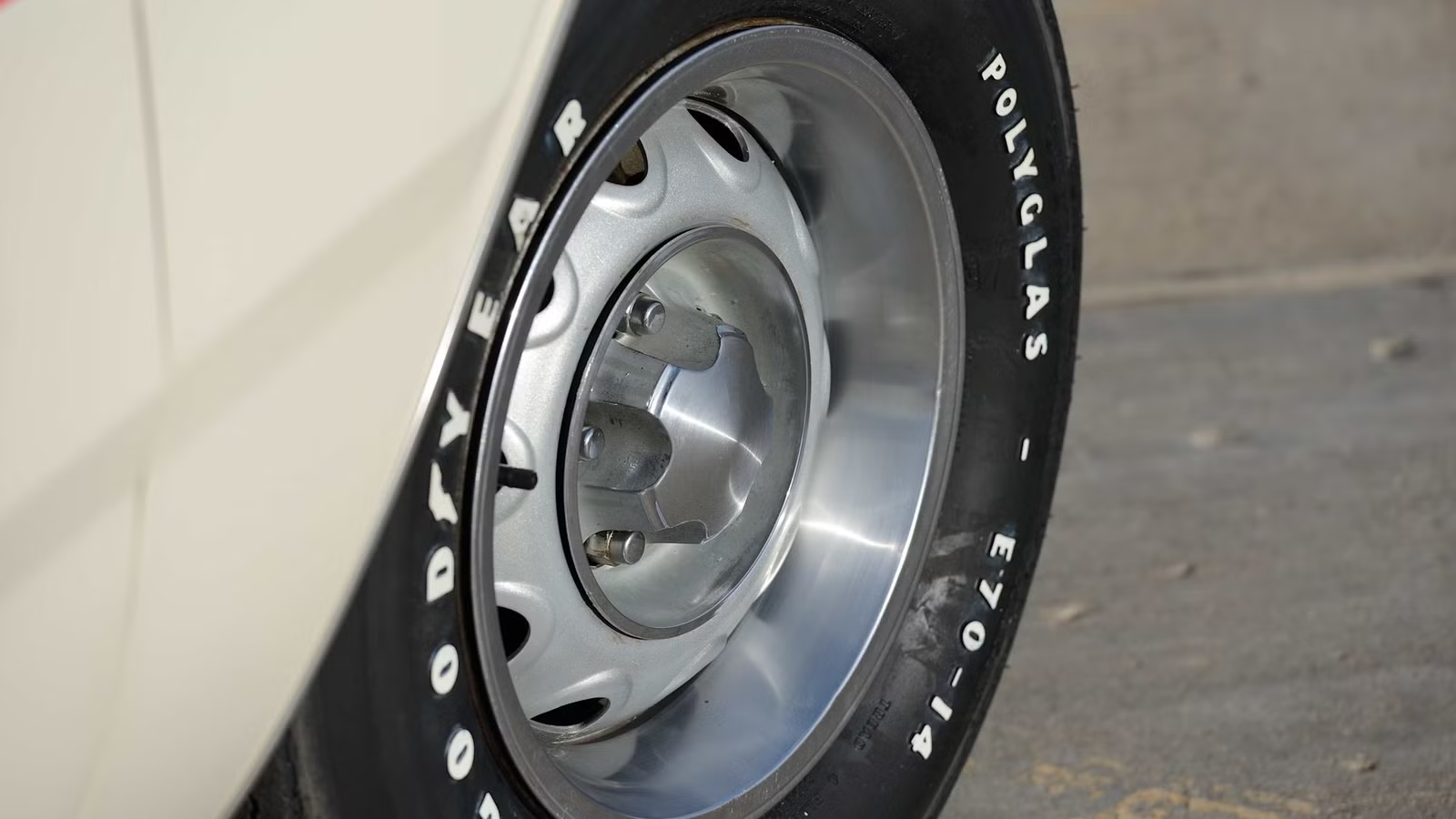
Imagine this: You’re walking along a beach in the mid 1970s when you spot a bonkers custom muscle car in the lot nearby. The two-door sports surfer decals and a surfboard sticking out of the back, thanks to some kind of rear-seat delete to make enough room. Its upholstery even looks waterproof. As you peer at it, you begin to realize the fit and finish looks nearly factory. But no automaker would be crazy enough to build this thing, right?
Mopar Had Some Looney Themed Editions

Over the years, Mopar has leaned into its zany reputation with some downright absurd appearance packages. But it’s not shocking, considering this is the brand family that named an entire model after a Looney Tunes character—the Road Runner, complete with a silly “beep beep” horn.
What Mopar vehicle would you expect to come in a gold-trimmed luxury edition? A Chrysler? A top-trim Dodge Charger? Try the budget compact model from the budget-friendly brand. I’m of course referring to Plymouth’s 1970-1975 “Gold Duster.” The package came with gold stripes on the side and rear of a beige car, as well as a special carpet color. Never mind that most came with vinyl roof and seats, and you could get them with the underpowered slant-six engine. No telling whether this visual package came first and landed the whimsical name later, or if Plymouth decided a play on the phrase “gold dust” was too good to pass up.

So imagine your engineers developed a truly gnarly muscle truck. In fact, Car and Driver tested it as the quickest American production vehicle from 0 to 100 mph. You give it a big, bad, scary name. Right? Or you could just call it the Dodge Lil’ Red Express. Never mind that it sounds more like a character from a children’s TV show than a legendary muscle truck.

The most bizarre example might be when Cincinnati debuted its NFL team, the Bengals, for the 1968 season. An enterprising Ohio Dodge dealer custom-ordered 50 1968 Chargers in PPG #60326 orange. At that point, Dodge wasn’t even building “Hemi orange” Chargers, but was keeping the color on hand for Michigan state highway plow trucks. That didn’t stop Tom Kneer Dodge from ordering them, slapping on special stripe decals, custom floor mats, custom badges, and creating the ultra-rare Bengal Chargers.
The 1974 Dart Sport Had Lost Its Mojo

In the late 1960s and early 1970s, Detroit’s formula was simple. Increase displacement and compression to build ever more powerful muscle cars. The trick kept buyers coming into dealerships, right until the party ended.
The wet blankets of emissions regulations, unleaded fuel, the oil crisis, and insurance surcharges killed the most potent V8s. By 1970, muscle car reviews read like eulogies. By 1974, the same engines were detuned shadows of their former selves.

At the same time, stricter crash test regulations were forcing automakers to drastically restyle cars. Models that had recently sported sleek, minimalist front ends now lugged around huge bumpers with black rubber stoppers cobbled on. Mopar was no exception.
The legendary, powerful, and weird Dodge Dart Swinger 340 and Dart Demon had devolved into the low-compression, flabby, mild-mannered Dodge Dart “Sport.” Mopar needed to do something quick. And what did Mopar do best in the 1970s? Lean into the weird. The result was the brand’s “1974 1/2 New Wave” marketing push. The entire “new wave” was led by a funky compact car, which took this hippie phrase hilariously literally.
The 1974 Dodge Dart Sport “Hang 10” Was A Wild Surf-Themed Mopar

Every single “Hang 10” Dodge Dart Sport was finished in EW1 Eggshell White paint. Then it was decked out with red-and-blue pinstriping running the length of the car. But these weren’t straight pinstripes; the stripes, of course, ended in the shape of waves. Look closely among the waves, and you’ll see a cute stick figure surfer dude. The pinstriping on the hood was actually shaped like a surfboard.
Inside, the cars had a completely psychedelic pattern. This included shag carpeting with matching console accents. There may have been a mid-year change, as some surviving cars have red carpeting while others have a color best described as dark orange. The white vinyl seats were trimmed in woven, multicolored “swimsuit material.” We’re not going to ask too many questions about what this material actually was, how it was obtained, or why it was included. We’re not ready for the answers.

The centerpiece of the entire car was Mopar’s “convertriple” fold-down rear seat. It was borrowed from Plymouth’s “Space Duster” trim (get it?), which had a fold-down rear seat for a 6+ foot carpeted load floor behind the driver and passenger. (For extra “space,” get it now?) In the case of the Hang 10, this cargo area was obviously intended for your surfboard.
This thing might as well have come with a dashboard hula girl, Matau bone necklace hanging from the rearview, and the Beach Boys on 8-track. Cowabunga!
Dodge’s Hang 10 Package Offered A Piece Of The California Surf Lifestyle
The Hang 10 would set you back at least $254—before any engine or trim-level upgrades. That’s right, this thing wasn’t even a top-trim option, available exclusively with a V8. You could order this package with a base “slant-six” engine. At the tail of the muscle era, that was audacious. But it signaled a shift.

Instead of a performance package or luxury package, Hang 10 was a lifestyle package. Dodge didn’t make it cheap. But Dodge seemed sure it would sell. In the Hang 10’s two years of production (1974 and 1975), Dodge built 700 of these things. Forget about performance or features, kids, you want a car that looks cool.
How The Hang 10 Dart Might Have Lived On

Today, lifestyle marketing is no longer the exception. It’s the rule. Mopar is still leading the way with special editions such as the Jeep Wrangler Islander and a one-year-only Ram 1500 special edition targeted at firefighters, police officers, veterans, and other trades. But that’s just the tip of the iceberg: From the F-150 Harley Davidson edition to the Ford Explorer Eddie Bauer edition, lifestyle appearance packages abound. The Dodge Sport Hang 10 just caught the wave early.
But were there just 700 Hang 10 Darts? We know Hang 10 absolutely worked. Some reports show that not only did dealerships buy the factory cars, but they also ordered another 1,000 sticker/decal kits. The intriguing possibility is that there could have been more Hang 10 Darts assembled at dealerships. Hundreds of them. They likely don’t have the same interior. But they could even be in other configurations (a station wagon, anyone?), or from later model years, or perhaps even as a reimagined Plymouth Duster. Groovy, man!
Sources: Old Cars Weekly, Curbside Classics, Street Machines, Dodge

Related posts


Latest Post


No Comments