
The Safest Midsize SUV For 2027 Isn’t A Toyota Or Hyundai
Shortlist a family SUV and the safety conversation usually starts with Toyota. The latest IIHS midsize table tells a different story. Not one Toyota in the class earns an award, and the Highlander, Land Cruiser and 4Runner all score Marginal in the moderate overlap front test. Hyundai, for example, fares better, but it shares the podium with rivals that rarely feature in the debate. Five contenders stand out for 2027, and the detail behind each rating matters more than the badge on the nose. Headlight performance, crash avoidance tech and child seat anchors decide who wins, so here is where each one earns or drops points.
The 2027 Kia Telluride Earns Top Safety Pick+ With Good Ratings Across All Three Crash Tests
Build Date And Headlights Decide Which Telluride Qualifies

Kia’s three-row flagship posts Good results in the small overlap, moderate overlap and side tests, the trio of crashes the IIHS builds every award around. The small overlap test, a 40 mph strike on 25 percent of the vehicle’s width, is where several rivals in this class slip to Acceptable. Add a standard front crash prevention system rated Good against both vehicles and pedestrians, Good seat belt reminders, and Good+ child seat anchors, and the Telluride lands the Top Safety Pick+ award for 2027.

The catch for potential buyers is the build date. The award applies to Tellurides built after June 2026, and the IIHS headlight entry shows a split rating that includes a Marginal result, so confirm the production date and trim before signing on the dotted line. Kia fully redesigned the SUV for the 2027 model year, which makes a clean crash sheet even more impressive. Its mechanical twin, the Hyundai Palisade, posts an equally strong result, so the real story is Toyota’s absence and Kia’s consistency. Pick a post-June 2026 build, check the headlights, and you have one of the safest three-row SUVs on sale today.
The Subaru Ascent Matches The Telluride With Excellent Crash Protection And Accident Prevention
Good Headlights And Standard Eyesight Leave No Weak Spot


If you were to frame the Subaru Ascent’s report card, it would gladly hang on a dealership wall. It scores Good in the small overlap, moderate overlap, and side tests, Good for headlights, Good in both front crash prevention tests with a standard system, Good seat belt reminders, and Good+ child seat anchors.

Subaru’s Eyesight system is standard, and the IIHS tests it against a passenger car, a motorcycle and a real semitrailer, so a Good rating means broad competence rather than one lucky scenario. The Ascent also has a story of improvement. From the 2026 model year, Subaru revised the rear seat belts to improve rear occupant protection in moderate overlap crashes, bringing back-seat safety closer to the level up front. Rating for rating, the Ascent matches the Telluride and edges it on headlights, with none of the production-date fine print. For buyers who want a three-row SUV with no excuses to make with regard to safety, this is as clean as a crash sheet gets in the modern era.
The Mazda CX-70 Delivers Top-Level Crash Protection With Strong Standard Safety Technology
Acceptable Crash Avoidance Still Clears The Award Bar

One caveat comes first: the IIHS lists the CX-70 under 2026 models, so view 2027 as a carryover, as no changes have been made. With that said, the two-row sibling of the CX-90 earns Good in all three crash tests, Good in the pedestrian test with a standard system, Good seat belt reminders, and Good+ child seat anchors.

The standard vehicle-to-vehicle system rates Acceptable rather than Good, and headlights are Good or Acceptable depending on the version, with the plug-in hybrid on Acceptable. That combination still clears the bar for Top Safety Pick+, and it does so with standard equipment rather than optional extras. Check, too, that the headlights fitted to the version you want match the rated type, because the IIHS ratings apply to specific headlight types. The CX-90 and its plug-in variant post the same numbers, so the strength sits with the Mazda large-product-group platform, not just one model or trim. Mazda gives up a little ground on crash avoidance to Subaru and Kia, but it never drops below Acceptable on any test. For drivers who want a more engaging SUV without paying a safety penalty, that is a fair trade.
The Nissan Murano Earns Top Safety Pick+ Despite Having Some Acceptable Rather Than Good Ratings
Its Gaps Lie In Preventing Crashes, Not Surviving Them

The Top Safety Pick+ award does not demand a clean sweep, and the Nissan Murano proves it. It earns Good in the small overlap, moderate overlap and side tests, Good in the pedestrian test with a standard system, Good seat belt reminders and Good+ child seat anchors. Where it slips is in two areas: headlights and the vehicle-to-vehicle crash prevention test both come in at Acceptable.

Those scores sit inside the award’s thresholds, which is why the badge stands, but they also explain why the Murano ranks below the Ascent on paper. The pattern is worth reading carefully, though. The Murano’s gaps lie in preventing crashes, not in surviving them, and its structure does the hard work when a collision happens. Child seat installation is also easy, with good anchor access in the rear. If you value the award but not perfection, the Nissan Murano is a sensible pick, though shoppers who spend a lot of time driving at night should test if the headlights meet their requirements before signing.
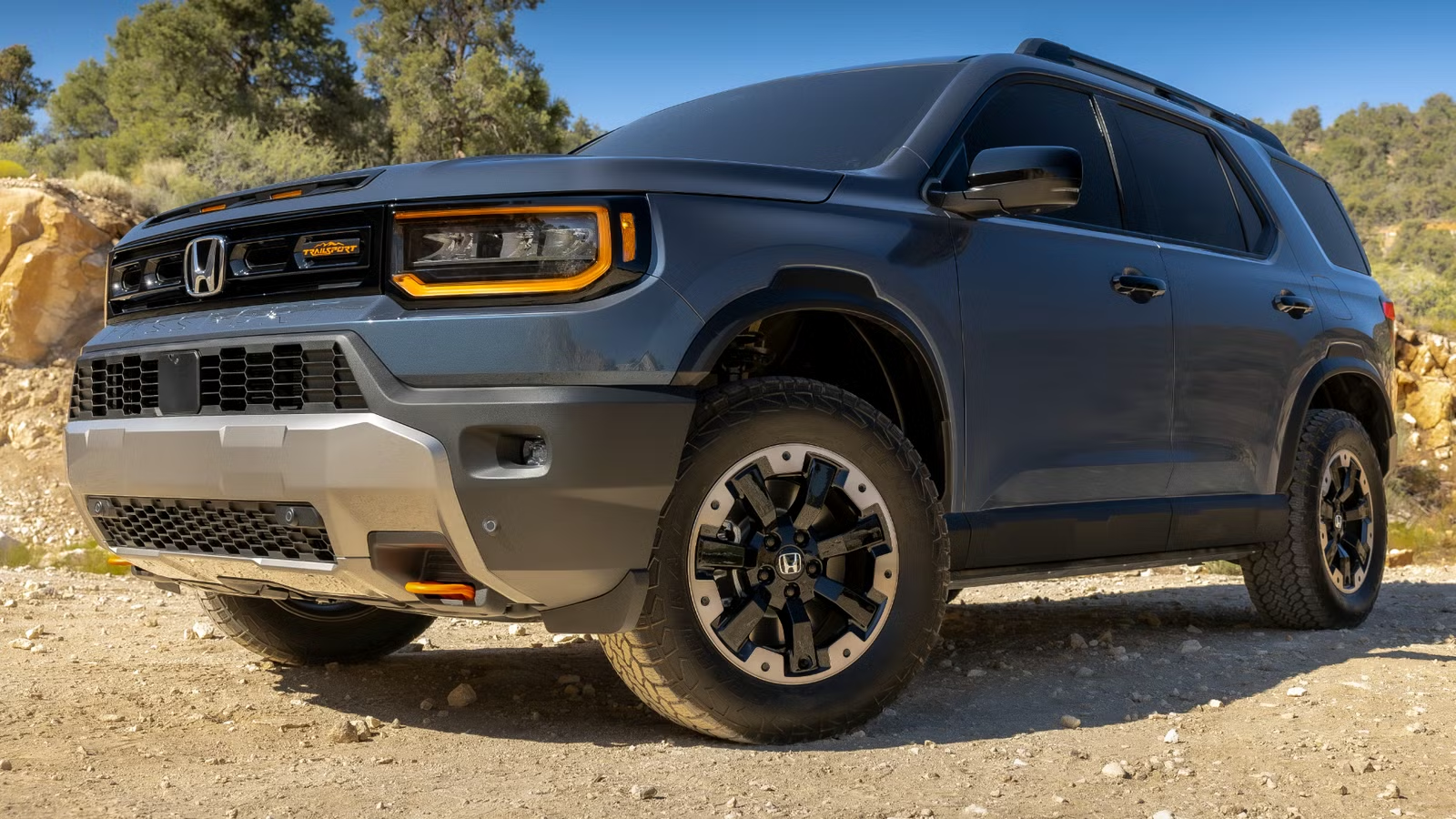
The Honda Passport Rounds Out The Safest Mainstream Midsize SUVs
Strong Crash Tests, But No Front Crash Prevention Ratings Yet

The Honda Passport’s results come with an asterisk. It earns Good in the small overlap, moderate overlap and side tests, Good for headlights, Good seat belt reminders and Good+ child seat anchors, which is a strong crash sheet by any measure. What it lacks is an award. The IIHS table shows no front crash prevention ratings for the 2027 Passport, in either the vehicle-to-vehicle or pedestrian tests, and without them, it cannot qualify for Top Safety Pick or Top Safety Pick+.

That is a testing gap, not a structural failure, and the next round of results could change the picture. Some roundups credit Honda’s driver assistance technology, but ratings, not reputation, decide this list. So what should a buyer do? If a third row matters, start with the Ascent and the Telluride, and check the Kia’s build date and headlight options. If two rows will do, the CX-70 and Murano both hold the top award, while the Passport deserves a look once its crash prevention results arrive. All four award winners include a standard front crash prevention system, so you do not need the top trim to get the rated hardware.
Sources: IIHS & CarBuzz

Related posts
Latest Post


No Comments