
The Sleeper Naked Bike With Honda Reliability And Superbike Performance
Superbikes represent some of the most advanced engineering in the motorcycle industry, but their aggressive ergonomics and track-focused designs aren’t necessarily ideal for everyday riding. Top-drawer naked bikes offer an alternative, combining high-performance engines with upright handlebars, reduced bodywork, and more versatile riding positions. And while European manufacturers have pushed this category toward increasingly exotic territory, there’s a Japanese alternative that brings much of the same engineering without the associated complexity of an exotic machine.
Superbike Performance Doesn’t Have To Be Complicated

High-performance naked motorcycles have evolved well beyond stripped-down sport bikes. Modern examples feature sophisticated electronics, premium suspension, and engines capable of producing power figures that would’ve been considered superbike territory just a decade ago. Motorcycles like the Ducati Streetfighter V4 and BMW S 1000 R demonstrate just how advanced this category has become, although their performance credentials come with premium price tags and increasingly complex technology.
Japanese Engineering Offers A Different Approach

Japanese manufacturers have traditionally approached performance motorcycles with an emphasis on refinement, proven engineering, and long-term usability. Honda, Kawasaki, Suzuki, and Yamaha have all built reputations around these priorities, although reliability ultimately depends on maintenance and individual ownership conditions. The advantage is that much of their technology originates from established platforms rather than completely new designs, allowing manufacturers to adapt high-performance components for different applications without starting from scratch.
The Yamaha MT-10 SP Is A Superbike In Disguise


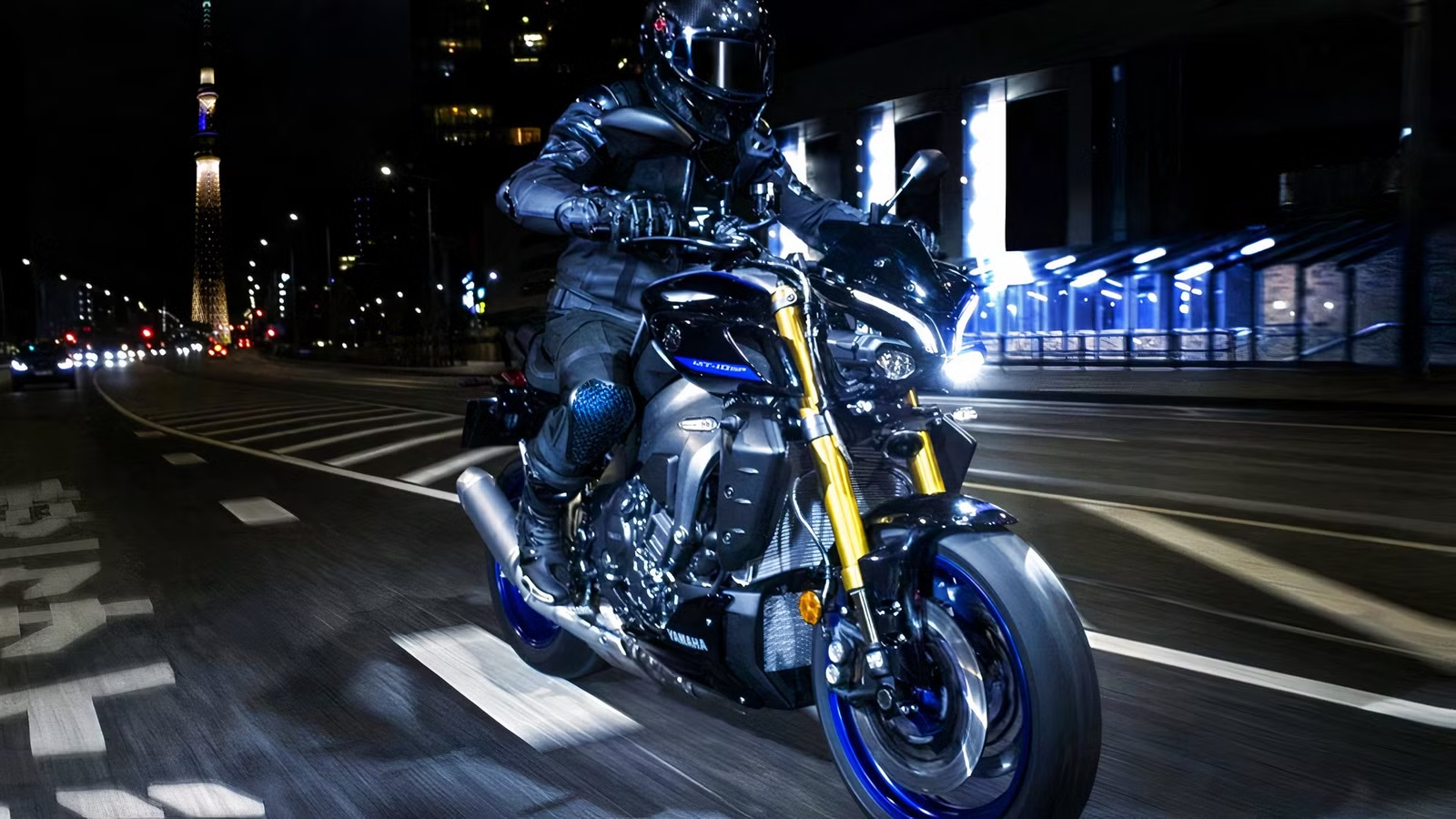
The motorcycle in question is the 2026 Yamaha MT-10 SP, the flagship of Yamaha’s Hyper Naked lineup. Priced at $17,499, it combines the engineering foundation of the YZF-R1 superbike with upright ergonomics and electronically controlled suspension. The SP designation identifies the highest-specification version of the MT-10, adding premium chassis equipment rather than additional engine output. It’s a compelling proposition for riders who want liter-class performance without committing to a fully faired superbike.
Underneath its angular bodywork sits a 998cc liquid-cooled, 16-valve inline-four engine featuring Yamaha’s crossplane crankshaft. Derived from the YZF-R1, the engine has been adapted with revised intake, exhaust, and fuel-injection settings to emphasize torque delivery across the rev range. It features a 79.0mm bore, 50.9mm stroke, and 12.0:1 compression ratio. Yamaha doesn’t publish official US horsepower or torque figures, but the closely related European model is rated at approximately 164 horsepower and 82.6 pound-feet of torque.
An R1-Derived Powertrain Built For The Street

Unlike a conventional inline-four, Yamaha’s crossplane crankshaft uses uneven firing intervals, giving the engine a distinctive exhaust note and power-delivery characteristics. The MT-10 SP also features three different-length intake ducts and acoustic amplifier grilles near the fuel tank, designed to transmit more induction sound toward the rider. These components complement the engine’s street-focused tuning while retaining the underlying architecture that connects it to Yamaha’s flagship superbike.
Power reaches the rear wheel through a six-speed transmission, chain final drive, and wet multiplate assist-and-slipper clutch. A bidirectional quick shifter allows clutchless upshifts and downshifts, while electronic throttle control provides four selectable power-delivery modes. The bike also features adjustable engine braking, cruise control, and a speed limiter. These systems broaden the MT-10 SP’s intended operating range, covering everything from urban riding to longer highway journeys.
Premium Suspension Is What Makes The SP Special
The MT-10 SP’s most significant upgrade over the standard MT-10 is its electronically controlled Öhlins suspension. The system combines a fully adjustable 43mm inverted fork with a matching rear shock, both offering 4.7 inches of travel. Three automatic damping modes continuously adjust compression and rebound settings according to operating conditions, while three manual modes allow riders to select their preferred electronic damping characteristics. This technology is designed to accommodate different riding situations without requiring conventional damping adjustments.
The suspension attaches to an aluminum Deltabox frame derived from the YZF-R1’s chassis architecture. Geometry includes a 55.3-inch wheelbase, 24-degree rake, and 4.0 inches of trail, while the motorcycle weighs 472 pounds with all fluids and a full tank of fuel. Seat height measures 32.9 inches, and ground clearance is 5.3 inches. Overall dimensions are 82.7 inches long, 31.5 inches wide, and 45.9 inches tall, emphasizing the compact proportions of Yamaha’s flagship naked motorcycle.
Superbike Hardware Extends Beyond The Suspension

Braking duties are handled by dual 320mm front discs with radial-mounted four-piston calipers and a single 220mm rear disc, supported by ABS. The SP also receives braided steel brake lines, while 17-inch aluminum wheels wear Bridgestone Battlax Hypersport S22 tires measuring 120/70ZR17 at the front and 190/55ZR17 at the rear. Exclusive Liquid Metal/Raven paintwork, a polished aluminum swingarm, and a color-matched lower fairing further distinguish the SP from its standard counterpart.
A six-axis IMU supports lean-sensitive traction control, slide control, wheelie control, and cornering-aware braking intervention. Riders can configure these systems through the motorcycle’s TFT display, with selectable riding modes coordinating different electronic settings. Full LED lighting completes the equipment package, while a 4.5-gallon fuel tank and Yamaha’s estimated 36 miles per gallon fuel economy give the MT-10 SP a theoretical range of approximately 162 miles under the manufacturer’s test conditions.
A Japanese Alternative To Europe’s Exotic Nakeds

The MT-10 SP occupies an interesting position in the liter-class naked-bike segment. At $17,499, it commands a $2,500 premium over the standard MT-10, which uses the same engine but substitutes conventional KYB suspension for the SP’s electronic Öhlins setup. It’s also considerably more expensive than the $12,699 MT-09 SP, although that motorcycle uses an 890cc three-cylinder engine rather than the larger model’s R1-derived inline-four.
Ultimately, the MT-10 SP is aimed at riders who appreciate superbike engineering but prefer a motorcycle designed around a broader range of road-riding applications. Its established engine architecture, premium suspension, sophisticated electronics, and Japanese manufacturing heritage make it an alternative to more expensive European performance nakeds. It doesn’t promise the outright output of the most extreme machines in the segment, but it offers an impressive collection of hardware without requiring riders to buy a dedicated superbike.
Source: Yamaha

Related posts





Latest Post


No Comments