
The Rarest Chevelle Sleeper Isn’t An SS And It’s Vanishing
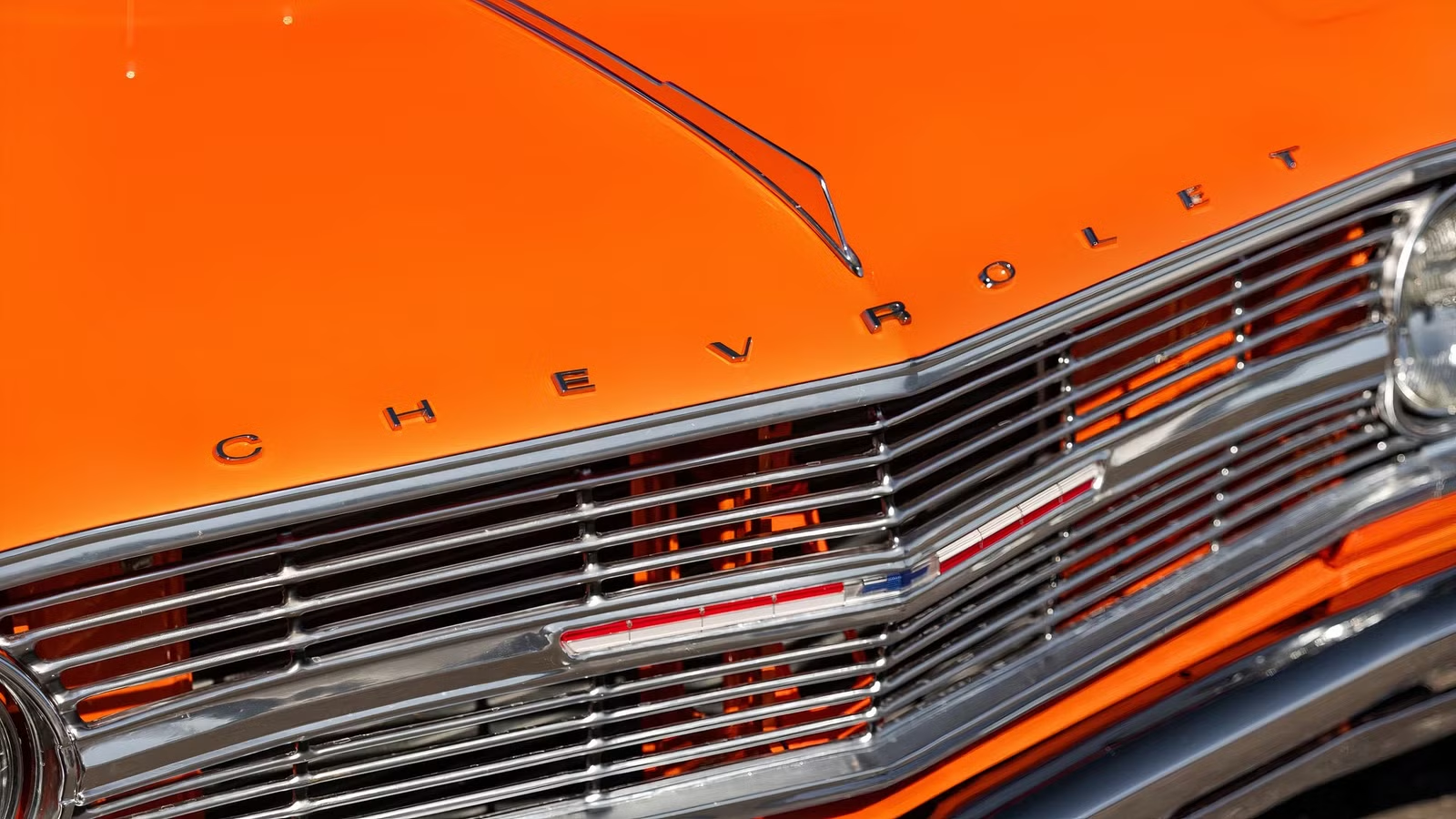
In America’s early horsepower wars, a badge could advertise speed before the engine even started. Make no mistake, Detroit loved selling that warning label.

One Chevrolet body style offered a sneakier proposition. It looked ready for grocery duty, yet the right engine could make the drive home far more fun than anyone ever suspected.
The Chevelle SS Got The Fame, But It Didn’t Have A Monopoly On Power
The 1964 Chevelle targeted the Ford Fairlane and America’s appetite for midsize cars. Positioned between the compact Chevy II and full-size Chevrolets, the newcomer was an immediate success, with more than 338,000 sold in its debut year. Chevrolet had an audience for something faster, and the SS coupe alone accounted for 65,669 cars.

The Malibu Super Sport attracted attention. For 1964 and 1965, the SS was restricted to two-door Sport Coupes and convertibles, with bucket seats and special trim. Here’s the catch: an early Chevelle SS could have a six-cylinder engine. The badge alone didn’t guarantee a hot rod.
The standard 194ci six made 120 hp, while the 283 V8 made up to 220 hp. Chevrolet added a 250 hp 327 in 1964 and the 300 hp L74 version later that year. In 1965, the limited production SS 396 Z16 introduced 375 hp big-block power, though performance extended beyond the badge.
Chevrolet’s Parts Bin Had A Performance Loophole Hiding In Plain Sight

The first-generation Chevelle rode on GM’s A-body platform, with a 115-inch wheelbase and body-on-frame construction. Up front were unequal-length control arms, while a four-link arrangement located the live rear axle. Those foundations extended from the Chevelle 300 to the Malibu SS.
Keep in mind that performance hardware wasn’t trapped behind an SS emblem. Regular Chevelles could use Chevrolet’s small-block V8 engines, paired with a three-speed manual, four-speed manual, or two-speed Powerglide automatic. Shared underpinnings also invited SS-inspired upgrades, provided individual components were correctly fitted.
The options list was noteworthy, too. The L74 327 cost an extra $137.75 in 1964, and Chevrolet recorded 1,737 installations across the Chevelle range. Positraction was a $37.70 option, while a tachometer added $48.45. A few checked boxes could turn a plain Chevrolet into a bundle of joy.
Even the dashboard had a secret. An SS came with special gauges, yet a tach could be ordered on other 1964 Chevelles. By 1965, that instrument was available on any V8 Chevelle regardless of body style. For drivers concerned with engine speed, budget trim had its advantages.
Two Doors, A Tailgate, And The Perfect Chevelle Sleeper

The best candidate for this quiet rebellion was the 1964-65 Chevrolet Chevelle 300 two-door station wagon. Chevrolet paired a two-door body with a useful cargo area, giving it a plain sedan’s personality and wagon practicality. Its modest 300-series trim hardly suggested an appetite for serious acceleration.
The missing rear doors made a significant difference. Compared with a conventional four-door family wagon, this Chevelle had a cleaner side profile and a stronger visual connection to Chevrolet’s two-door cars. The roof still suggested grocery duty, disguising an owner’s horsepower ambitions.
Chevrolet built only 2,710 two-door Chevelle 300 wagons for 1964, including 1,609 six-cylinder examples and 1,101 V8s. By comparison, 12,781 four-door 300 wagons left the factory that year. Chevrolet sadly discontinued the two-door wagon after 1965, ending its brief production run.
The weight figures are equally interesting. A 1964 six-cylinder two-door wagon had a curb weight of 3,195 pounds, rising to 3,330 pounds with a V8. That made the V8 two-door 80 pounds lighter than the equivalent four-door wagon. The V8 version originally listed for $2,636, just $108 more than its six-cylinder counterpart. The long roof looked hefty, but the numbers were quite reasonable.
When 300 Horsepower Meets A Grocery Getter, Things Get Interesting

The L74 327 small-block was the most tempting early Chevelle engine. At 300 horsepower at 5,000 rpm and 360 lb-ft at 3,200 rpm, it had tremendous muscle for a midsize Chevrolet. Its four-barrel carburetor was a long way from the bare minimum family car spec. Against the V8 wagon’s 3,330-pound curb weight, the sleeper formula looks solid.
Timing adds further intrigue. The L74 arrived in June 1964, and its 1,737 recorded installations cover the Chevelle range rather than identifying a wagon-specific total. The V8 two-door wagon and Chevrolet’s engine menu made an enticing combination, but exactly how many carried the top 327 isn’t quite known.
There are several caveats worth noting. For a start, imaginary quarter-mile heroics would be premature. Horsepower and weight suggest potential, but gearing, traction, and transmission choice would end up shaping the result. The tires also offered little in the way of modern grip. Despite all that, the prospect of a properly sorted 327-powered wagon embarrassing a milder SS is enough to make that innocent tailgate seem rather amusing.
The Chevelle Sleeper That Never Needed An SS Badge

For anyone with a weakness for deceptive Chevys, the two-door Chevelle 300 wagon is an invitation to misbehave. Its shared A-body bones offer plenty of compatible performance hardware, with the aftermarket happy to supply more. A stronger V8 sounds tempting, provided the brakes and suspension get invited to the party too.
Here’s the irony: Chevrolet never sold a factory Chevelle SS two-door wagon. Owners can build their own SS-inspired versions, but the badges don’t magically rewrite the paperwork. Even a 454 swap would be garage mischief, though strictly an owner modification rather than some forgotten factory special.
Finding a wagon worth modifying is the tougher trick. Chevrolet built just 2,710 two-door examples in 1964, and rust-free sheetmetal isn’t sitting on every parts shelf. Preserving an original makes sense, although hiding extra horsepower beneath that innocent bodywork has appeal.
The Chevelle SS will always draw attention at American car shows. Let the coupe bask in the compliments while the wagon quietly plots its next humiliation. Few things in muscle car history are more satisfying than a supposed grocery getter giving a performance car reason to worry.
Source: SS396, Mecum.

Related posts



Latest Post


No Comments