
The Rarest Buick Ever Produced
Buick’s current lineup of polished crossovers and sedans tells only part of the brand’s story. Dig into the archives and you’ll find a manufacturer that once chased NASCAR glory with purpose-built coupes and traded punches with Detroit’s fiercest muscle cars. Those chapters produced some genuinely extraordinary vehicles — and at least one that almost nobody has ever seen in person. We went hunting through Buick’s back catalog to find the single rarest model the automaker ever put into production, and the answer is more obscure than you might expect. Only standalone models were considered, rather than cars distinguished solely by a rare factory option.
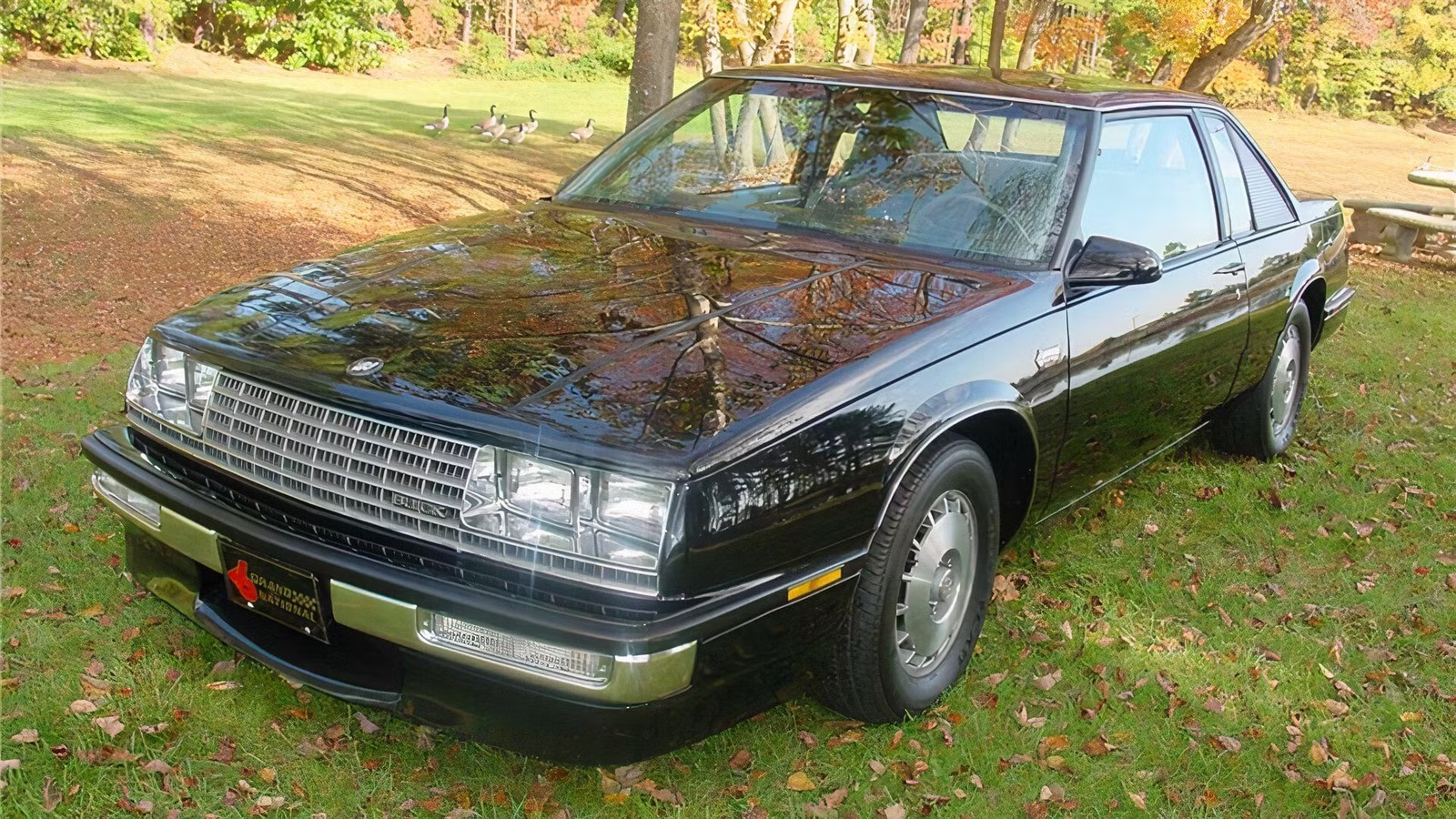
The 1986 LeSabre Grand National Is The Most Exclusive Model Buick Ever Made
1986 Buick LeSabre Grand National Details
 25 autotech Engine |
3.8-liter turbocharged V6 |
|
Power |
 64 autotech 150 HP |
|
Torque |
200 LB-FT |
|
Number Produced |
117 Units |
(Sources: Barrett-Jackson, Buick)
If you wanted a Buick muscle car during the 1980s, the usual destination was the Regal. Available in potent T-Type form, which packed a turbocharged V6 producing nearly 200 hp, the Regal bowed out with the mighty GNX — Grand National Experimental — in 1987. The Grand National nameplate was reserved for the very hottest cars in Buick’s lineup, and the rarest model the automaker ever built was no exception.
The LeSabre Grand National coupe arrived for 1986 and was produced for a single model year before being discontinued. Its brief existence wasn’t a business decision so much as a racing one. Buick was competing in NASCAR at the time on the LeSabre platform and needed a road-going version to satisfy homologation rules.
How Aerodynamics Shaped The Rare 1986 LeSabre Grand National
The aerodynamic advantage had long been understood within NASCAR circles, with special vehicles like the Ford Torino Talladega and Plymouth Superbird being built in the late 1960s and early ’70s to conquer superspeedway ovals like Daytona. At the extreme speeds those tracks demanded, a more slippery body could translate directly into a competitive edge.
Buick identified a way to make its LeSabre racer more aerodynamic, but first needed to build a run of road cars to satisfy homologation requirements. The key modification was a reshaped rear quarter window that made the roofline more streamlined — a subtle change with meaningful consequences at racing speeds.
Moving quickly, Buick assembled a total of 117 of these modified LeSabre coupes in December 1985, just ahead of the 1986 NASCAR season, according to Barrett-Jackson. Retailed as 1986 models, that extraordinarily low production figure makes it the rarest Buick model ever sold.
The LeSabre Grand National Sat Beneath The Regal In Buick’s Performance Hierarchy
While the LeSabre racer tore up the track, claiming race wins at Talladega in 1986 and Daytona the following year, the homologated road car was nothing to write home about. It sat below the hottest Regal models in terms of performance, even though it carried a turbocharged 3.8-liter V6 engine under the hood.
That engine produced 150 hp and 200 lb-ft of torque, and a four-speed automatic transmission did little to sharpen its sporting character. The Grand National package added $1,237 to the standard LeSabre coupe’s base price of $12,511 according to J.D. Power, bringing the total to $13,748 — a figure that, adjusted for inflation, represents roughly $40,000 in today’s money.
For that premium, Buick layered on a suite of visual upgrades over the standard LeSabre. Beyond the revised rear quarter windows, buyers received special GN fender badges along with chrome treatment on the bumpers, front grille, light surrounds, and door handles.
The rare LeSabre also came with a unique black-trimmed Tri-Shield hood ornament and special aluminum wheels, which were shod in Goodyear tires wearing the same markings as the NASCAR race cars of the era.
Why The LeSabre Grand National Was Short-Lived
Inside, the LeSabre delivered the comfort features expected of the era: cruise control, intermittent windshield wipers, power windows, and a tilt steering wheel were all standard. Seating consisted of a wide cloth front bench rather than the bucket seats found in most performance cars of the period.
The car was never intended for mass production, and any possibility of expanding the run was extinguished as Buick pivoted toward positioning itself as a luxury brand rather than a performance one. Future plans for the LeSabre GN were shelved, and the Grand National nameplate was retired altogether after the Regal GNX bowed out in 1987.
The 1982 Regal Grand National Was Another Ultra-Rare Buick

1982 Buick Regal Grand National Details
|
Engine |
4.1-liter V6 |
|
Power |
125 HP |
|
Torque |
205 LB-FT |
|
Number Produced |
215 Units |
(Source: Hemmings)
While most enthusiasts remember the Regal Grand National production run between 1984 and 1987, Buick also produced the car briefly in 1982 before dropping it for the following year. Just 215 examples were built that year, according to Hemmings, and they looked markedly different from the models that would follow a couple of years later.
Where the 1984 Grand Nationals wore an all-business black-on-black color scheme, the 1982 variant was finished in silver with black accents at the rear, red pin-striping along the flanks, and large Buick decals on the rear fenders. It was far from a tire-shredder, however — these early Grand Nationals relied on a 4.1-liter naturally aspirated V6 that mustered only 125 hp.
The choice to omit the 3.8-liter turbocharged V6 from these 1982 Grand Nationals was a puzzling one, particularly given that the Regal GN was built to celebrate Buick’s recent dominance of the NASCAR Cup Series. The marque had secured an impressive 22 wins from 31 races in 1981, with Darrell Waltrip edging fellow Buick driver Bobby Allison to claim the championship.
Apparently some customers agreed the turbo was the right engine for the job: Hemmings reports that as many as 20 of the 215 cars built were specially ordered with the turbocharged unit. Beyond the distinctive paint scheme, the Regal GN also featured a removable targa top, unique turbine-style wheels, sporty bucket seats, a console-mounted shifter, and a rear spoiler.
Grand National Remains A Storied Buick Nameplate

Having only been envisioned as a one-off celebratory model, the venerable Regal T-Type carried the performance torch for 1983. Keen to get more mileage out of the Grand National name, Buick revived it full-time for the 1984 model year. Now wearing the iconic black-on-black livery, it came standard with the turbo 3.8-liter V6 that would later appear in the LeSabre Grand National — though tuned to a higher output.
With the combined production totals of the 1982 Regal Grand National and 1986 LeSabre Grand National falling well short of even the already-scarce Regal GNX, clean examples of either car rarely surface on the market. The GNX tends to command the spotlight, but these Grand National-badged Buick performance cars are compelling — and considerably more exclusive — alternatives.
Sources: Barrett-Jackson, XR793, J.D. Power, Hemmings, Mecum Auctions

Related posts


Latest Post


No Comments