
The Five-Year Cost Of Owning A Car Can Be Surprisingly Different From Its Purchase Price
You can negotiate a great purchase price and still end up with the more expensive car. That discount feels like a victory until fuel, insurance, maintenance, and depreciation spend the next five years picking it apart. The trouble is that the asking price gives you one clear number, while ownership delivers a stack of smaller bills and one potentially large loss when you sell. A cheaper car can absolutely remain the better deal, but it has to survive the entire calculation before earning that title.
The Price On The Windshield Only Starts The Calculation
Buying A Car And Paying To Own It Are Different Expenses

Your purchase price tells you how much money changes hands to acquire the vehicle. Your ownership cost measures how much value and money you consume while using the vehicle, after accounting for its resale value. That distinction prevents an expensive accounting mistake. The useful calculation starts with depreciation, then adds fuel, insurance, taxes, registration, maintenance, and repairs. Your car does not have to break down spectacularly to cost more than expected; ordinary expenses are perfectly capable of doing the job.
A Fair Comparison Needs The Same Five-Year Assignment

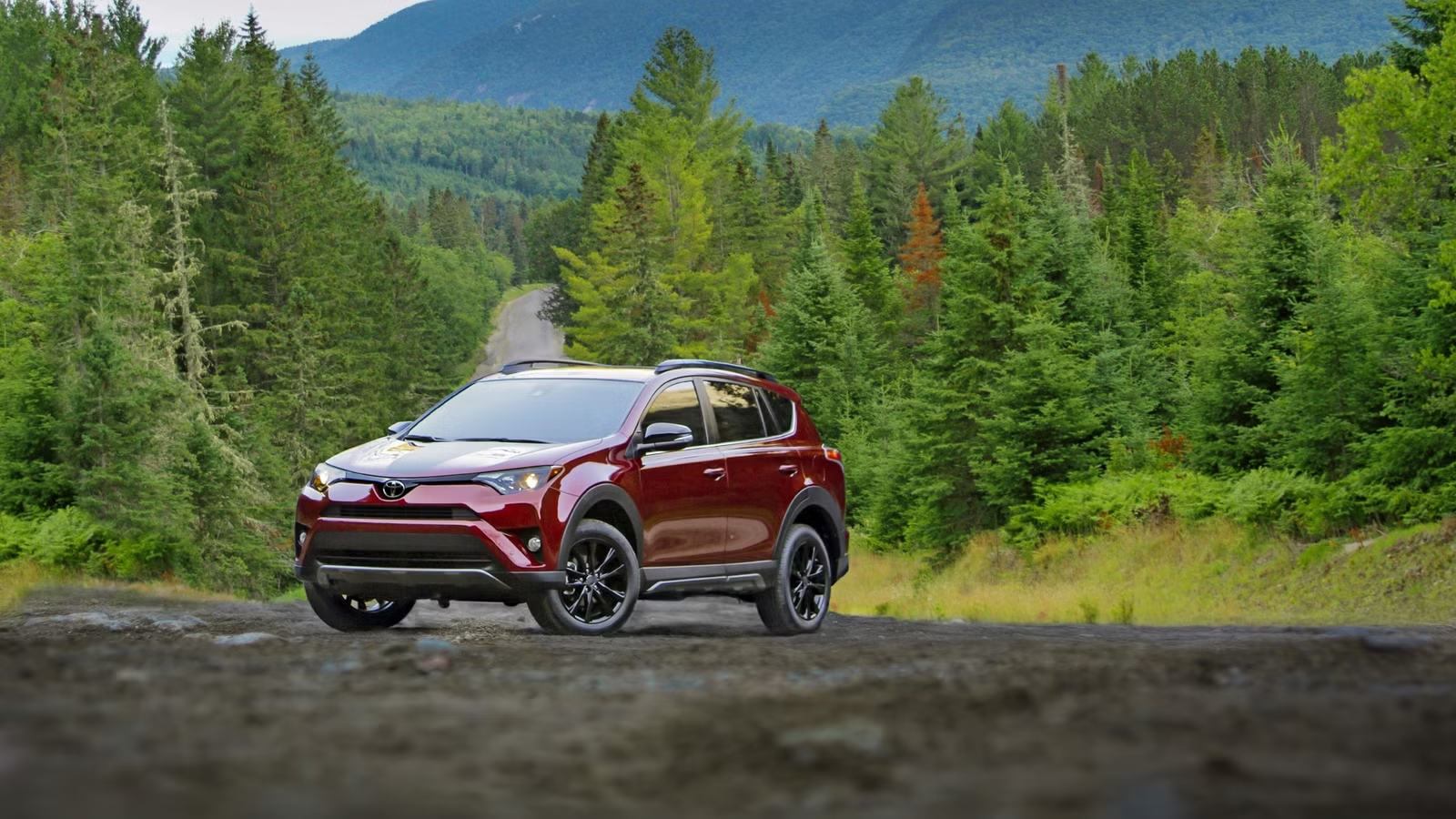
Consider the 2025 Toyota RAV4 LE AWD and RAV4 Hybrid LE AWD. Using the same model year, trim level, and driven wheels keeps this comparison focused on ownership rather than letting equipment differences quietly choose the winner. For a transparent worked example, assume purchase prices of $32,000 for the gasoline model and $34,000 for the hybrid, including destination but before taxes. These are illustrative transaction amounts, not advertised offers or claims about current market pricing.
Both vehicles cover 60,000 miles over five years, using gasoline priced at a constant $3.50 per gallon. The resale values, insurance expenses, taxes, and service budgets below are also explicit scenario assumptions, allowing you to see exactly what changes the outcome.

Depreciation Can Undo A Purchase-Price Advantage
The Money You Recover Matters As Much As The Money You Spend

Suppose the gasoline RAV4 sells for $20,000 after five years, while the hybrid brings $22,000. Each loses $12,000, meaning the hybrid’s $2,000 purchase premium disappears from the depreciation comparison because you recover it at resale. That does not make the hybrid’s extra purchase money imaginary. You still need to provide it at the beginning, but under these assumptions, it remains in the vehicle’s value rather than becoming an additional ownership expense.
Now change only the hybrid’s resale value to $20,000. Its depreciation rises to $14,000, and that same premium becomes a real five-year cost. The fuel economy has not changed, but the financial verdict might.
A Resale Forecast Is Useful Without Being A Guarantee
Those resale figures are sensitivity-testing inputs, not predictions of how much a buyer will hand you in five years. Future demand, mileage, condition, and accident history can all move the eventual selling price. Even a shared retained-value percentage can produce different losses. At 60 percent of their assumed purchase prices, the gasoline RAV4 retains $19,200 and loses $12,800, while the hybrid retains $20,400 and loses $13,600.
That is why a high resale percentage deserves a calculator next to it. You pay depreciation in dollars, and a more expensive vehicle can retain a larger percentage of its value while still losing more money.
Everyday Expenses Can Change Which Car Costs Less
Fuel Savings Have To Earn Back Any Upfront Premium

The 2025 RAV4 LE AWD carries a 30-mpg combined rating, compared with 39 mpg for the Hybrid LE AWD. Over the example’s 60,000 miles, those figures translate to 2,000 gallons for the gasoline model and approximately 1,538 gallons for the hybrid. At $3.50 per gallon, the gasoline RAV4 uses $7,000 in fuel, while the hybrid uses approximately $5,385. The hybrid saves about $1,615, which falls short of recovering the assumed $2,000 purchase premium through fuel alone.
Under these conditions, fuel savings reach $2,000 at roughly 74,300 miles. That is a fuel-only break-even point, however, and treating it as the complete ownership verdict would ignore everything else on the receipt.
Insurance And Registration Can Consume The Savings

For the worked example, assign five-year insurance expenses of $7,500 to the gasoline RAV4 and $8,000 to the hybrid. These are hypothetical budget entries rather than quotes, but the resulting $500 difference demonstrates how easily another expense can absorb fuel savings.
Spread across five years, that difference is only $100 annually. It still consumes almost a third of the hybrid’s calculated fuel advantage, which makes obtaining equivalent insurance quotes considerably more useful than assuming both Toyotas cost the same to cover. Assume another $2,500 in combined purchase taxes and registration expenses for the gasoline model, versus $2,650 for the hybrid. Your actual amounts depend on where you register the vehicle, so replace these placeholders with applicable charges before making a buying decision.
Maintenance And Repairs Need Separate Lines In The Budget
Scheduled Service Is Predictable Enough To Price

Maintenance is where you can replace much of the guesswork with a schedule. Price the required services for the exact vehicle, mileage, and operating conditions, then account for anything already included with the purchase. Tires deserve their own attention because they can turn an apparently modest service budget into an unpleasant afternoon. Compare the correct sizes, similar tire quality, installation, and any alignment work, rather than using the cheapest online tire price as the entire replacement bill.
For this example, allow each RAV4 $3,000 for scheduled maintenance and wear items over five years, including tires. Equal allowances keep the illustration neutral; they do not imply that both vehicles will generate identical invoices.
Repair Estimates Need More Care Than A Reliability Reputation

A reputation for reliability cannot tell you what a specific failure costs. RepairPal’s estimates illustrate the distinction even within one nameplate: water-pump replacement for a 2018 RAV4 is listed at $531–$711, compared with $876–$1,070 for a 2024 model, before taxes, fees, and related work.
Warranty coverage changes your exposure, too. Toyota lists a 36-month/36,000-mile basic warranty and 60-month/60,000-mile powertrain coverage, while the hybrid battery receives 10-year/150,000-mile coverage, subject to terms and exclusions. Automatically charging the hybrid for a replacement battery within this five-year example would therefore distort the comparison. Instead, assign each vehicle a $1,000 contingency for unexpected owner-paid repairs, recognizing that a reserve is money set aside, not proof of a future bill.
Put Both Cars Through The Same Final Calculation

The gasoline RAV4’s illustrative budget includes $12,000 in depreciation, $7,000 in fuel, $7,500 in insurance, $2,500 in taxes and registration, $3,000 in maintenance and wear, and a $1,000 repair reserve. Together, those items produce a five-year budget of $33,000, or 55 cents per mile. The hybrid combines $12,000 in depreciation, approximately $5,385 in fuel, $8,000 in insurance, $2,650 in taxes and registration, $3,000 in maintenance and wear, and the same $1,000 repair reserve. Its total is approximately $32,035, or 53.4 cents per mile.
Under those assumptions, the vehicle costing $2,000 more to buy finishes approximately $965 cheaper to own. These are illustrative budgets rather than market forecasts, and unused repair reserves would reduce actual spending. The calculation excludes parking, tolls, accessories, and the opportunity cost of the purchase money. Add any expenses that differ between your actual candidates, because a supposedly complete total stops being useful when it leaves out something you regularly pay.
You can still choose the more expensive car because you prefer its comfort, performance, or character. The useful victory is knowing what that preference costs before the window sticker convinces you that the arithmetic is finished.
Sources: Toyota, RepairPal, Edmunds, Kelley Blue Book

Related posts




Latest Post


No Comments