
The Rare Sportbike That’s Quietly Skyrocketing In Value
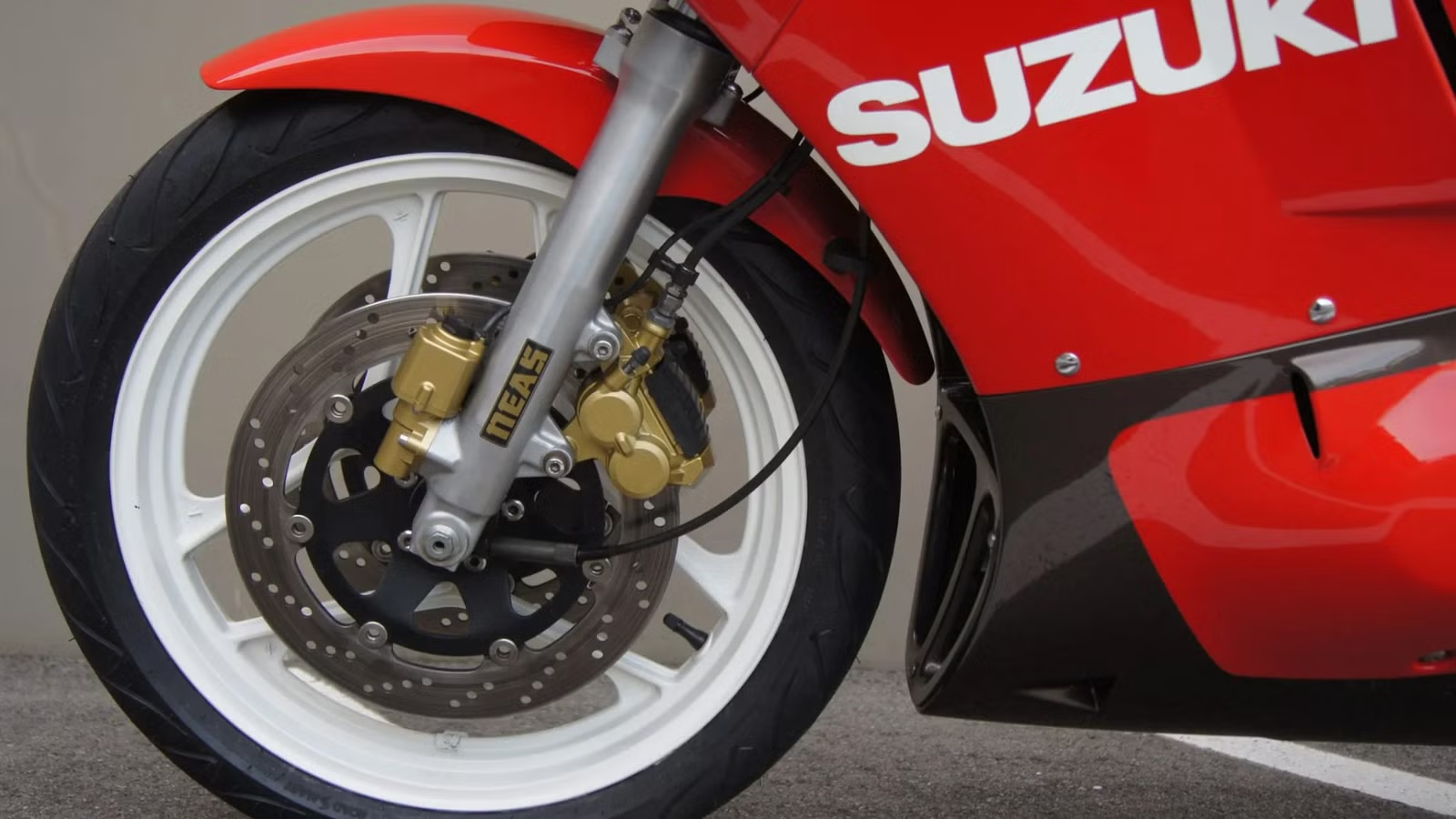
Few eras in motorcycling history burned as bright — or moved as fast — as the mid-1980s Superbike Wars. Manufacturers were locked in an arms race, rushing lightweight aluminum-framed, high-revving machines from the racetrack straight to the showroom floor. Homologation rules forced their hand, and the results were some of the most focused, uncompromising street-legal motorcycles ever produced. Decades on, most enthusiasts can rattle off the legends without hesitation. But one Japanese machine has spent years lurking in the shadows — and it’s finally stepping into the light.

Many of these street-legal bikes have since become legendary, while others are still relatively unknown to the collecting community, overshadowed by more flashy competitors. Now, however, there’s one from Japan that seems to be making a genuine comeback, re-emerging from obscurity and quietly gaining serious traction among collectors.
Suzuki Built The GSX-R750 Limited Edition To Win Races First
Due to homologation rules, manufacturers were required to produce limited numbers of street-legal superbikes in order to qualify for competition. These conditions resulted in some of the most focused machines of the era, and one that has been quietly skyrocketing in value lately is the Suzuki GSX-R750 Limited Edition from 1986.

Mainly built so Suzuki could compete in AMA Superbike racing, the Limited Edition was based on one of the most iconic motorcycles that defined the 1980s — the Suzuki GSX-R750. On track, this platform had already proven its credentials many times over, helping Suzuki secure major victories. These included the Le Mans 24-Hour endurance race in 1985, multiple Japanese National Road Racing titles, and success in the World Endurance Championship.

But while the standard GSX-R750 gave Suzuki a foot in the door, their racing teams still needed more specialized hardware to stay competitive. The Limited Edition existed to homologate those race-focused components, giving Suzuki’s racing program access to higher-spec parts while remaining within the rules. The most notable upgrade? A dry-clutch setup paired to a close-ratio six-speed gearbox — a configuration favored by racing teams because it could handle the heat and punishment of endurance competition far better than a conventional wet clutch. Fully adjustable suspension, an aluminum-bodied rear shock, and a remote gas-charged reservoir rounded out the package, trimming weight and sharpening stability for high-speed racing.
The Limited Edition wasn’t simply a sticker-and-paint job. This was a serious superbike built to win. As a homologation special, production was capped at just 500 units worldwide, with only 199 allocated for the US market — making it one of the rarest early GSX-R models in existence.
Collectors Are Finally Catching On To The GSX-R750 Limited Edition

For years, the GSX-R750 Limited Edition quietly hovered under the radar. When it first rolled off the production line, it was priced at $6,499 new — roughly equivalent to around $14,000 in today’s money. That made it a pricey but race-ready streetbike from day one, and over the past few years, it has been appreciating steadily in value.
Clean examples that would have traded for around $14,000 in 2020 are now routinely fetching $20,000–$26,000. This surge isn’t random, either — auction results over the last few years show a clear upward trend. In 2024, one went under the hammer for $18,000 on Classic.com, while another low-mileage example more recently exchanged hands for $26,750.
As prices rise, much of the value is driven by rarity, originality, low mileage, and race-bred components like the LE’s dry clutch and close-ratio gearbox — features that make this bike far more than just a vintage sportbike. Even subtle cosmetic originality, such as correct paint, period decals, and unmolested fairings, can add thousands to the final hammer price.
Rarity And Racing Pedigree Are Driving The GSX-R750 Limited Edition’s Rise

Enthusiasts are finally waking up to what made this little Japanese racer so special. Race-bred engineering, lightweight agility, and a riding experience that feels impossibly analog in today’s electronics-laden world of motorcycles — the surge in interest draws on deep nostalgia and, for many, the childhood obsessions that first sparked a love of the sport.
For the GSX-R750 Limited Edition specifically, it represents a defining moment in the history of the unshackled Japanese superbike, making it increasingly desirable for any collector with a bidder’s card and some disposable income.
Rarity, as ever, is another key driver. With just 199 US-market units produced, original examples are dwindling, and any surviving bike with matching numbers, low miles, and untouched bodywork now commands serious attention.
It’s this combination of race-bred performance and genuine scarcity that has transformed the Limited Edition from an overlooked footnote into a rising star among 1980s homologation specials. And for those who managed to acquire one at an attainable price, continued appreciation could make it a rewarding long-term hold.
Collector’s Checklist: What To Look For In A GSX-R750 Limited Edition

If the surge in values has caught your attention, you’re far from alone. With prices climbing, the GSX-R750 Limited Edition is finally getting the recognition it has always deserved. Unfortunately, truly clean, original examples have become increasingly rare.
Originality is king, and informed buyers will pay a premium for bikes with stock bodywork, unmodified suspension, and untouched engine components. The moment a GSX-R has been heavily customized — or worse, repaired with non-genuine parts — its value can drop sharply.
Condition, perhaps surprisingly, matters more than mileage. Considered too hardcore for daily use, many of these street-legal racers spent decades in storage or were only lightly ridden, so low-mileage examples with properly maintained engines and clutch systems are highly sought-after. And that dry clutch? It’s the jewel in the crown of this particular machine, and it demands proper care. Neglect it, and values can take a meaningful hit.
Other Rare Homologation Machines Collectors Can’t Ignore
The GSX-R750 Limited Edition isn’t the only race-bred machine from the ’80s and ’90s seeing its value surge. Several other homologation specials have been catching the eyes of collectors, too.
Honda RVF750R RC45 (1994)

The Honda RVF750R RC45 was the follow-up to the legendary RC30, built to dominate the World Superbike Championship. To succeed, it adopted a gear-driven cam V4 engine, race-developed chassis geometry, and cutting-edge electronics for its time. Despite its impressive credentials, the RC45 long lived in the shadow of the RC30 — but like the Suzuki, collectors have finally started to appreciate just how special it is, with values surging in recent years. Clean examples now routinely fetch between $30,000 and $45,000, with fully original, low-mile machines climbing even higher.
Yamaha YZF-R7 OW-02 (1999)

The OW-02 designation marked the limited-production version of Yamaha’s YZF-R7, and like the Suzuki, was restricted to just 500 units worldwide. It introduced lightweight carbon-fiber bodywork, a race-spec inline-four engine, and a power-to-weight ratio that rivaled the best contemporary superbikes. With rarity on its side and a strong racing pedigree, it has since become increasingly desirable among collectors. Well-preserved examples regularly trade between $35,000 and $50,000, particularly in European and Japanese markets.
Kawasaki Ninja ZX-7RR (1996)

The ZX-7RR was Kawasaki’s homologation entry for AMA Superbike racing, featuring flat-slide carburetors and a more track-focused chassis compared to the standard ZX-7R. While still less celebrated than the RC45 or the OW-02, collectors are beginning to recognize its rarity, and prices for well-kept examples have quietly moved past $12,000–$15,000, with pristine machines fetching as much as $25,250.
Spec sheet: How they stack up
|
Model |
Engine |
Power |
Torque |
Weight |
Notes |
|
1986 Suzuki GSX-R750 Limited Edition |
747 cc inline-4 DOHC |
106 bhp @ 10,500 rpm (period spec) |
47 ft-lb @ 8,000 rpm |
176 kg dry |
Race-oriented 750 with dry clutch & close-ratio gearbox — rare homologation special. |
|
Honda RVF750R RC45 |
749.2 cc V-4 DOHC |
119 hp @ 12,000 rpm |
56 lb-ft @ 10,000 rpm |
189 kg dry |
Honda’s WSBK homologation weapon with fuel injection and lightweight aluminum frame. |
|
Yamaha YZF-R7 OW-02 |
749 cc inline-4 DOHC 5-valve |
106 hp @ 11,000 rpm |
72 Nm (53 lb-ft) @ 9,000 rpm |
176 kg dry |
500-unit homologation bike with Öhlins suspension and race-focused chassis. |
|
Kawasaki Ninja ZX-7RR |
748 cc inline-4 DOHC |
105–123 hp (varies) |
52.4-56.4 lb-ft |
418–452 lb wet |
Track-oriented ZX-7 variant built to meet AMA rules with adjustable swingarm pivot. |
The GSX-R750 Limited Edition Is Finally Getting The Recognition It Deserves

Some bikes grow old without ever truly making their mark on motorcycling history. And then there are the rare few that feel more significant with every passing year. The Suzuki GSX-R750 Limited Edition is firmly in the latter camp. Built not for comfortable road riding but to satisfy the rulebooks at the height of superbike competition, this once-overlooked homologation special is now chasing serious auction headlines and finally earning the recognition it has always deserved.
For collectors who understand what the mid-’80s Superbike Wars really meant, the GSX-R750 LE isn’t just another appreciating classic — it’s a reminder of a time when Japan’s motorcycle manufacturers went all-in on racing supremacy, making it one of the era’s purest survivors.
Sources: Bring a Trailer, Iconic Motorbike Auctions, Classic.com, Hagerty, Cycle World, Visordown, Yamaha Global

Related posts

Latest Post



No Comments