
Chrysler Built A 375-HP Hurst Muscle Car And Sold Fewer Than 500
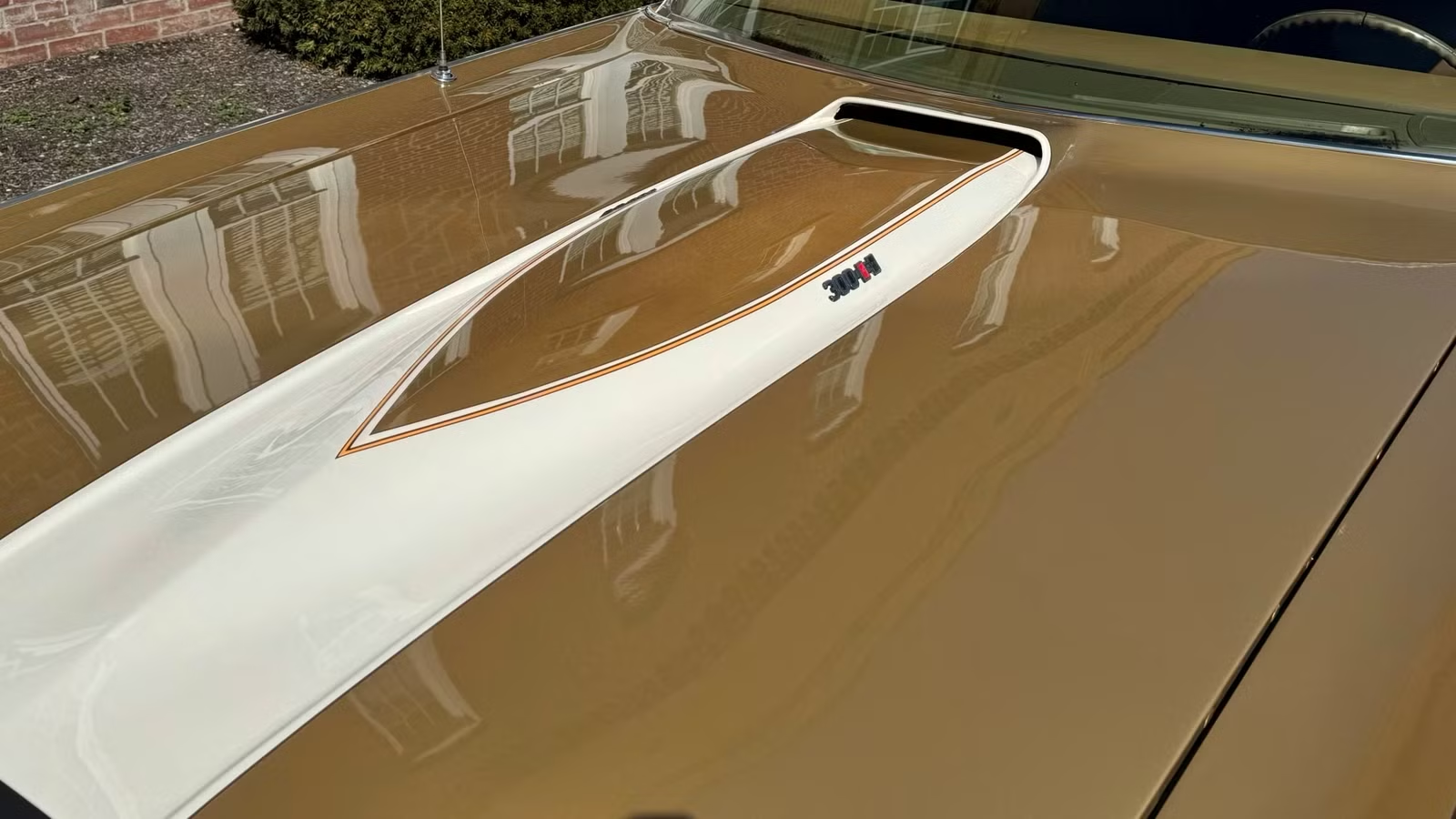
By 1970, the American muscle car formula was extremely straightforward. Automakers took the cars they already had and outfitted them with beefy powerplants that were probably more than they really needed. It was like Dodge in 2020, except everyone was doing it at the same time.

But that’s not to say there weren’t some curveballs along the way.
Chrysler Gave Its Luxury Coupe The Hurst Treatment
Chrysler was early to the party when it came to big, powerful luxury cars. It had been building them with serious performance and upscale energy since the 1950s. The nameplate was still around in 1970, but by then the muscle car segment had shifted in the direction of smaller, lighter cars.

It was a tricky time for American automakers, and Chrysler found some help in navigating the changing landscape and giving the 300 another shot at greatness. That help arrived in the form of automotive marketing authority Jim Wangers, who represented much of the brains behind turning the Pontiac GTO into what it was at the time.
Wangers, who was working for Hurst Performance Research, pitched a concept for bringing Chrysler’s full-sized performance heritage back to relevance. The idea was to take the existing Chrysler 300 hardtop and give it the full Hurst treatment, which would combine the luxury car’s big dimensions and upscale interior with more modern, sporting styling and, of course, a high-powered V8.
Chrysler Sent Its 300s To Hurst For Some Serious Modifications

The production arrangement was atypical. Chrysler would build the 300s at its Jefferson Avenue plant in Detroit, just like always, then ship them to Brighton, Michigan, where they’d get their prescribed special equipment from Hurst before being hauled back to Detroit for final inspection.
Each car started out in a nondescript Spinnaker White, which Hurst leveled up with gold accents and stripes, giving the giant coupe a more athletic appearance. A fiberglass hood replaced the factory one, complete with a prominent bulge that may or may not have been actually necessary to accommodate the hardware underneath. Either way, it looked great, as did the custom decklid and integrated spoiler around back. That view from the rear wasn’t eroded by anything as gauche as a trunk lock, either, with a vacuum-operated release in the glovebox instead.
Hurst badging gave the whole package a finishing touch that was dripping with early-70s street cred. The fresh take on the Chrysler 300 had arrived.
The 440 TNT Gave This Luxury Cruiser 375 Horsepower

Whether or not that hood bulge was necessary, the whole thing would have rung hollow without some serious power under the hood. This was delivered by way of Chrysler’s 440-cubic-inch TNT V8, producing 375 hp and 480 lb-ft of torque. The car’s enormous footprint and two-ton curb weight meant it was a long way from being a drag strip hero, but it certainly moved and it looked the part.
It had a three-speed TorqueFlite automatic transmission and a 3.23:1 rear axle. The 300 Hurst had heavy-duty suspension, power front disc brakes, power steering, and dual exhaust, creating a respectable mechanical package to go along with the over-the-top appearance.
Inside, the 300 remained all class and comfort, with leather upholstery borrowed from the Imperial LeBaron and bucket seats with six-way power adjustment. Despite Hurst making a name for itself with its performance shifters, the 300 Hursts were all automatic, most with a column-mounted shifter and a few with one on the center console.
It was a full-sized luxury cruiser with muscle car horsepower, elaborate bodywork, and all the comforts Chrysler could reasonably stuff inside.
Chrysler Planned 2,000 And Built Just 485

The 300 Hurst was quite a proposition, though there was no obvious place for such a thing in the market. For starters, it was far from cheap at $5,939, well above the cost of the conventional Chrysler 300 hardtop underneath.
Like most muscle car stories that begin in the ’70s, timing wasn’t kind to the car. The American economy was slipping. Buyers who still had an appetite for performance could get it from smaller, lighter, less expensive alternatives. And those who wanted luxury with a little extra power probably wanted it without the outrageous bodywork and gold accents.
The Hurst Edition didn’t return for 1971. The plan had called for around 2,000 examples, but Chrysler’s production records indicate just 485 were built, making it one of the rarer Chrysler performance models of its era.
Sources: Chrysler

Related posts


Latest Post


No Comments