
The Older Manual Porsche GT3 RS That Out-Earned A Faster, Newer PDK Model
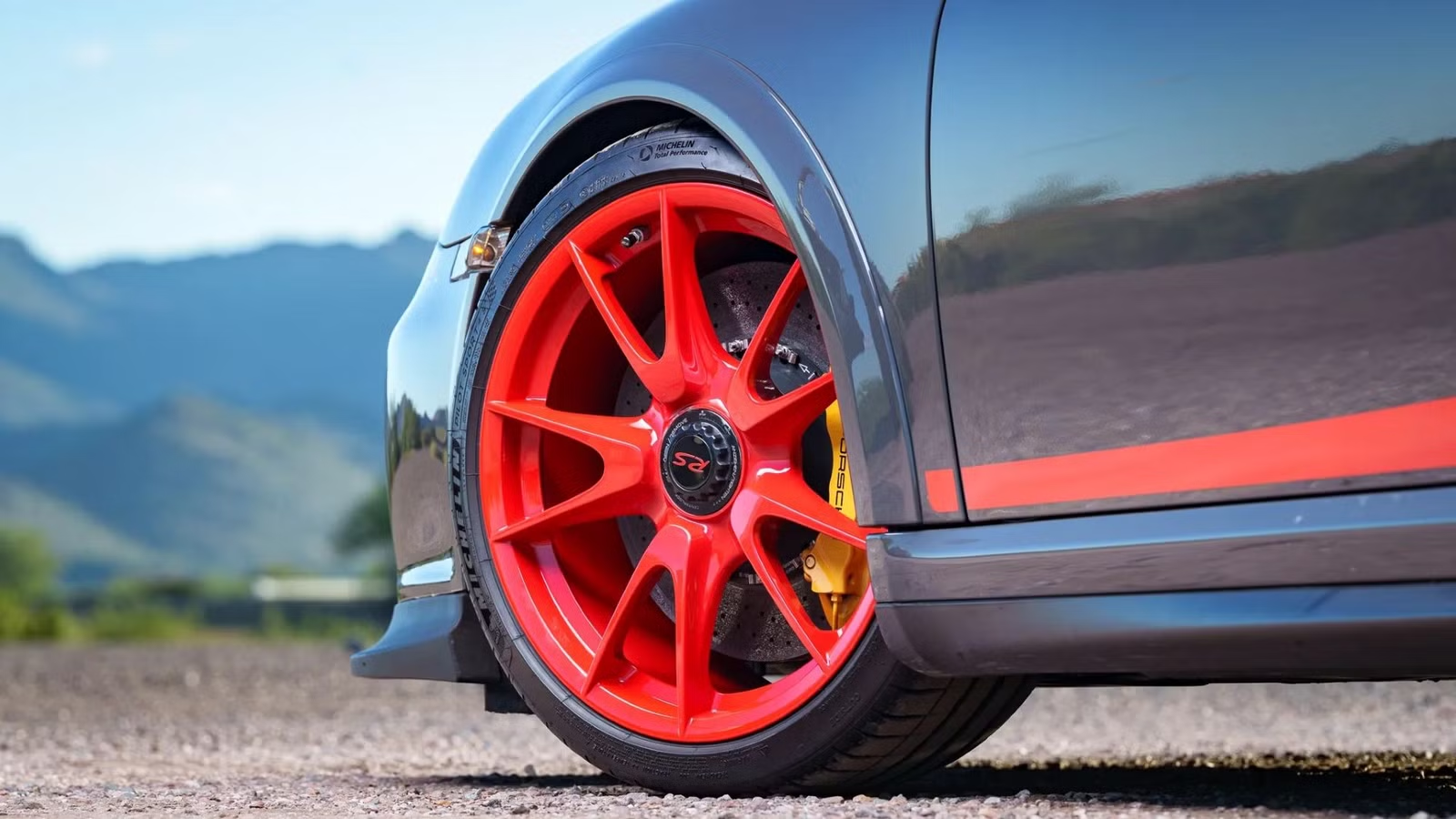
Few cars are as recognizable as a Porsche 911. And few cars are as great as a Porsche 911 GT3 RS. But while these Swiss Army knife Porsches, which will do everything from going shopping to clocking a hot lap of the ‘Ring, have slowly evolved over time to be sharper and faster, something bizarre is happening in the secondhand market. It turns out older cars are out-earning newer, faster models by tens of thousands of dollars, with Porsche GT3 RSs from 2010 outshining examples that are five years younger. It turns out that there is a simple answer to all this used car madness.
The GT3 RS Is Constantly Evolving

The Porsche 911 GT3 RS may be the Instagram influencer’s car of choice, as well as being as common as an Uber in West Hollywood, but in fact those two letters at the end go back much further than your average social media scroller might realize. The first Porsche to get the moniker was the 718 RSK race car in 1957, six years before the first 911 was even launched, before it was revived for the legendary 1973 911 Carrera RS 2.7 and the understated (can a 911 be understated?) 1991 Porsche 911 (type 964) RS (one of the greatest 911s ever). The real, recognizable bloodline of today starts at the 2003 Porsche 911 (type 996) GT3 RS, which was the first model to get a water-cooled engine. Why is this car significant in the context of the RS of today? Because, unlike the low-key 964 RS cars, the GT3 RS was no longer just focused on weight reduction.
The 911 GT3 RS Became A Mainstay Of 2000s Performance

For the 996 of 2003, in came the wild italic side graphics and large rear wing, alongside carbon brakes, a polycarbonate window, and carbon hood. This set the template for the GT3 RSs to come. The resulting cars that followed — one for every succeeding generation — were sharper, faster, more aerodynamically loaded, tweaked, trimmed, and generally better than the last. That’s what Porsche does best: take a good idea and continue to make it better and better. So wait. Why are the prices all over the place?
Used 911 GT3 RS Prices Have Become Unhinged

When car historian Donald Osborne brought three 911 GT3s to Jay Leno’s Garage recently, it was nearly impossible to tell the difference at first glance. Almost a decade separated the cars, but such is Porsche’s dedication to keeping the 911 silhouette and ethos intact, not to mention the now trademark decals and wings of the GT3 RS brand, they all looked pretty similar. On loan from the Audrain Automobile Museum in Newport, Rhode Island, the models were a 2008 997.1, a 2011 997.2 and a 2016 991.1.
But while they may have looked the same if you squinted (or saw one ripping past on a dark night), there was a big difference in store. According to Osborne’s estimates, the 2016 GT3 RS, which is the fastest and most powerful, is the cheapest of the trio, currently worth around $235,000. The 2008 model has reportedly climbed from approximately $165,000 five years ago to around $395,000 today, while the 2011 GT3 RS is worth even more. Osborne says it was also worth around $165,000 five years ago but could fetch approximately $450,000 right now. So why is a younger car that much cheaper?
Why A Five-Year Older Car Is Worth More In The World Of Porsches

The answer lies somewhere around the sole of your right foot. The two 997 models feature a manual gearbox, whereas the 2016 car switched to PDK. The Porsche-Doppelkupplungsgetriebe is Porsche’s high-performance dual-clutch transmission and likely explains why the latter car is a whole second quicker to 60 mph than the older model, clocking in at a supercar-like 3.0 seconds. But it is not all about outright speed, of course, and it seems that Porsche purists (who are likely to be in the market for a track-ready GT3 RS) will pay a huge premium to shift using a manual gearbox.
But there is another feature that fans seek out in the older car. The six-speed manual in the 997.2 GT3 RS is linked to the legendary Mezger-derived Boxer engine. This unit was last used in a GT3 RS in 2011 for the limited-release 911 GT3 RS 4.0, a car that many today consider the greatest 911 of all time. The 2016 GT3 RS gained a 4.0-liter, 500-hp engine and PDK which made it devastatingly quick (recording a 6:56.4 lap of the Nürburgring), but Porsche fans with a lot of cash aren’t just interested in lap times.
The 997.2 Generation Is Seen As The Sweet Spot Of Water-Cooled Porsches

The second-generation 911 GT3 RS (997.2 GT3 RS) arrived in 2010 with an additional 15 hp thanks to its new 3.8-liter boxer engine, bringing total output to 450 hp. The light six-speed manual gearbox featured shorter throws, and the overall car had lost 11 lbs (every little counts) thanks to various changes, including new door inners and a different spoiler made of more aluminum and carbon fiber components.
This Porsche stood on the precipice between analog sports cars and the quickly approaching hyper-technical era — it was in many ways the last of the DIY GT3 RSs. No wonder journalists said it could be the best car they had ever driven. As Joni Mitchell once said, you don’t know what you’ve got till it’s gone. No wonder Porsche fans are desperately trying to get their hands on a 997.2 GT3 RS.
Sources: Porsche

Related posts
Latest Post


No Comments